Blab Business
Malaysia-Korea Strategic Partnership Drives Semiconductor and Halal Market Synergies
When Prime Minister Anwar Ibrahim stepped into Seoul in November 2024, the handshake was more than diplomatic—it was a pledge to reshape two economies. The two leaders elevated their relationship to a strategic partnership, moving beyond traditional trade and investment into a broader collaboration that spans innovation, sustainability, tourism, and people‑to‑people ties.
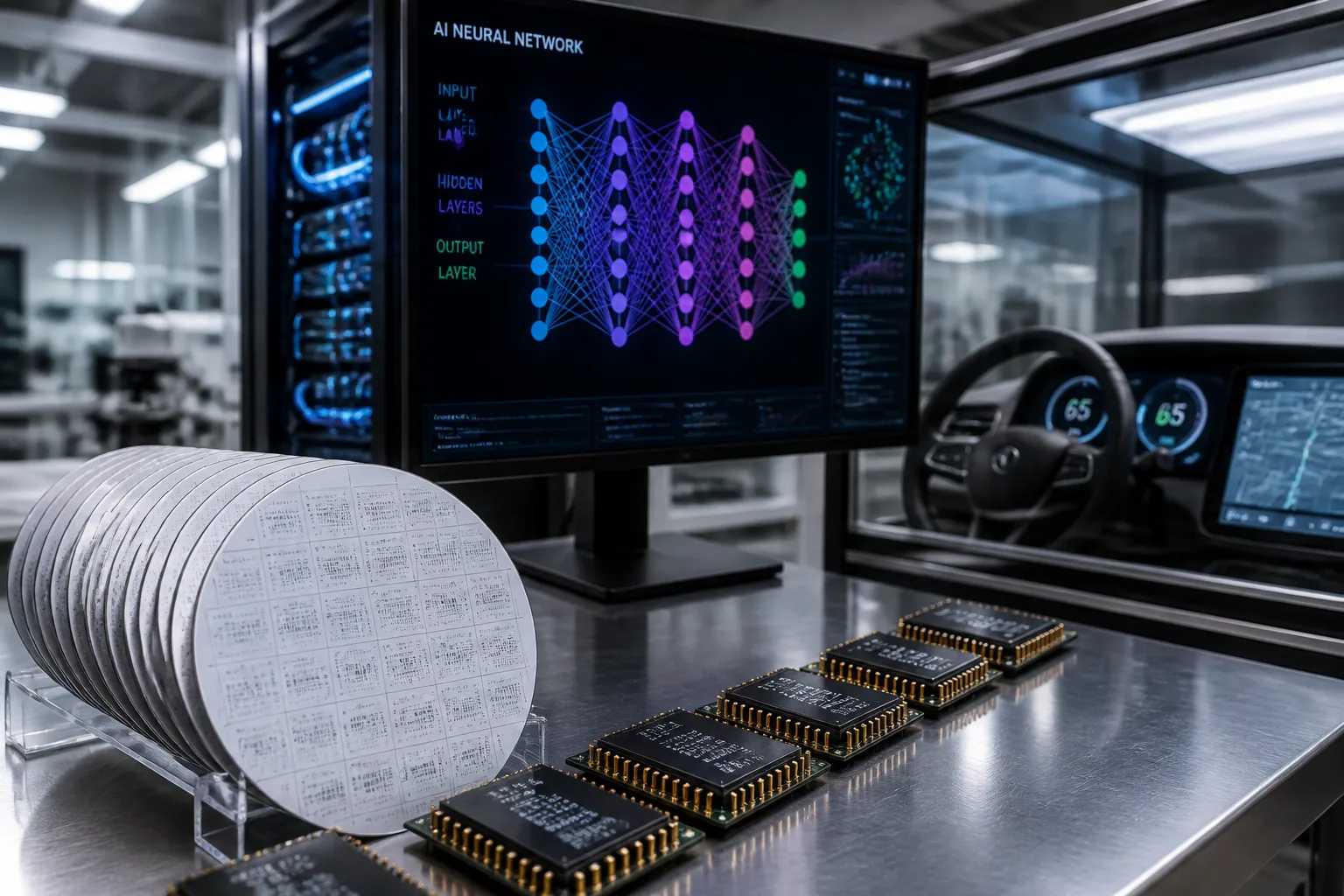
The partnership’s backbone is the semiconductor industry. Malaysia already supplies roughly 13 % of the world’s outsourced semiconductor assembly and testing market, a share that has grown over five decades of back‑end expertise. The country is now expanding into integrated circuit design, research and advanced packaging, positioning itself as a full‑cycle hub. South Korean firms—leaders in memory chips, advanced manufacturing and digital innovation—see Malaysia as a strategic extension of their regional ecosystem. Samsung SDI’s 1.7 trillion‑won investment in a second battery plant in Seremban and SK Nexilis’ expansion into electric‑vehicle batteries illustrate the depth of Korean commitment.
Beyond chips, Malaysia offers a gateway to the world’s fastest‑growing halal market. With nearly 2 billion Muslim consumers, demand for halal‑certified cosmetics, food, pharmaceuticals and digital services is rising. Malaysia’s JAKIM‑certified standards are internationally recognised, and the country’s modern infrastructure and digital readiness make it an attractive launchpad for Korean brands in Southeast Asia, the Middle East and beyond.
The recently concluded Malaysia‑Korea Free Trade Agreement (MKFTA) underpins these developments. By reducing tariffs, the agreement signals a shared commitment to a resilient, open and future‑oriented economic partnership. It also provides a framework for cooperation in digital transformation, green technology, youth exchanges and supply‑chain resilience—areas that both governments have earmarked as priorities.
Geopolitical uncertainties—rising protectionism, supply‑chain fragmentation and technology‑trade tensions—add complexity to the partnership. Malaysia and South Korea must navigate these risks while maintaining openness. The strategic partnership, therefore, is not only about expanding opportunities during favourable periods but also about jointly managing uncertainty and preserving regional stability.
Today, the partnership is already visible in joint research initiatives, increased Korean investment in Malaysia’s semiconductor and battery sectors, and a growing number of Malaysian students studying in South Korea. The next steps include monitoring the performance of the MKFTA, tracking the progress of Korean‑led projects such as Samsung SDI’s battery plant, and assessing how the partnership can support Malaysia’s 2026 economic outlook, which highlights AI, data‑center growth and advanced manufacturing.
In sum, Malaysia and South Korea have moved beyond a transactional relationship to a strategic alliance that leverages Malaysia’s semiconductor expertise and halal credentials against South Korea’s technological leadership. The partnership’s success will hinge on sustained investment, policy alignment and the ability to adapt to a rapidly changing global environment.
The partnership’s backbone is the semiconductor industry. Malaysia already supplies roughly 13 % of the world’s outsourced semiconductor assembly and testing market, a share that has grown over five decades of back‑end expertise. The country is now expanding into integrated circuit design, research and advanced packaging, positioning itself as a full‑cycle hub. South Korean firms—leaders in memory chips, advanced manufacturing and digital innovation—see Malaysia as a strategic extension of their regional ecosystem. Samsung SDI’s 1.7 trillion‑won investment in a second battery plant in Seremban and SK Nexilis’ expansion into electric‑vehicle batteries illustrate the depth of Korean commitment.
Beyond chips, Malaysia offers a gateway to the world’s fastest‑growing halal market. With nearly 2 billion Muslim consumers, demand for halal‑certified cosmetics, food, pharmaceuticals and digital services is rising. Malaysia’s JAKIM‑certified standards are internationally recognised, and the country’s modern infrastructure and digital readiness make it an attractive launchpad for Korean brands in Southeast Asia, the Middle East and beyond.
The recently concluded Malaysia‑Korea Free Trade Agreement (MKFTA) underpins these developments. By reducing tariffs, the agreement signals a shared commitment to a resilient, open and future‑oriented economic partnership. It also provides a framework for cooperation in digital transformation, green technology, youth exchanges and supply‑chain resilience—areas that both governments have earmarked as priorities.
Geopolitical uncertainties—rising protectionism, supply‑chain fragmentation and technology‑trade tensions—add complexity to the partnership. Malaysia and South Korea must navigate these risks while maintaining openness. The strategic partnership, therefore, is not only about expanding opportunities during favourable periods but also about jointly managing uncertainty and preserving regional stability.
Today, the partnership is already visible in joint research initiatives, increased Korean investment in Malaysia’s semiconductor and battery sectors, and a growing number of Malaysian students studying in South Korea. The next steps include monitoring the performance of the MKFTA, tracking the progress of Korean‑led projects such as Samsung SDI’s battery plant, and assessing how the partnership can support Malaysia’s 2026 economic outlook, which highlights AI, data‑center growth and advanced manufacturing.
In sum, Malaysia and South Korea have moved beyond a transactional relationship to a strategic alliance that leverages Malaysia’s semiconductor expertise and halal credentials against South Korea’s technological leadership. The partnership’s success will hinge on sustained investment, policy alignment and the ability to adapt to a rapidly changing global environment.