Blab Business
Moment Energy Opens Canadas Largest EV Battery Repurposing Plant in Surrey
On Tuesday, Moment Energy broke the ribbon at its first commercial facility in Surrey, British Columbia, announcing the launch of what it calls the world’s largest plant that reclaims electric‑vehicle (EV) batteries for grid‑scale storage.
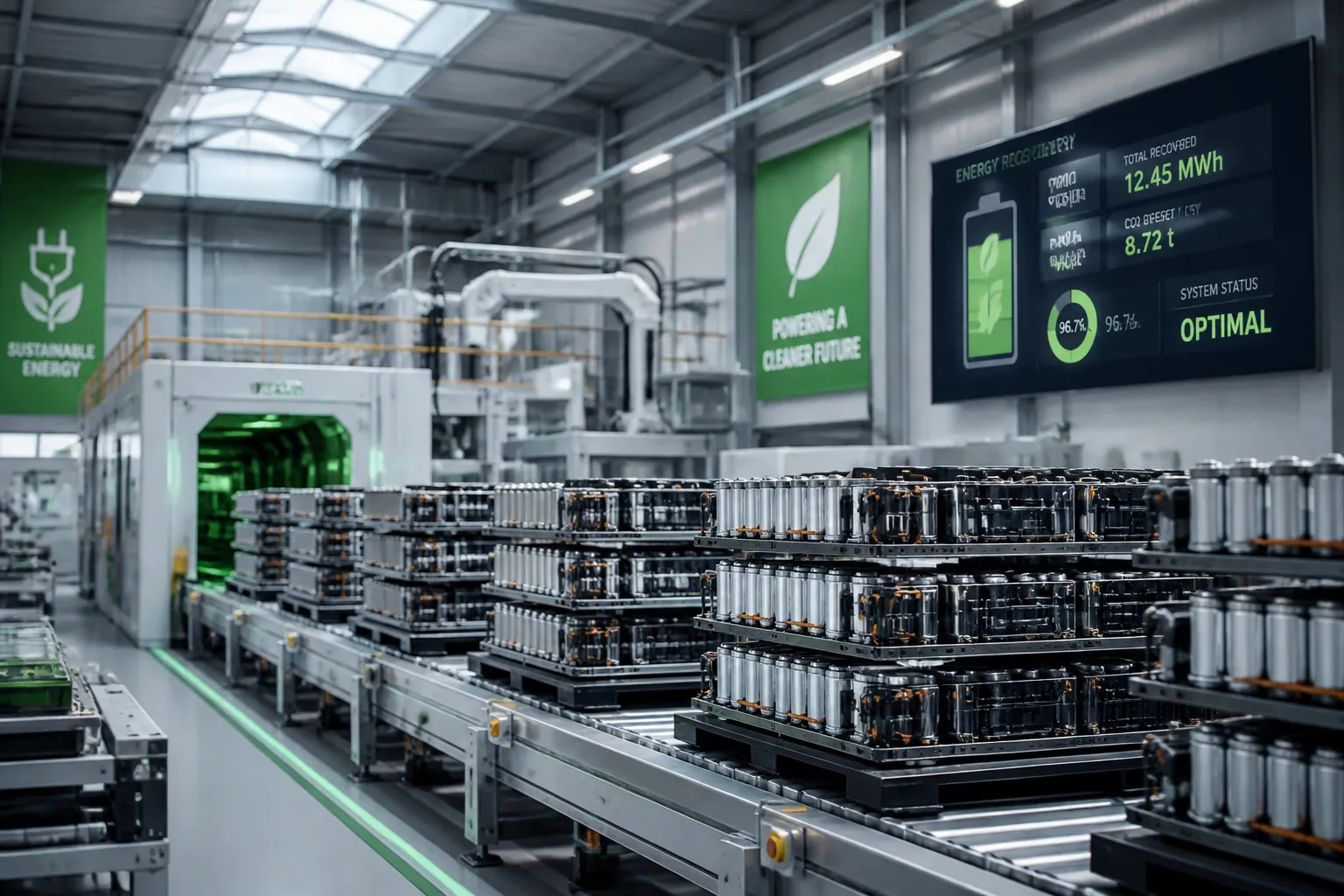
The 25‑year‑old site is engineered to process 25,000 retired EV batteries each year. After a vehicle’s pack is removed, Moment’s AI‑assisted system isolates lithium‑ion cells that still hold roughly 85 % of their original capacity. Those cells are cycled—charged and discharged repeatedly—until they meet the company’s performance thresholds. When cleared, the cells are assembled into modular storage units that stack on racks like “Lego blocks.” The finished modules are expected to deliver reliable power for 15 to 20 years.
The plant’s opening follows a rapid buildout that began after the project was unveiled at Web Summit Vancouver in early May. The four co‑founders—Edward Chiang, Sumreen Rattan, Gabriel Soares and Gurmesh Sidhu—started the company in a garage in 2019. All four are Simon Fraser University graduates and grew up in Surrey, a city just south of the Fraser River and part of the Metro Vancouver region.
Choosing Surrey was a deliberate nod to the community that shaped them. Chiang told reporters that the new facility will create more than 100 direct jobs and, when it reaches 1 GWh of annual capacity by 2030, could support over 1,000 indirect jobs across British Columbia.
Moment Energy’s business model diverges from traditional battery recycling. Instead of separating chemicals and materials, the company reuses the cells themselves. The process is faster than competitors’ methods; the firm claims it takes six hours per battery, compared with three days for other firms.
The plant fits into a broader strategy to reduce the cost of upgrading the North American power grid. According to Chiang, the grid is “broken” and upgrading power lines costs tens of millions of dollars. The company argues that second‑life batteries can lower those costs and help modernise the grid.
Funding for the project has come from both public and private sources. Moment has raised more than US$100 million to date. Private seed funding came from BC‑based Version One Ventures, Amazon’s Climate Pledge Fund, San Francisco‑based Voyager Ventures and BC‑based Evok Innovations. Public support includes a $4.9 million grant from PacifiCan, a federal economic‑development agency for BC, and US$20 million from the U.S. Department of Energy in 2024 to build a Texas gigafactory.
One challenge for clean‑tech firms is the timing gap between capital outlays and the receipt of incentive payments. Sarah Goodman, president and CEO of NorthX, an early backer of Moment, said that fast‑growing hard‑tech companies must spend on materials, assembly and installation months before they receive payments from incentive schemes. To bridge this gap, NorthX announced $3 million in follow‑on funding on Tuesday. The money is intended to keep projects moving until the company receives support from BC Hydro’s Energy Storage Incentive.
James Brady, vice president of finance at Moment, said the company has been willing to invest where traditional lenders are still building familiarity with the sector.
Investor comments from Voyager’s partner Leonardo Banchik highlighted the company’s potential for strong returns. Banchik noted that the market for clean, cheap, firm power is enormous, driven by the boom in AI data centers and the increasing penetration of renewables that are cheaper than fossil fuels.
Moment’s advantage, according to Banchik, is its ability to purchase second‑life batteries from auto companies that want to offload them to avoid landfill or recycling fees. The company’s unit economics are described as solid.
The Surrey facility is the third plant for Moment. The company plans to expand its annual capacity to 1 GWh by 2030, a milestone that would position it as a significant player in the North American energy‑storage market.
At the ribbon‑cutting ceremony, the four founders stood beside a large Canadian flag. The event was attended by local officials, including Housing and Infrastructure Minister Gregor Robertson, who praised the plant as an example of homegrown innovation.
Moment’s next steps include scaling production, securing additional financing to bridge the gap between capital expenditures and incentive payments, and expanding its customer base to hospitals, airports, off‑grid homes and data centers.
The plant’s opening is a milestone for the Canadian clean‑tech sector and reflects a growing trend of repurposing EV batteries to extend their useful life and support grid reliability.
The 25‑year‑old site is engineered to process 25,000 retired EV batteries each year. After a vehicle’s pack is removed, Moment’s AI‑assisted system isolates lithium‑ion cells that still hold roughly 85 % of their original capacity. Those cells are cycled—charged and discharged repeatedly—until they meet the company’s performance thresholds. When cleared, the cells are assembled into modular storage units that stack on racks like “Lego blocks.” The finished modules are expected to deliver reliable power for 15 to 20 years.
The plant’s opening follows a rapid buildout that began after the project was unveiled at Web Summit Vancouver in early May. The four co‑founders—Edward Chiang, Sumreen Rattan, Gabriel Soares and Gurmesh Sidhu—started the company in a garage in 2019. All four are Simon Fraser University graduates and grew up in Surrey, a city just south of the Fraser River and part of the Metro Vancouver region.
Choosing Surrey was a deliberate nod to the community that shaped them. Chiang told reporters that the new facility will create more than 100 direct jobs and, when it reaches 1 GWh of annual capacity by 2030, could support over 1,000 indirect jobs across British Columbia.
Moment Energy’s business model diverges from traditional battery recycling. Instead of separating chemicals and materials, the company reuses the cells themselves. The process is faster than competitors’ methods; the firm claims it takes six hours per battery, compared with three days for other firms.
The plant fits into a broader strategy to reduce the cost of upgrading the North American power grid. According to Chiang, the grid is “broken” and upgrading power lines costs tens of millions of dollars. The company argues that second‑life batteries can lower those costs and help modernise the grid.
Funding for the project has come from both public and private sources. Moment has raised more than US$100 million to date. Private seed funding came from BC‑based Version One Ventures, Amazon’s Climate Pledge Fund, San Francisco‑based Voyager Ventures and BC‑based Evok Innovations. Public support includes a $4.9 million grant from PacifiCan, a federal economic‑development agency for BC, and US$20 million from the U.S. Department of Energy in 2024 to build a Texas gigafactory.
One challenge for clean‑tech firms is the timing gap between capital outlays and the receipt of incentive payments. Sarah Goodman, president and CEO of NorthX, an early backer of Moment, said that fast‑growing hard‑tech companies must spend on materials, assembly and installation months before they receive payments from incentive schemes. To bridge this gap, NorthX announced $3 million in follow‑on funding on Tuesday. The money is intended to keep projects moving until the company receives support from BC Hydro’s Energy Storage Incentive.
James Brady, vice president of finance at Moment, said the company has been willing to invest where traditional lenders are still building familiarity with the sector.
Investor comments from Voyager’s partner Leonardo Banchik highlighted the company’s potential for strong returns. Banchik noted that the market for clean, cheap, firm power is enormous, driven by the boom in AI data centers and the increasing penetration of renewables that are cheaper than fossil fuels.
Moment’s advantage, according to Banchik, is its ability to purchase second‑life batteries from auto companies that want to offload them to avoid landfill or recycling fees. The company’s unit economics are described as solid.
The Surrey facility is the third plant for Moment. The company plans to expand its annual capacity to 1 GWh by 2030, a milestone that would position it as a significant player in the North American energy‑storage market.
At the ribbon‑cutting ceremony, the four founders stood beside a large Canadian flag. The event was attended by local officials, including Housing and Infrastructure Minister Gregor Robertson, who praised the plant as an example of homegrown innovation.
Moment’s next steps include scaling production, securing additional financing to bridge the gap between capital expenditures and incentive payments, and expanding its customer base to hospitals, airports, off‑grid homes and data centers.
The plant’s opening is a milestone for the Canadian clean‑tech sector and reflects a growing trend of repurposing EV batteries to extend their useful life and support grid reliability.