Blab Business
VanEcks GPZ ETF Faces Concentration Risk Amid Private-Market Growth
When a fund that purports to give investors a taste of the booming private‑market sector is built on a handful of big names, the promise of diversification starts to feel hollow.
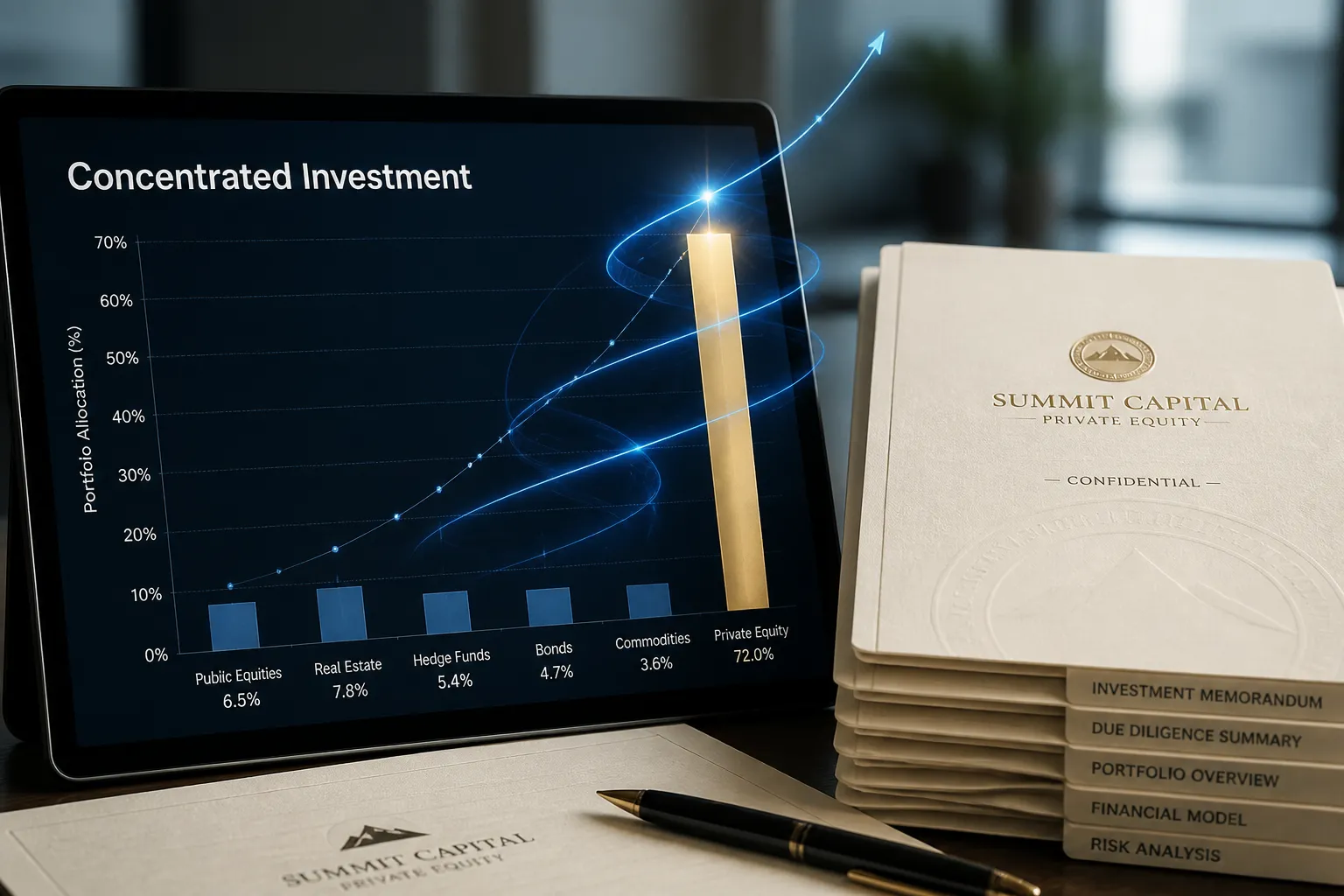
VanEck Alternative Asset Manager ETF (ticker: GPZ) is designed to track the MarketVector Alternative Asset Managers Index, which aims to capture the performance of companies that manage private equity, private credit, infrastructure, and real estate. In practice, GPZ holds only 24 public‑equity stocks, with Blackstone Inc., Brookfield Corp., and KKR & Co. Inc. together accounting for a sizable share of the portfolio. This concentration turns the fund into something closer to a thin slice of the financial sector than a broad exposure to the private‑market ecosystem.
The private‑market landscape has drawn significant capital in recent years. Institutional investors are steadily allocating more of their portfolios to private equity, private credit, and infrastructure, seeking higher returns than those offered by public markets. GPZ’s premise is to provide indirect access to that growth by investing in the publicly traded companies that run these alternative asset firms.
However, analysts have rated GPZ a SELL, citing three main concerns. First, the concentration risk is high: with only 24 holdings, a few large names dominate performance, making the fund vulnerable to idiosyncratic swings. Second, the track record is limited; the ETF has only been in existence for a short time, and its historical performance does not yet demonstrate stability. Third, the fund offers little direct exposure to private‑market assets themselves; investors are effectively buying shares in the managers rather than the underlying private‑market investments.
Expense and yield considerations also weigh against the fund. GPZ’s expense ratio stands at 0.40 %, which is modest relative to some peers but is offset by its limited diversification. The current yield of 0.99 % is below the average for comparable alternative‑asset ETFs, and performance data from Yahoo Finance and Morningstar show that GPZ has lagged the S&P 500 and other alternative‑asset ETFs over the past year.
From an investor’s perspective, the ETF may still appeal to those who are bullish on alternative asset managers and seek exposure to the broader private‑market trend. Yet for long‑term investors prioritizing diversification, the concentration risk and underperformance relative to broader market indices make GPZ a less attractive option. Analysts routinely recommend more diversified funds or even a simple S&P 500 ETF when evaluating the risk‑reward profile.
GPZ trades on the NYSE with a daily price range of roughly $21.25 to $21.78. All holdings, performance metrics, and fee information are publicly disclosed in the fund’s prospectus and annual reports. No regulatory actions or significant corporate changes have been announced for the ETF.
In conclusion, private‑market exposure remains a compelling niche, but VanEck’s GPZ ETF structure—marked by concentration risk, a limited track record, and a low yield—limits its appeal for investors seeking broad diversification. As the private‑market sector continues to attract capital, investors should monitor GPZ’s performance, expense ratios, and peer comparisons to determine whether the fund aligns with their portfolio objectives.
The MarketVector Alternative Asset Managers Index, which GPZ tracks, is intended to mirror the performance of firms that manage private equity, private credit, infrastructure, and real estate. While the index contains a broad set of companies, the ETF’s narrow selection of 24 stocks represents only a small fraction of the index’s constituents. This concentration amplifies the influence of a few large names on the fund’s overall performance, increasing the risk of idiosyncratic swings.
Performance data from Yahoo Finance and Morningstar confirm that GPZ has underperformed the S&P 500 and other alternative‑asset ETFs over the past year. Its total return has fallen short of the benchmark, and its yield of 0.99 % is below the average for comparable funds. Analysts point out that the fund’s low expense ratio does not compensate for its limited diversification and concentration risk.
Regulatory oversight for GPZ is consistent with that of other listed funds; there have been no recent changes in its structure or regulatory filings. Investors are encouraged to review the fund’s prospectus and annual reports for detailed information on holdings, fees, and risk factors. The fund’s SELL rating reflects concerns about its concentration risk and limited track record, suggesting that investors seeking broad exposure to private‑market sectors may prefer diversified alternatives.
VanEck Alternative Asset Manager ETF (ticker: GPZ) is designed to track the MarketVector Alternative Asset Managers Index, which aims to capture the performance of companies that manage private equity, private credit, infrastructure, and real estate. In practice, GPZ holds only 24 public‑equity stocks, with Blackstone Inc., Brookfield Corp., and KKR & Co. Inc. together accounting for a sizable share of the portfolio. This concentration turns the fund into something closer to a thin slice of the financial sector than a broad exposure to the private‑market ecosystem.
The private‑market landscape has drawn significant capital in recent years. Institutional investors are steadily allocating more of their portfolios to private equity, private credit, and infrastructure, seeking higher returns than those offered by public markets. GPZ’s premise is to provide indirect access to that growth by investing in the publicly traded companies that run these alternative asset firms.
However, analysts have rated GPZ a SELL, citing three main concerns. First, the concentration risk is high: with only 24 holdings, a few large names dominate performance, making the fund vulnerable to idiosyncratic swings. Second, the track record is limited; the ETF has only been in existence for a short time, and its historical performance does not yet demonstrate stability. Third, the fund offers little direct exposure to private‑market assets themselves; investors are effectively buying shares in the managers rather than the underlying private‑market investments.
Expense and yield considerations also weigh against the fund. GPZ’s expense ratio stands at 0.40 %, which is modest relative to some peers but is offset by its limited diversification. The current yield of 0.99 % is below the average for comparable alternative‑asset ETFs, and performance data from Yahoo Finance and Morningstar show that GPZ has lagged the S&P 500 and other alternative‑asset ETFs over the past year.
From an investor’s perspective, the ETF may still appeal to those who are bullish on alternative asset managers and seek exposure to the broader private‑market trend. Yet for long‑term investors prioritizing diversification, the concentration risk and underperformance relative to broader market indices make GPZ a less attractive option. Analysts routinely recommend more diversified funds or even a simple S&P 500 ETF when evaluating the risk‑reward profile.
GPZ trades on the NYSE with a daily price range of roughly $21.25 to $21.78. All holdings, performance metrics, and fee information are publicly disclosed in the fund’s prospectus and annual reports. No regulatory actions or significant corporate changes have been announced for the ETF.
In conclusion, private‑market exposure remains a compelling niche, but VanEck’s GPZ ETF structure—marked by concentration risk, a limited track record, and a low yield—limits its appeal for investors seeking broad diversification. As the private‑market sector continues to attract capital, investors should monitor GPZ’s performance, expense ratios, and peer comparisons to determine whether the fund aligns with their portfolio objectives.
The MarketVector Alternative Asset Managers Index, which GPZ tracks, is intended to mirror the performance of firms that manage private equity, private credit, infrastructure, and real estate. While the index contains a broad set of companies, the ETF’s narrow selection of 24 stocks represents only a small fraction of the index’s constituents. This concentration amplifies the influence of a few large names on the fund’s overall performance, increasing the risk of idiosyncratic swings.
Performance data from Yahoo Finance and Morningstar confirm that GPZ has underperformed the S&P 500 and other alternative‑asset ETFs over the past year. Its total return has fallen short of the benchmark, and its yield of 0.99 % is below the average for comparable funds. Analysts point out that the fund’s low expense ratio does not compensate for its limited diversification and concentration risk.
Regulatory oversight for GPZ is consistent with that of other listed funds; there have been no recent changes in its structure or regulatory filings. Investors are encouraged to review the fund’s prospectus and annual reports for detailed information on holdings, fees, and risk factors. The fund’s SELL rating reflects concerns about its concentration risk and limited track record, suggesting that investors seeking broad exposure to private‑market sectors may prefer diversified alternatives.








