Blab Business
ANA Holdings Stakes 8 Billion Yen in AlgaleX, a Biotech Firm Turning Food Waste into High-Value Edible Algae
On July 10, 2026, ANA Holdings Inc. announced that its corporate venture arm, the ANA Future Frontier Fund L.P., would invest 8 billion yen (about $53 million) in AlgaleX Inc., a biotechnology startup headquartered in Okinawa.
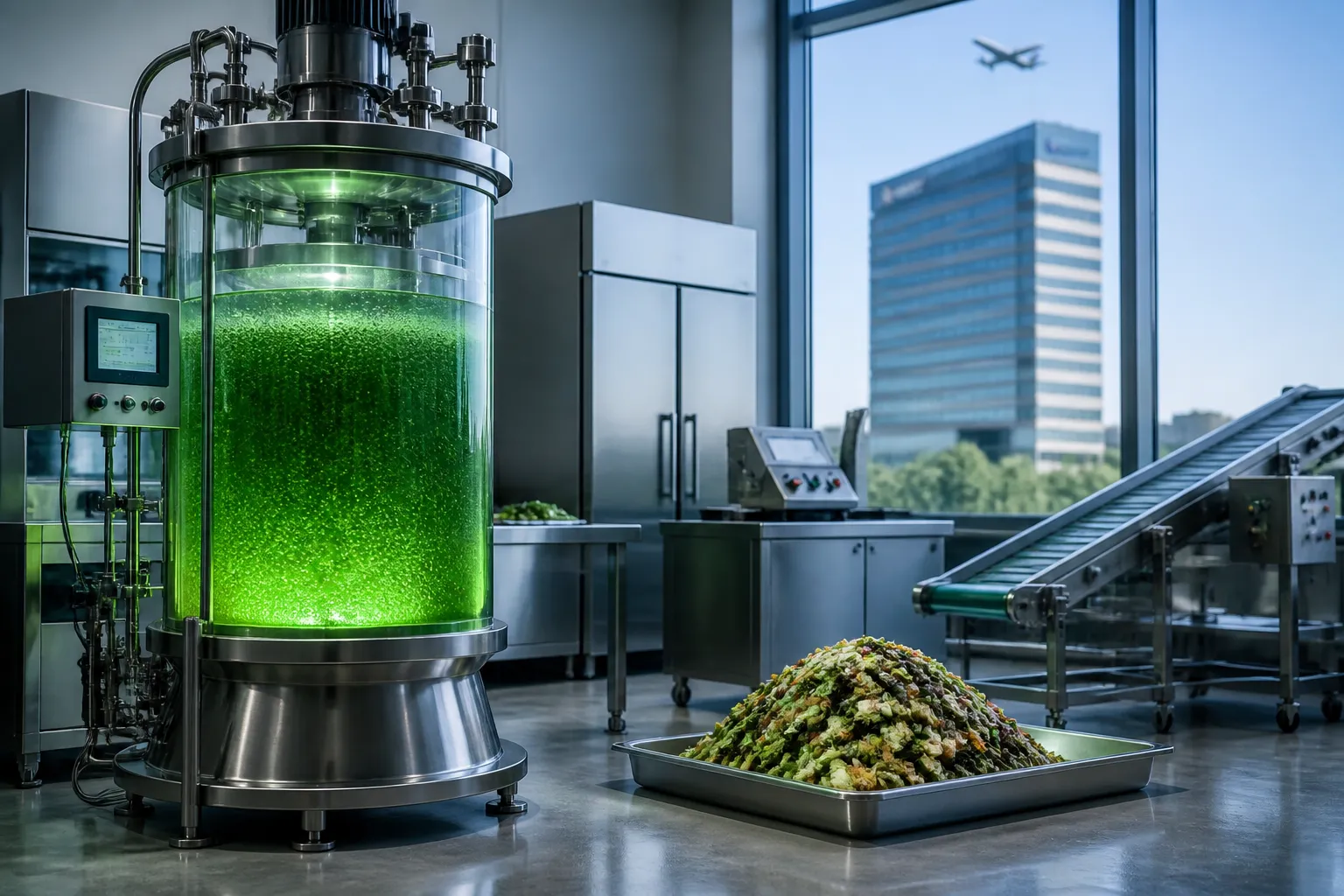
AlgaleX’s breakthrough lies in an AI‑driven cultivation control system called Touji‑24. The platform predicts and optimises growth conditions in real time, enabling the company to feed algae cultures with low‑cost, inconsistent inputs—such as food waste and by‑products from a local awamori distillery—while still producing a high‑yield, nutrient‑rich biomass.
The firm already markets Umamo, a powdered edible algae that contains roughly 13 times the docosahexaenoic acid (DHA) found in a gram of mackerel. Beyond its impressive omega‑3 content, Umamo delivers a savory umami flavour that has attracted restaurants and retailers in Japan and abroad.
"ANA HD recognizes AlgaleX has built something rare: a technology that solves a real societal problem while creating durable economic value," said Yoshiaki Tsuda, Executive Vice President and Director of the Future Creation Hub at ANA HD. "Its AI‑driven cultivation platform is both powerful and adaptable, and the team pairs an ambitious vision with a proven ability to execute in the lab and in the market. ANA HD believes that algae technology born in Okinawa can become part of how the world feeds itself, and we aim to support AlgaleX’s future business development."
AlgaleX’s BioFarm business extends beyond product manufacturing. The firm offers research and development support to other companies interested in algae cultivation, positioning itself as a hub for algae‑based biorefineries.
The investment follows a similar move by Global Brain, which also committed capital to AlgaleX through the same ANA Future Frontier Fund. The partnership signals a growing interest among Japanese corporates in sustainable bio‑economy ventures that can repurpose waste streams.
Industry analysts note that AI‑optimised algae cultivation could reduce production costs and improve yield by up to 30–50 %, according to studies published in 2025 and 2026. If AlgaleX’s technology scales, it could contribute to Japan’s broader sustainability goals by providing a low‑carbon protein source and a method for managing food waste.
ANA Holdings has a history of investing in startups that align with its long‑term strategy. Earlier this year, the airline’s venture fund also backed a residential‑housing startup that repurposes vacant rural homes. The algae investment fits within ANA’s broader focus on future‑frontier technologies that can generate new revenue streams while addressing societal challenges.
As of now, AlgaleX has not disclosed a revenue figure for Umamo, but the product has seen growing adoption in the Japanese foodservice sector. The company plans to expand production capacity in the coming months and to explore international markets.
ANA’s investment does not change the airline’s core operations, but it does signal a willingness to diversify its portfolio into high‑growth biotech sectors. The company has not announced any immediate plans to integrate AlgaleX’s products into its flight catering services.
The 8 billion‑yen stake represents a significant commitment from ANA’s venture fund, which has a total capital base of roughly 100 billion yen. The investment is expected to provide AlgaleX with the resources needed to accelerate product development, scale its BioFarm operations, and pursue additional partnerships.
In the coming weeks, analysts will watch for AlgaleX’s next funding round and any regulatory approvals required for large‑scale algae cultivation. ANA Holdings will likely report on the investment’s progress in its upcoming quarterly financial statements.
The partnership underscores a broader trend of corporates investing in sustainable biotechnologies that can turn waste into value. Whether AlgaleX’s AI‑driven platform can achieve the projected efficiencies remains to be seen, but the investment marks a notable step in Japan’s pursuit of a circular bio‑economy.
AlgaleX’s breakthrough lies in an AI‑driven cultivation control system called Touji‑24. The platform predicts and optimises growth conditions in real time, enabling the company to feed algae cultures with low‑cost, inconsistent inputs—such as food waste and by‑products from a local awamori distillery—while still producing a high‑yield, nutrient‑rich biomass.
The firm already markets Umamo, a powdered edible algae that contains roughly 13 times the docosahexaenoic acid (DHA) found in a gram of mackerel. Beyond its impressive omega‑3 content, Umamo delivers a savory umami flavour that has attracted restaurants and retailers in Japan and abroad.
"ANA HD recognizes AlgaleX has built something rare: a technology that solves a real societal problem while creating durable economic value," said Yoshiaki Tsuda, Executive Vice President and Director of the Future Creation Hub at ANA HD. "Its AI‑driven cultivation platform is both powerful and adaptable, and the team pairs an ambitious vision with a proven ability to execute in the lab and in the market. ANA HD believes that algae technology born in Okinawa can become part of how the world feeds itself, and we aim to support AlgaleX’s future business development."
AlgaleX’s BioFarm business extends beyond product manufacturing. The firm offers research and development support to other companies interested in algae cultivation, positioning itself as a hub for algae‑based biorefineries.
The investment follows a similar move by Global Brain, which also committed capital to AlgaleX through the same ANA Future Frontier Fund. The partnership signals a growing interest among Japanese corporates in sustainable bio‑economy ventures that can repurpose waste streams.
Industry analysts note that AI‑optimised algae cultivation could reduce production costs and improve yield by up to 30–50 %, according to studies published in 2025 and 2026. If AlgaleX’s technology scales, it could contribute to Japan’s broader sustainability goals by providing a low‑carbon protein source and a method for managing food waste.
ANA Holdings has a history of investing in startups that align with its long‑term strategy. Earlier this year, the airline’s venture fund also backed a residential‑housing startup that repurposes vacant rural homes. The algae investment fits within ANA’s broader focus on future‑frontier technologies that can generate new revenue streams while addressing societal challenges.
As of now, AlgaleX has not disclosed a revenue figure for Umamo, but the product has seen growing adoption in the Japanese foodservice sector. The company plans to expand production capacity in the coming months and to explore international markets.
ANA’s investment does not change the airline’s core operations, but it does signal a willingness to diversify its portfolio into high‑growth biotech sectors. The company has not announced any immediate plans to integrate AlgaleX’s products into its flight catering services.
The 8 billion‑yen stake represents a significant commitment from ANA’s venture fund, which has a total capital base of roughly 100 billion yen. The investment is expected to provide AlgaleX with the resources needed to accelerate product development, scale its BioFarm operations, and pursue additional partnerships.
In the coming weeks, analysts will watch for AlgaleX’s next funding round and any regulatory approvals required for large‑scale algae cultivation. ANA Holdings will likely report on the investment’s progress in its upcoming quarterly financial statements.
The partnership underscores a broader trend of corporates investing in sustainable biotechnologies that can turn waste into value. Whether AlgaleX’s AI‑driven platform can achieve the projected efficiencies remains to be seen, but the investment marks a notable step in Japan’s pursuit of a circular bio‑economy.








