Blab Business
West Asia Conflict Pressures Gujarat MSMEs, Threatening Margins and Exports
A flare‑up in West Asia is already tightening the belt on Gujarat’s micro‑, small‑ and medium‑enterprise (MSME) sector. A recent Crisil Intelligence report projects that the war could trim revenue growth by roughly 100 basis points for MSMEs this fiscal year and compress operating margins by 50‑100 basis points across key industrial clusters.
The report points to Gujarat’s export‑oriented, energy‑intensive clusters as the most exposed. In Surat, textile and gems‑and‑jewellery firms are paying more for gas, petrochemical derivatives and imported raw materials. Ahmedabad’s dyes and pigments manufacturers are similarly hit, as the chemicals they rely on have risen in the global market. Morbi’s ceramic factories and Vadodara’s chemical units are also vulnerable; Morbi has already reported a slowdown as gas supplies from Gulf ports have become erratic.
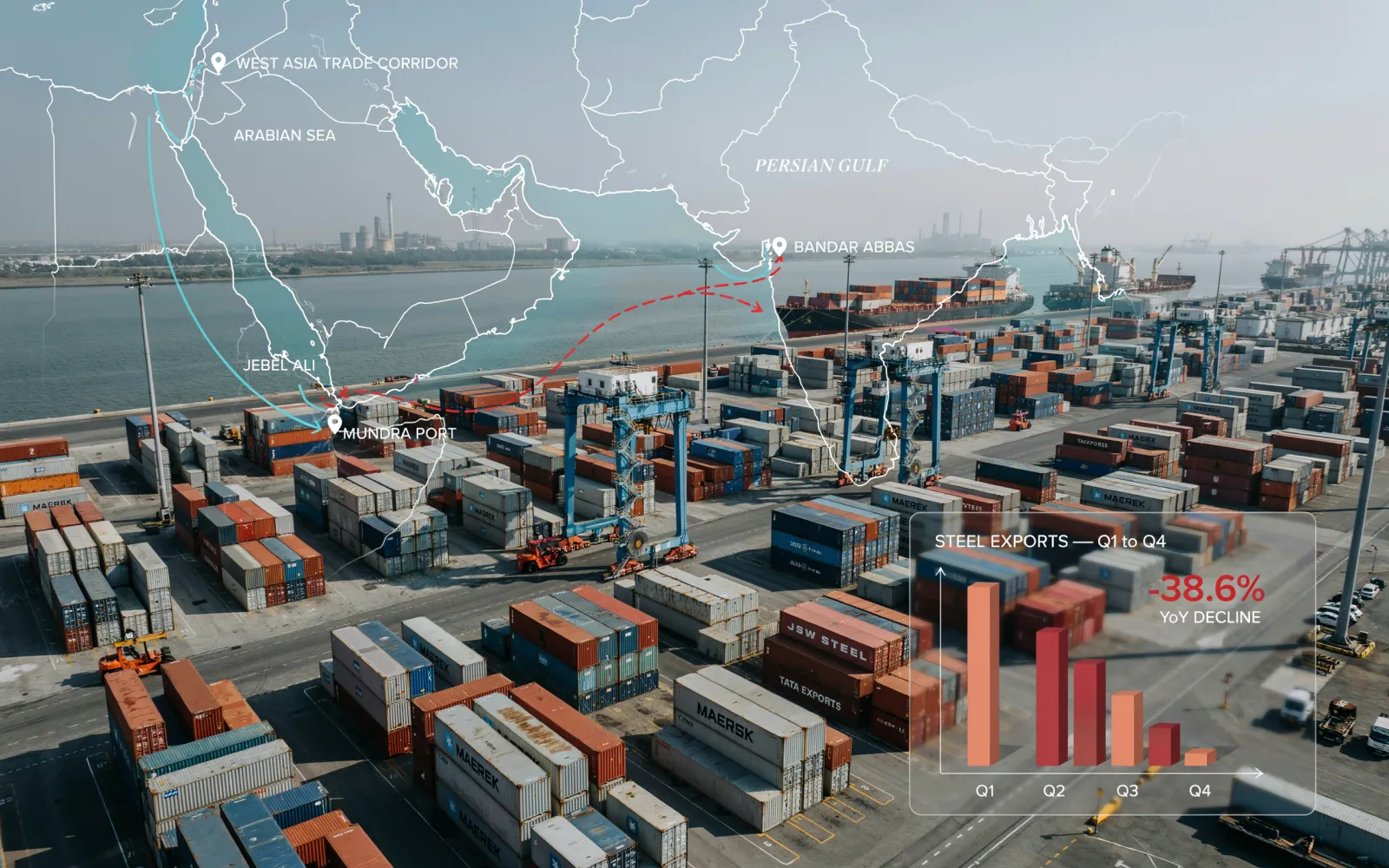
Industry insiders note that natural‑gas prices have spiked, and petrochemical derivatives used in dyes, pigments and ceramic glazes are now more expensive. Shipping‑route disruptions have further compounded the cost pressure, driving up freight charges and delaying deliveries of critical inputs.
Export sentiment in Middle‑East markets has weakened, the report says. Gujarat’s clusters that target Gulf economies—especially Surat’s diamond and textile exporters—are seeing a decline in orders. The West Asia war has also hit emerging Gulf markets that Indian exporters were targeting, further dampening demand.
Morbi, known as the “ceramics capital of India,” has begun to see a slow revival as inventories have been depleted. Yet the city’s ceramic industry still faces the risk of a production halt if gas supplies remain unstable. A separate article in The Hindu highlighted that the city’s ceramic factories are on the brink of shutdown due to the gas crisis, underscoring the fragility of the supply chain.
Surat’s textile exporters have reported that global trade‑route disruptions and U.S. tariffs have dented export orders. The sector, which supplies a significant share of the world’s gold‑ and silver‑embellished fabrics, is also exposed to U.S. tariff policies that could affect its competitiveness.
The impact on Gujarat’s MSMEs is two‑fold: rising costs on one side and limited pricing power on the other. Unlike larger firms, smaller businesses lack the financial cushion to absorb prolonged volatility in energy and raw‑material prices, disruptions in shipping routes, and reduced export demand.
Crisil’s findings come amid a broader context of supply‑chain instability and rising input costs that have already been affecting Indian MSMEs across the country. While the pandemic had a uniform impact on both large and small firms, the West Asia conflict is expected to hit small and medium enterprises harder.
The economic implications extend beyond individual firms. Gujarat’s economy, which accounts for 30.7% of India’s total exports, relies heavily on the sectors highlighted in the report. A contraction in MSME revenue growth and margin compression could ripple through the state’s industrial output and employment.
In response, state officials have urged MSMEs to explore alternative supply chains and to seek government assistance under schemes such as Udyam Registration, which offers credit and subsidy access. The Gujarat government has also announced plans to enhance local sourcing of critical inputs and to improve energy infrastructure in key industrial clusters.
The situation remains fluid. The West Asia conflict continues to influence global commodity prices, while U.S. and other countries’ tariff policies add further uncertainty. MSMEs in Gujarat are monitoring the evolving landscape closely, as any escalation could further erode margins or delay export shipments.
As the fiscal year draws to a close, Gujarat’s MSMEs will be preparing for upcoming earnings reports and potential regulatory reviews. The state’s industrial leaders are also keeping an eye on forthcoming trade agreements, such as the India‑EU free trade deal, which could offer new export opportunities but also introduce new compliance requirements.
In summary, the West Asia conflict is already tightening the cost and export environment for Gujarat’s MSMEs. The sector faces a dual challenge of rising input costs and constrained pricing power, with potential margin compression and revenue slowdown. The coming months will test the resilience of these enterprises as they navigate supply‑chain disruptions, tariff pressures, and a volatile global market.
The report points to Gujarat’s export‑oriented, energy‑intensive clusters as the most exposed. In Surat, textile and gems‑and‑jewellery firms are paying more for gas, petrochemical derivatives and imported raw materials. Ahmedabad’s dyes and pigments manufacturers are similarly hit, as the chemicals they rely on have risen in the global market. Morbi’s ceramic factories and Vadodara’s chemical units are also vulnerable; Morbi has already reported a slowdown as gas supplies from Gulf ports have become erratic.
Industry insiders note that natural‑gas prices have spiked, and petrochemical derivatives used in dyes, pigments and ceramic glazes are now more expensive. Shipping‑route disruptions have further compounded the cost pressure, driving up freight charges and delaying deliveries of critical inputs.
Export sentiment in Middle‑East markets has weakened, the report says. Gujarat’s clusters that target Gulf economies—especially Surat’s diamond and textile exporters—are seeing a decline in orders. The West Asia war has also hit emerging Gulf markets that Indian exporters were targeting, further dampening demand.
Morbi, known as the “ceramics capital of India,” has begun to see a slow revival as inventories have been depleted. Yet the city’s ceramic industry still faces the risk of a production halt if gas supplies remain unstable. A separate article in The Hindu highlighted that the city’s ceramic factories are on the brink of shutdown due to the gas crisis, underscoring the fragility of the supply chain.
Surat’s textile exporters have reported that global trade‑route disruptions and U.S. tariffs have dented export orders. The sector, which supplies a significant share of the world’s gold‑ and silver‑embellished fabrics, is also exposed to U.S. tariff policies that could affect its competitiveness.
The impact on Gujarat’s MSMEs is two‑fold: rising costs on one side and limited pricing power on the other. Unlike larger firms, smaller businesses lack the financial cushion to absorb prolonged volatility in energy and raw‑material prices, disruptions in shipping routes, and reduced export demand.
Crisil’s findings come amid a broader context of supply‑chain instability and rising input costs that have already been affecting Indian MSMEs across the country. While the pandemic had a uniform impact on both large and small firms, the West Asia conflict is expected to hit small and medium enterprises harder.
The economic implications extend beyond individual firms. Gujarat’s economy, which accounts for 30.7% of India’s total exports, relies heavily on the sectors highlighted in the report. A contraction in MSME revenue growth and margin compression could ripple through the state’s industrial output and employment.
In response, state officials have urged MSMEs to explore alternative supply chains and to seek government assistance under schemes such as Udyam Registration, which offers credit and subsidy access. The Gujarat government has also announced plans to enhance local sourcing of critical inputs and to improve energy infrastructure in key industrial clusters.
The situation remains fluid. The West Asia conflict continues to influence global commodity prices, while U.S. and other countries’ tariff policies add further uncertainty. MSMEs in Gujarat are monitoring the evolving landscape closely, as any escalation could further erode margins or delay export shipments.
As the fiscal year draws to a close, Gujarat’s MSMEs will be preparing for upcoming earnings reports and potential regulatory reviews. The state’s industrial leaders are also keeping an eye on forthcoming trade agreements, such as the India‑EU free trade deal, which could offer new export opportunities but also introduce new compliance requirements.
In summary, the West Asia conflict is already tightening the cost and export environment for Gujarat’s MSMEs. The sector faces a dual challenge of rising input costs and constrained pricing power, with potential margin compression and revenue slowdown. The coming months will test the resilience of these enterprises as they navigate supply‑chain disruptions, tariff pressures, and a volatile global market.








