Blab Business
Fifth Avenues Retail Boom Meets Uncertain Future of Fifth Redesign Under Mamdani Administration
When you step onto Fifth Avenue between East 40th and East 61st Streets, you’re walking through New York’s most lucrative tax corridor, with the stretch generating roughly $1.53 billion in office and retail property taxes each year, the Fifth Avenue Association business‑improvement district reports.
Luxury brands have made the avenue their playground. In 2023 Prada paid $835 million for 720 and 724 Fifth Avenue, while Rolex is preparing a new tower at East 52nd Street that will house a flagship store at its base. LVMH is also eyeing the stretch, planning a 25‑story tower crowned by a luxury emporium at East 57th Street.
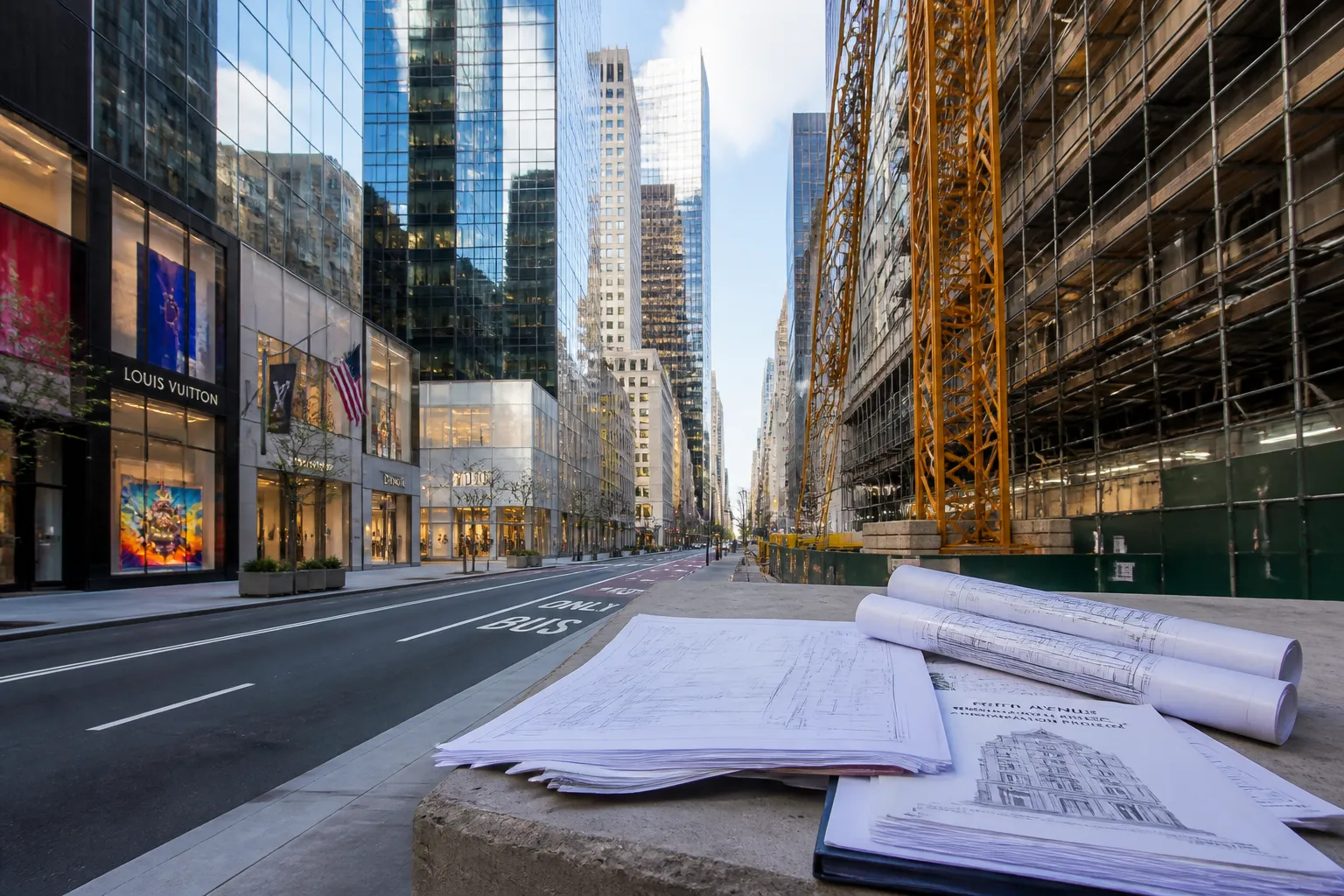
The city is poised to approve a $402 million “Future of Fifth” redesign that will trim automobile traffic to a single lane and widen sidewalks to accommodate pedestrian seating. Conceived under former Mayor Eric Adams and the Economic Development Corporation (EDC), the plan now sits under review by Mayor Zohran Mamdani’s EDC and the Department of Transportation, with construction slated to begin in 2027.
A key point of contention is the absence of a bike lane, a feature Transportation Alternatives has championed. Most merchants on the avenue, according to the Fifth Avenue Association BID, oppose a bike lane. The redesign does include a bus lane, but the association’s CEO, Madelyn Wils, notes that many express buses run at less than 10 % capacity.
Utility work looms large. The redesign will require new water mains, sewers, and electrical infrastructure, yet the city has yet to publish a timetable for these underground projects. Wils cautioned that coordinated work would mitigate disruption, recalling the long‑term street closures during the 1990s Wall Street Area Water Main Project.
Retail activity remains robust. Cushman & Wakefield broker Steven Soutendijk said tenant interest in the corridor “exceeds anything we’ve seen since before Covid.” CBRE’s Andrew Goldberg added that the arrival of California‑based sportswear brand Edikted at 595 Fifth Avenue signals growing appeal to younger consumers.
Despite this enthusiasm, several high‑profile storefronts sit vacant. The former Dior space at the GM Building, the former Henri Bendel site at 712 Fifth Avenue, and the 673 Fifth Avenue location owned by a Chinese company have all remained empty for more than a decade.
The Fifth Avenue Association BID remains optimistic that the redesign will boost pedestrian traffic and, in turn, retail sales. Wils said the association had “compromised with the city” on certain points of the plan and that the project would “lead to even greater prosperity in the future.” However, she also warned that outcomes would hinge on the new administration’s support.
Mayor Mamdani’s administration has yet to appoint a president for the EDC, leaving the agency leaderless for several months. The vacancy has raised concerns among business leaders about the city’s focus on economic development.
The redesign’s timeline remains uncertain. The city has not released a detailed schedule for the utility upgrades or for the start of construction, leaving the Fifth Avenue Association and other stakeholders awaiting final approval.
In short, Fifth Avenue continues to be a lucrative retail corridor that attracts luxury brands and new tenants. Yet the proposed Future of Fifth redesign faces questions about its scope, the inclusion of a bike lane, utility coordination, and the leadership of the EDC under Mayor Mamdani—factors that will shape the avenue’s physical environment and economic trajectory in the coming years.
Luxury brands have made the avenue their playground. In 2023 Prada paid $835 million for 720 and 724 Fifth Avenue, while Rolex is preparing a new tower at East 52nd Street that will house a flagship store at its base. LVMH is also eyeing the stretch, planning a 25‑story tower crowned by a luxury emporium at East 57th Street.
The city is poised to approve a $402 million “Future of Fifth” redesign that will trim automobile traffic to a single lane and widen sidewalks to accommodate pedestrian seating. Conceived under former Mayor Eric Adams and the Economic Development Corporation (EDC), the plan now sits under review by Mayor Zohran Mamdani’s EDC and the Department of Transportation, with construction slated to begin in 2027.
A key point of contention is the absence of a bike lane, a feature Transportation Alternatives has championed. Most merchants on the avenue, according to the Fifth Avenue Association BID, oppose a bike lane. The redesign does include a bus lane, but the association’s CEO, Madelyn Wils, notes that many express buses run at less than 10 % capacity.
Utility work looms large. The redesign will require new water mains, sewers, and electrical infrastructure, yet the city has yet to publish a timetable for these underground projects. Wils cautioned that coordinated work would mitigate disruption, recalling the long‑term street closures during the 1990s Wall Street Area Water Main Project.
Retail activity remains robust. Cushman & Wakefield broker Steven Soutendijk said tenant interest in the corridor “exceeds anything we’ve seen since before Covid.” CBRE’s Andrew Goldberg added that the arrival of California‑based sportswear brand Edikted at 595 Fifth Avenue signals growing appeal to younger consumers.
Despite this enthusiasm, several high‑profile storefronts sit vacant. The former Dior space at the GM Building, the former Henri Bendel site at 712 Fifth Avenue, and the 673 Fifth Avenue location owned by a Chinese company have all remained empty for more than a decade.
The Fifth Avenue Association BID remains optimistic that the redesign will boost pedestrian traffic and, in turn, retail sales. Wils said the association had “compromised with the city” on certain points of the plan and that the project would “lead to even greater prosperity in the future.” However, she also warned that outcomes would hinge on the new administration’s support.
Mayor Mamdani’s administration has yet to appoint a president for the EDC, leaving the agency leaderless for several months. The vacancy has raised concerns among business leaders about the city’s focus on economic development.
The redesign’s timeline remains uncertain. The city has not released a detailed schedule for the utility upgrades or for the start of construction, leaving the Fifth Avenue Association and other stakeholders awaiting final approval.
In short, Fifth Avenue continues to be a lucrative retail corridor that attracts luxury brands and new tenants. Yet the proposed Future of Fifth redesign faces questions about its scope, the inclusion of a bike lane, utility coordination, and the leadership of the EDC under Mayor Mamdani—factors that will shape the avenue’s physical environment and economic trajectory in the coming years.








