Blab Business
Bank of Thailand Sets Course for Baht-Backed Stablecoin Amid Regional Digital-Currency Push
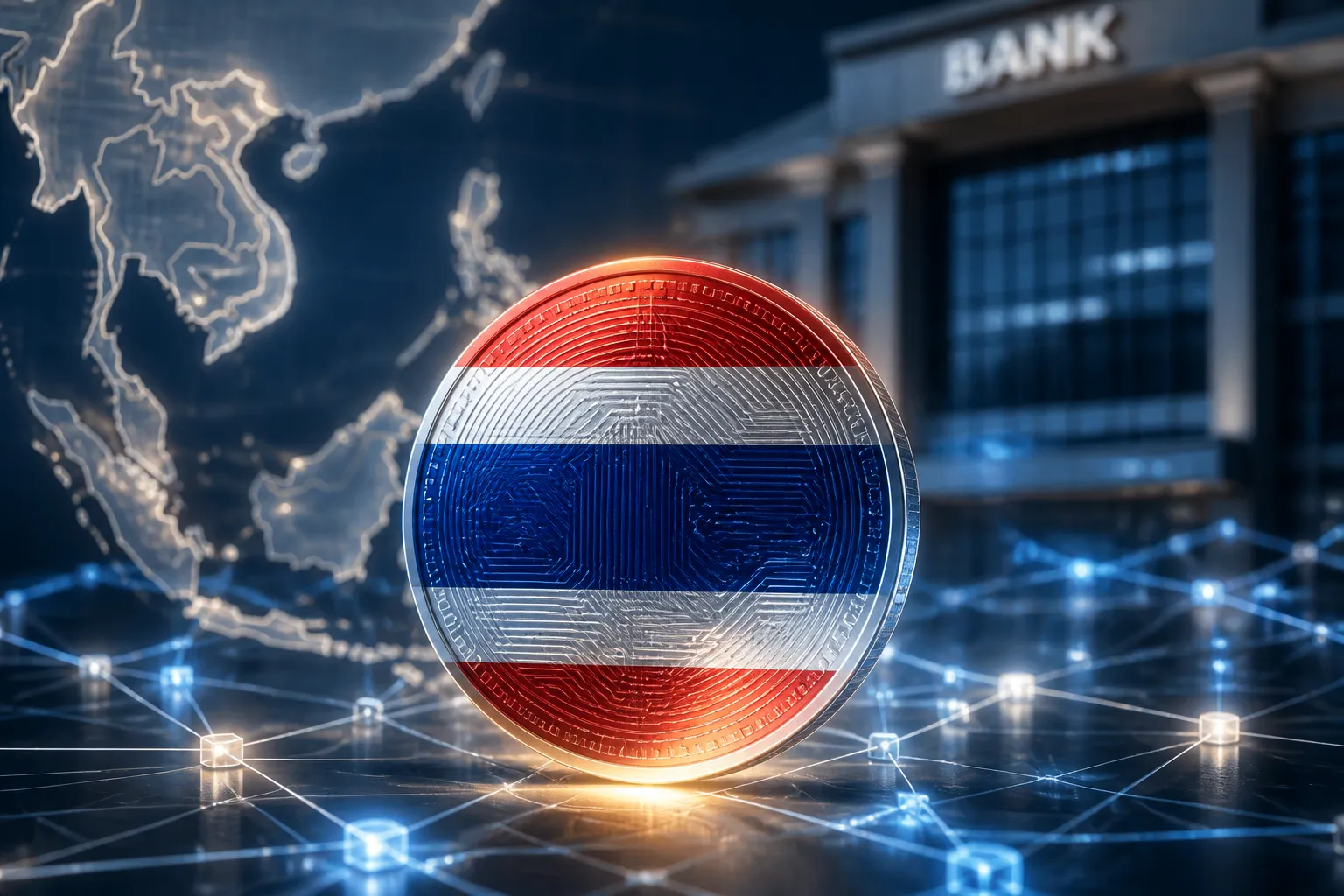
The Bank of Thailand (BoT) has announced a plan to issue a stablecoin pegged 1:1 to the Thai baht. The central bank will hold a public hearing on the proposal before the end of 2026 and has outlined strict requirements for any issuer.
Under the design, each stablecoin would be backed by an equivalent amount of baht held in reserve. If a licensed issuer creates 1 billion baht worth of tokens, it must simultaneously place 1 billion baht in reserve. The reserves are locked and cannot be used for other purposes, ensuring that the stablecoin can be redeemed for baht at any time. Issuers must obtain a licence from the BoT and will be subject to the central bank’s regulatory oversight.
In the first phase, the BoT intends to allow stablecoins to be used only for settlement between financial institutions. Additional use cases will be evaluated in later phases, according to BoT Governor Vitai Ratanakorn. The objective is to strengthen Thailand’s payment and settlement infrastructure, improve efficiency, and reduce transaction costs.
The stablecoin initiative is part of a broader regulatory sandbox that the BoT launched in 2024. The sandbox, known as the Programmable Payment Project, lets eight private operators test payment settlement and related financial innovations using distributed‑ledger technology and smart contracts. As of April 2026, three participants—TrueMoney, Bitkub Blockchain Technology, and Om Platform—have moved to the second phase of testing. Pilots include asset tokenisation payments, escrow services, and blockchain bridging. The projects aim to make digital‑asset transactions more convenient and transparent, and to enable atomic settlement where payments and asset transfers occur simultaneously.
A pilot for Purpose‑Bound Money (PBM) is also underway. It targets foreign tourists, allowing them to exchange digital assets for baht‑programmable payment tokens and use those tokens to pay for goods and services via QR codes at selected merchants. The pilot is limited to specific events and locations and tests payment conditions based on geographic location and merchant designation.
Regional peers are moving in similar directions. The Hong Kong Monetary Authority (HKMA) granted licences to HSBC and Standard Chartered Bank on 10 April 2026 to issue Hong Kong dollar‑referenced stablecoins under the Stablecoin Ordinance. Standard Chartered will operate its stablecoin through a joint venture, Anchorpoint Financial Ltd., which completed a full‑lifecycle test of its HKDAP token on the Ethereum mainnet in May 2026.
Singapore’s Monetary Authority introduced a regulatory framework in August 2023 for single‑currency stablecoins pegged to the Singapore dollar or any G10 currency. The framework requires value stability, capital and liquidity adequacy, redemption at par within five business days, and transparent disclosure of reserve management and audit results.
The Bank of Korea is studying won‑backed stablecoins while lawmakers debate legislation. Some proposals would allow non‑bank issuers, but regulators favour a model where issuers are majority‑owned by banks to leverage established risk‑management practices.
The BoT’s plan is still in the consultation stage. The central bank expects the public review to last about three months and will use the feedback to refine the framework. The next milestone is the public hearing, scheduled for late 2026, after which the BoT will finalize the regulatory rules. The outcome will determine whether Thai banks can issue a baht‑backed stablecoin and how it will fit into the country’s broader digital‑finance strategy.
In summary, Thailand is preparing a fully backed baht stablecoin with a 1:1 reserve model, limited initially to inter‑bank settlements. The initiative is supported by a regulatory sandbox that is already testing programmable payments and asset tokenisation. Regional developments in Hong Kong, Singapore, and South Korea provide a context for Thailand’s approach. The public hearing and final rulemaking in 2026 will decide the next steps for the stablecoin and its potential impact on Thailand’s payment infrastructure.
Under the design, each stablecoin would be backed by an equivalent amount of baht held in reserve. If a licensed issuer creates 1 billion baht worth of tokens, it must simultaneously place 1 billion baht in reserve. The reserves are locked and cannot be used for other purposes, ensuring that the stablecoin can be redeemed for baht at any time. Issuers must obtain a licence from the BoT and will be subject to the central bank’s regulatory oversight.
In the first phase, the BoT intends to allow stablecoins to be used only for settlement between financial institutions. Additional use cases will be evaluated in later phases, according to BoT Governor Vitai Ratanakorn. The objective is to strengthen Thailand’s payment and settlement infrastructure, improve efficiency, and reduce transaction costs.
The stablecoin initiative is part of a broader regulatory sandbox that the BoT launched in 2024. The sandbox, known as the Programmable Payment Project, lets eight private operators test payment settlement and related financial innovations using distributed‑ledger technology and smart contracts. As of April 2026, three participants—TrueMoney, Bitkub Blockchain Technology, and Om Platform—have moved to the second phase of testing. Pilots include asset tokenisation payments, escrow services, and blockchain bridging. The projects aim to make digital‑asset transactions more convenient and transparent, and to enable atomic settlement where payments and asset transfers occur simultaneously.
A pilot for Purpose‑Bound Money (PBM) is also underway. It targets foreign tourists, allowing them to exchange digital assets for baht‑programmable payment tokens and use those tokens to pay for goods and services via QR codes at selected merchants. The pilot is limited to specific events and locations and tests payment conditions based on geographic location and merchant designation.
Regional peers are moving in similar directions. The Hong Kong Monetary Authority (HKMA) granted licences to HSBC and Standard Chartered Bank on 10 April 2026 to issue Hong Kong dollar‑referenced stablecoins under the Stablecoin Ordinance. Standard Chartered will operate its stablecoin through a joint venture, Anchorpoint Financial Ltd., which completed a full‑lifecycle test of its HKDAP token on the Ethereum mainnet in May 2026.
Singapore’s Monetary Authority introduced a regulatory framework in August 2023 for single‑currency stablecoins pegged to the Singapore dollar or any G10 currency. The framework requires value stability, capital and liquidity adequacy, redemption at par within five business days, and transparent disclosure of reserve management and audit results.
The Bank of Korea is studying won‑backed stablecoins while lawmakers debate legislation. Some proposals would allow non‑bank issuers, but regulators favour a model where issuers are majority‑owned by banks to leverage established risk‑management practices.
The BoT’s plan is still in the consultation stage. The central bank expects the public review to last about three months and will use the feedback to refine the framework. The next milestone is the public hearing, scheduled for late 2026, after which the BoT will finalize the regulatory rules. The outcome will determine whether Thai banks can issue a baht‑backed stablecoin and how it will fit into the country’s broader digital‑finance strategy.
In summary, Thailand is preparing a fully backed baht stablecoin with a 1:1 reserve model, limited initially to inter‑bank settlements. The initiative is supported by a regulatory sandbox that is already testing programmable payments and asset tokenisation. Regional developments in Hong Kong, Singapore, and South Korea provide a context for Thailand’s approach. The public hearing and final rulemaking in 2026 will decide the next steps for the stablecoin and its potential impact on Thailand’s payment infrastructure.