Blab Business
Cherokee Nation Opens $470 Million W.W. Hastings Hospital in Tahlequah
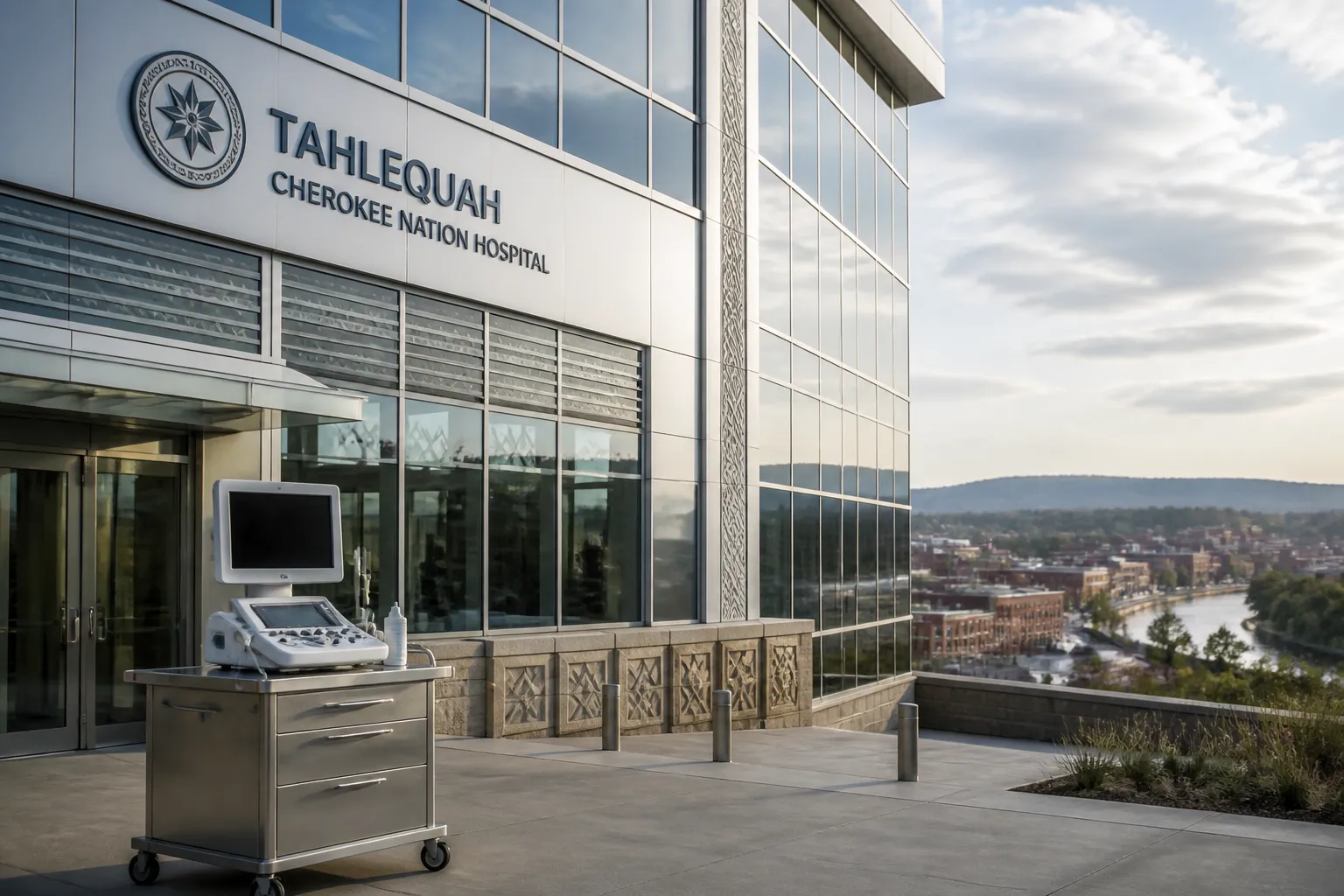
On July 11, 2026, the Cherokee Nation welcomed patients into its new six‑story, 400,000‑square‑foot W.W. Hastings Hospital, a $470 million replacement for the original facility that served the community since the mid‑1980s.
The new hospital, which bears the same name as its predecessor, expands capacity to 127 beds and introduces a range of specialty services. Among them are a neonatal intensive care unit, hospice care, a dedicated surgical center, and a rooftop helipad for rapid transport of critical patients.
Replacing a 180,000‑square‑foot building that once housed 56 beds, the new structure connects to the Cherokee Nation Outpatient Health Center via a skybridge. The integrated campus now houses emergency and intensive‑care units, imaging, laboratory, and pharmacy services, allowing seamless patient flow between inpatient and outpatient care.
Construction of the hospital is part of the Cherokee Nation’s Respond, Recover and Rebuild plan, which has invested roughly $1.12 billion in health‑care facilities and equipment over the past decade. The tribe’s 2025 economic‑impact report shows that Cherokee Nation Health Services generated more than $2 billion in statewide economic output during fiscal year 2025 and supported nearly 11,500 jobs in Oklahoma.
Employment at the new facility already exceeds 700 health‑care workers, and the Cherokee Nation has announced plans to add another 200 positions in fiscal year 2027.
The former hospital site will be transformed into the Cherokee Nation Nursing and Allied Health Education Center. A $30 million renovation project, announced earlier this year, will partner with the University of Oklahoma to create a satellite campus for the OU College of Nursing. The education center is slated to open in 2027 and forms part of the tribe’s broader effort to expand the health‑care workforce in the state.
The opening follows a series of milestones for the Cherokee Nation’s health‑care system. The tribe assumed operations of the original hospital in 2008, and since then has steadily expanded services and capacity. The new facility’s 127 beds represent a significant increase over the previous 56‑bed capacity, enabling the nation to serve a larger patient population and provide more advanced care.
The rooftop helipad enhances the ability to transport critically ill patients quickly, while the neonatal intensive care unit expands care for premature and high‑risk infants. Hospice services and a dedicated surgical center broaden the range of care available to residents of the Cherokee reservation and surrounding communities.
The integrated campus design, linking the inpatient hospital to the outpatient health center, is intended to streamline patient flow and improve coordination of care. The skybridge connection allows staff to move patients and equipment between the two facilities without exposure to external weather conditions.
The Cherokee Nation’s investment in health‑care infrastructure is part of a broader strategy to strengthen economic resilience on the reservation. The 2025 economic‑impact report highlighted that the health‑care sector contributes significantly to the state’s economy, both through direct employment and through the multiplier effects of medical services.
Looking ahead, the Cherokee Nation plans to continue expanding its health‑care services. The addition of 200 new positions in fiscal year 2027 is expected to support further growth in patient volume and service offerings. The partnership with the University of Oklahoma will also help address shortages of nursing and allied‑health professionals in the region.
The opening of the new W.W. Hastings Hospital marks a major milestone for the Cherokee Nation’s health‑care system. The facility’s expanded capacity, advanced services, and integrated campus design position the tribe to meet the evolving health needs of its citizens and the broader Oklahoma community.
The new hospital is located at 19780 E. Ross St., Tahlequah, and is part of the Cherokee Nation’s ongoing commitment to improving health outcomes and supporting economic development on the reservation.
The new hospital, which bears the same name as its predecessor, expands capacity to 127 beds and introduces a range of specialty services. Among them are a neonatal intensive care unit, hospice care, a dedicated surgical center, and a rooftop helipad for rapid transport of critical patients.
Replacing a 180,000‑square‑foot building that once housed 56 beds, the new structure connects to the Cherokee Nation Outpatient Health Center via a skybridge. The integrated campus now houses emergency and intensive‑care units, imaging, laboratory, and pharmacy services, allowing seamless patient flow between inpatient and outpatient care.
Construction of the hospital is part of the Cherokee Nation’s Respond, Recover and Rebuild plan, which has invested roughly $1.12 billion in health‑care facilities and equipment over the past decade. The tribe’s 2025 economic‑impact report shows that Cherokee Nation Health Services generated more than $2 billion in statewide economic output during fiscal year 2025 and supported nearly 11,500 jobs in Oklahoma.
Employment at the new facility already exceeds 700 health‑care workers, and the Cherokee Nation has announced plans to add another 200 positions in fiscal year 2027.
The former hospital site will be transformed into the Cherokee Nation Nursing and Allied Health Education Center. A $30 million renovation project, announced earlier this year, will partner with the University of Oklahoma to create a satellite campus for the OU College of Nursing. The education center is slated to open in 2027 and forms part of the tribe’s broader effort to expand the health‑care workforce in the state.
The opening follows a series of milestones for the Cherokee Nation’s health‑care system. The tribe assumed operations of the original hospital in 2008, and since then has steadily expanded services and capacity. The new facility’s 127 beds represent a significant increase over the previous 56‑bed capacity, enabling the nation to serve a larger patient population and provide more advanced care.
The rooftop helipad enhances the ability to transport critically ill patients quickly, while the neonatal intensive care unit expands care for premature and high‑risk infants. Hospice services and a dedicated surgical center broaden the range of care available to residents of the Cherokee reservation and surrounding communities.
The integrated campus design, linking the inpatient hospital to the outpatient health center, is intended to streamline patient flow and improve coordination of care. The skybridge connection allows staff to move patients and equipment between the two facilities without exposure to external weather conditions.
The Cherokee Nation’s investment in health‑care infrastructure is part of a broader strategy to strengthen economic resilience on the reservation. The 2025 economic‑impact report highlighted that the health‑care sector contributes significantly to the state’s economy, both through direct employment and through the multiplier effects of medical services.
Looking ahead, the Cherokee Nation plans to continue expanding its health‑care services. The addition of 200 new positions in fiscal year 2027 is expected to support further growth in patient volume and service offerings. The partnership with the University of Oklahoma will also help address shortages of nursing and allied‑health professionals in the region.
The opening of the new W.W. Hastings Hospital marks a major milestone for the Cherokee Nation’s health‑care system. The facility’s expanded capacity, advanced services, and integrated campus design position the tribe to meet the evolving health needs of its citizens and the broader Oklahoma community.
The new hospital is located at 19780 E. Ross St., Tahlequah, and is part of the Cherokee Nation’s ongoing commitment to improving health outcomes and supporting economic development on the reservation.