Blab Business
IBM Shares Plunge 25% After Earnings Miss, Mainframe Business Weaker Than Expected
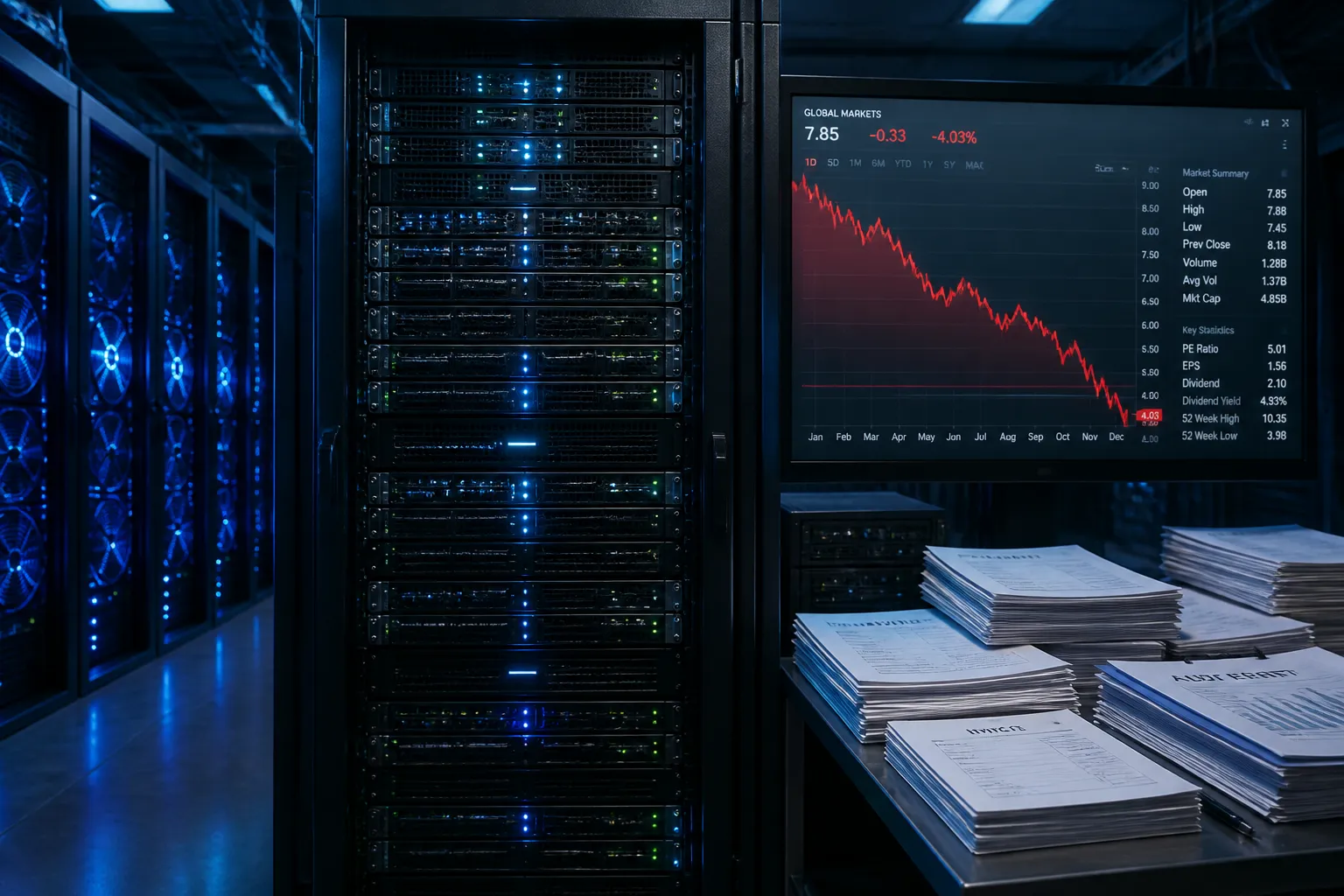
IBM’s shares tumbled 25.2% on Tuesday, marking the company’s steepest slide since the late 1960s, after it released a preliminary second‑quarter 2026 earnings report that fell short of Wall Street expectations.
The tech giant reported adjusted earnings per share of $2.93, missing the consensus estimate of $3.02, and revenue of $17.2 billion, below the $17.86 billion forecasted by analysts. The stock closed at $217.07, down from $242.28 at the close of the prior session.
In a statement, CEO Arvind Krishna explained that IBM had anticipated a low‑single‑digit decline in its z17 mainframe business for the quarter, but the actual drop was larger. He cited a global memory shortage that has tightened supply of high‑performance memory used in servers as a contributing factor.
Krishna also noted that clients had shifted capital expenditures toward servers, storage, and memory purchases in the last weeks of June to secure supply‑constrained infrastructure ahead of expected price increases. "This dynamic impacted client buying patterns," he said. "While we anticipated some supply‑chain related impact in our expectations, we did not anticipate the magnitude of the capex reprioritization," he added.
IDC analyst Ashish Nadkarni commented that the market’s reaction to Krishna’s warning was likely stronger than warranted, but that investors should not dismiss the CEO’s remarks. "It may not mean the collapse of the mainframe business, but it does mean that IBM is not isolated from the strategic reallocation of enterprise budgets in order to address the acceleration of AI adoption," Nadkarni wrote.
Prior to the drop, IBM’s shares had fallen 4.8% year‑to‑date; the recent decline has pushed the loss to 26%. Competitors have also struggled: Oracle shares are down 33% YTD, Microsoft 20%, and Accenture 50%.
IBM’s earnings call is scheduled for July 22. The company’s investor‑relations website lists the upcoming call and provides a link to the preliminary earnings release.
The company has long focused on hybrid cloud and artificial‑intelligence solutions, with the z17 mainframe positioned as a core platform for enterprise workloads. The latest results suggest that the shift in customer spending toward AI‑enabled servers and memory has outpaced the mainframe’s revenue growth.
Revenue fell $0.66 billion from the consensus estimate, a 3.7% shortfall, while the EPS miss of $0.09 reflects a 3% gap relative to expectations. Guidance for the full year was not disclosed in the preliminary release.
The global memory shortage has affected multiple technology vendors, and IBM’s statement indicates that the shortage has had a tangible impact on its hardware sales. The CEO acknowledged the shortage as a contributing factor but did not break down its effect on specific product lines.
Investors and analysts will likely focus on IBM’s ability to navigate supply‑chain constraints while continuing to invest in AI and cloud services. The upcoming earnings call should shed light on the company’s revenue mix, mainframe performance, and guidance for the remainder of the fiscal year.
In summary, IBM’s shares fell 25% after preliminary earnings missed expectations, driven by a weaker mainframe business and a global memory shortage that has constrained server sales. The CEO highlighted a shift in customer capital expenditures toward AI‑enabled infrastructure, which has impacted the company’s revenue and earnings. IBM will provide additional details in its earnings call on July 22.
The tech giant reported adjusted earnings per share of $2.93, missing the consensus estimate of $3.02, and revenue of $17.2 billion, below the $17.86 billion forecasted by analysts. The stock closed at $217.07, down from $242.28 at the close of the prior session.
In a statement, CEO Arvind Krishna explained that IBM had anticipated a low‑single‑digit decline in its z17 mainframe business for the quarter, but the actual drop was larger. He cited a global memory shortage that has tightened supply of high‑performance memory used in servers as a contributing factor.
Krishna also noted that clients had shifted capital expenditures toward servers, storage, and memory purchases in the last weeks of June to secure supply‑constrained infrastructure ahead of expected price increases. "This dynamic impacted client buying patterns," he said. "While we anticipated some supply‑chain related impact in our expectations, we did not anticipate the magnitude of the capex reprioritization," he added.
IDC analyst Ashish Nadkarni commented that the market’s reaction to Krishna’s warning was likely stronger than warranted, but that investors should not dismiss the CEO’s remarks. "It may not mean the collapse of the mainframe business, but it does mean that IBM is not isolated from the strategic reallocation of enterprise budgets in order to address the acceleration of AI adoption," Nadkarni wrote.
Prior to the drop, IBM’s shares had fallen 4.8% year‑to‑date; the recent decline has pushed the loss to 26%. Competitors have also struggled: Oracle shares are down 33% YTD, Microsoft 20%, and Accenture 50%.
IBM’s earnings call is scheduled for July 22. The company’s investor‑relations website lists the upcoming call and provides a link to the preliminary earnings release.
The company has long focused on hybrid cloud and artificial‑intelligence solutions, with the z17 mainframe positioned as a core platform for enterprise workloads. The latest results suggest that the shift in customer spending toward AI‑enabled servers and memory has outpaced the mainframe’s revenue growth.
Revenue fell $0.66 billion from the consensus estimate, a 3.7% shortfall, while the EPS miss of $0.09 reflects a 3% gap relative to expectations. Guidance for the full year was not disclosed in the preliminary release.
The global memory shortage has affected multiple technology vendors, and IBM’s statement indicates that the shortage has had a tangible impact on its hardware sales. The CEO acknowledged the shortage as a contributing factor but did not break down its effect on specific product lines.
Investors and analysts will likely focus on IBM’s ability to navigate supply‑chain constraints while continuing to invest in AI and cloud services. The upcoming earnings call should shed light on the company’s revenue mix, mainframe performance, and guidance for the remainder of the fiscal year.
In summary, IBM’s shares fell 25% after preliminary earnings missed expectations, driven by a weaker mainframe business and a global memory shortage that has constrained server sales. The CEO highlighted a shift in customer capital expenditures toward AI‑enabled infrastructure, which has impacted the company’s revenue and earnings. IBM will provide additional details in its earnings call on July 22.