Blab Business
Nike Faces Continued Sales Slump and Capital Allocation Scrutiny Ahead of FY2027 Guidance
Nike, Inc. (NKE) is confronting a prolonged sales slowdown that has prompted a shift in analyst sentiment and raised questions about the company’s capital‑allocation strategy. In January, the author of a recent equity research note reiterated a Sell rating on Nike, citing weak sales and soft demand as the primary drivers of the downgrade. The rating was later revised to Hold as the valuation began to reflect the company’s ongoing turnaround challenges and an extended recovery timeframe.
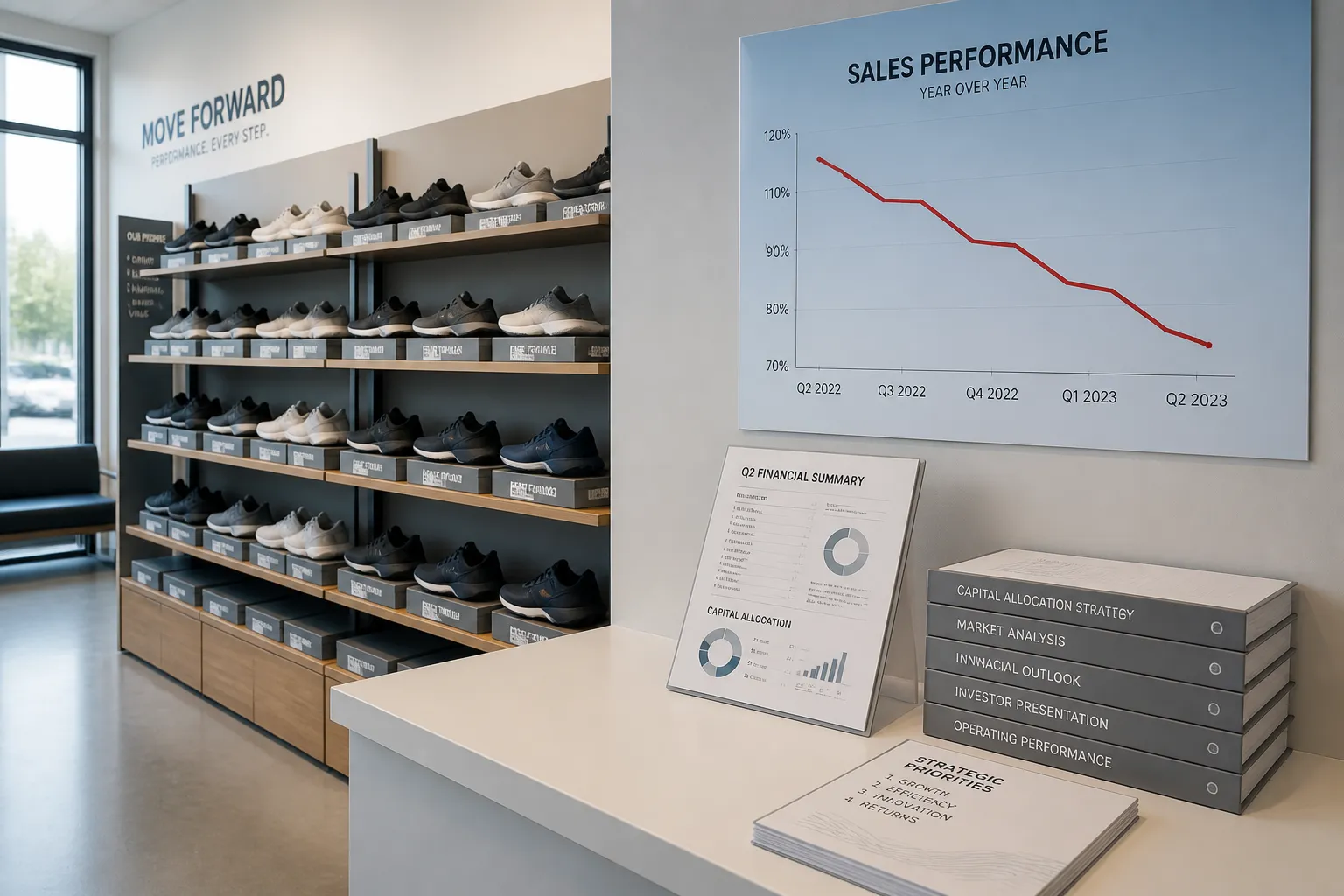
Nike’s most recent quarterly results reinforce the narrative of a struggling business. In fiscal 2025 Q4, the company reported revenue that was 1 % lower than the same period a year earlier, placing sales at multiyear lows. Guidance for the first quarter of fiscal 2027 projects further declines, suggesting that the downturn may persist into the next fiscal year. Gross‑margin performance, however, has shown signs of stabilization. After a collapse of 440 basis points to 40.3 % in Q4 2025—driven by aggressive inventory discounts and higher supply‑chain costs—margin figures have begun to recover, offering a modest bright spot.
Earnings per share (EPS) for Q4 2025 exceeded expectations, largely due to a one‑off tariff‑recovery benefit. The company’s earnings growth was not driven by core operating performance but by a temporary adjustment to U.S. import duties. Despite the EPS beat, Nike did not announce any share‑repurchase program for the quarter, a decision that has drawn scrutiny given the company’s 40 % decline in share price over the past year. The absence of buybacks raises questions about management’s view of the firm’s intrinsic value and its willingness to return capital to shareholders.
Nike’s product‑portfolio strategy has also been in the spotlight. The company recently removed approximately $2 billion of classic franchises, including certain legacy footwear lines, in an effort to focus on sport‑led innovation and premiumization. This shift is intended to support early signs of gross‑margin improvement and to align the brand with higher‑margin product categories. The move is part of a broader turnaround plan that includes tightening supply‑chain costs and reducing discounting.
Financially, Nike’s fiscal 2025 results showed revenue of $46.31 billion, a decline of 9.88 % from the previous year, and net income of $3.22 billion, down 43.53 %. Non‑U.S. brand and Converse sales accounted for roughly 57 % of total revenue, underscoring the company’s heavy reliance on international markets. While the company’s brand remains one of the most valuable in the sports sector, the recent earnings data suggest that market share gains have been limited.
Investor sentiment has been mixed. Analysts have noted that the company’s guidance for Q1 FY2027 indicates a continued downward trend in sales, which could weigh on the stock’s valuation multiples. The lack of a buyback program, coupled with the stock’s steep decline, has led some market participants to question whether Nike’s management is fully committed to returning value to shareholders.
Looking ahead, Nike’s next earnings release is scheduled for December 19, 2026. The company will need to address the persistent sales slump, demonstrate continued margin recovery, and clarify its capital‑allocation policy to restore investor confidence. Until then, the company’s trajectory remains uncertain, with the potential for further declines in revenue and earnings if the current market conditions persist.
In summary, Nike is grappling with a sustained sales decline, a cautious approach to capital allocation, and a product‑portfolio overhaul aimed at higher margins. The company’s upcoming earnings report will be a key indicator of whether its turnaround strategy can reverse the current trend and justify a more favorable valuation.
Nike’s most recent quarterly results reinforce the narrative of a struggling business. In fiscal 2025 Q4, the company reported revenue that was 1 % lower than the same period a year earlier, placing sales at multiyear lows. Guidance for the first quarter of fiscal 2027 projects further declines, suggesting that the downturn may persist into the next fiscal year. Gross‑margin performance, however, has shown signs of stabilization. After a collapse of 440 basis points to 40.3 % in Q4 2025—driven by aggressive inventory discounts and higher supply‑chain costs—margin figures have begun to recover, offering a modest bright spot.
Earnings per share (EPS) for Q4 2025 exceeded expectations, largely due to a one‑off tariff‑recovery benefit. The company’s earnings growth was not driven by core operating performance but by a temporary adjustment to U.S. import duties. Despite the EPS beat, Nike did not announce any share‑repurchase program for the quarter, a decision that has drawn scrutiny given the company’s 40 % decline in share price over the past year. The absence of buybacks raises questions about management’s view of the firm’s intrinsic value and its willingness to return capital to shareholders.
Nike’s product‑portfolio strategy has also been in the spotlight. The company recently removed approximately $2 billion of classic franchises, including certain legacy footwear lines, in an effort to focus on sport‑led innovation and premiumization. This shift is intended to support early signs of gross‑margin improvement and to align the brand with higher‑margin product categories. The move is part of a broader turnaround plan that includes tightening supply‑chain costs and reducing discounting.
Financially, Nike’s fiscal 2025 results showed revenue of $46.31 billion, a decline of 9.88 % from the previous year, and net income of $3.22 billion, down 43.53 %. Non‑U.S. brand and Converse sales accounted for roughly 57 % of total revenue, underscoring the company’s heavy reliance on international markets. While the company’s brand remains one of the most valuable in the sports sector, the recent earnings data suggest that market share gains have been limited.
Investor sentiment has been mixed. Analysts have noted that the company’s guidance for Q1 FY2027 indicates a continued downward trend in sales, which could weigh on the stock’s valuation multiples. The lack of a buyback program, coupled with the stock’s steep decline, has led some market participants to question whether Nike’s management is fully committed to returning value to shareholders.
Looking ahead, Nike’s next earnings release is scheduled for December 19, 2026. The company will need to address the persistent sales slump, demonstrate continued margin recovery, and clarify its capital‑allocation policy to restore investor confidence. Until then, the company’s trajectory remains uncertain, with the potential for further declines in revenue and earnings if the current market conditions persist.
In summary, Nike is grappling with a sustained sales decline, a cautious approach to capital allocation, and a product‑portfolio overhaul aimed at higher margins. The company’s upcoming earnings report will be a key indicator of whether its turnaround strategy can reverse the current trend and justify a more favorable valuation.