Blab Business
Indonesia Eyes Global Coffee Leadership as East Java Drives 780,000-Ton Production
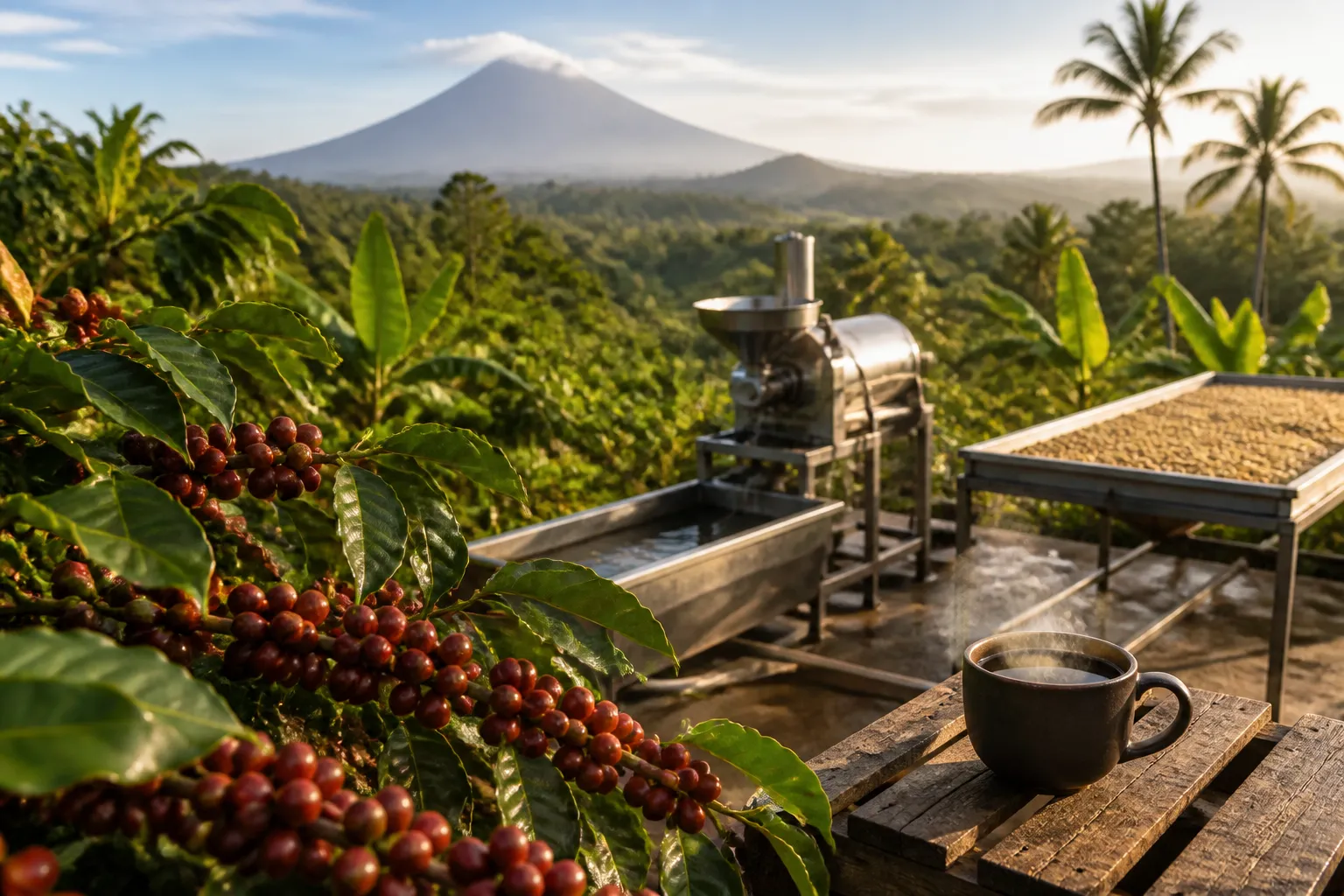
Java’s green beans are brewing a global ambition. In 2025, Indonesia confirmed it is the world’s fourth‑largest coffee producer, shipping 780,000 metric tons of green coffee beans. Most of that output comes from the island of Java itself, with East Java alone supplying 53,000 tons a year, according to Rifki Ismal, Deputy Head of Bank Indonesia’s East Java Representative Office.
East Java’s contribution eclipses that of Central and West Java, each of which produce roughly 25,000 tons annually. The province’s edge is attributed to its favorable microclimates and an established network of smallholder farmers that together form the backbone of Indonesia’s coffee supply chain.
Bank Indonesia (BI) is positioning the country to strengthen its global coffee profile by expanding export markets. The central bank’s strategy hinges on leveraging Indonesia’s production capacity while supporting the micro, small and medium enterprises (MSMEs) that dominate the sector. BI believes that expanding market reach for these producers will generate a multiplier effect for the broader economy.
To operationalise this strategy, BI is backing the 2026 edition of the Java Coffee, Flavors and Festival (JCFF 2026) in Surabaya. The event will feature business‑coaching workshops and business‑matching sessions that connect local MSMEs with domestic and international buyers. The program will host more than 60 MSME tenants, including 41 enterprises that have received BI backing. Vendors will also showcase complementary products such as chocolate, tea, herbs and spices.
The previous year’s JCFF attracted roughly 130,000 visitors and facilitated Rp107 billion (about US$5.96 million) in transactions over its three‑day run. Rifki expressed optimism that the 2026 festival will surpass those figures, citing the strong participation of MSMEs and the growing interest from global buyers.
Indonesia’s coffee industry remains a significant contributor to the national economy. The country’s 2025 production places it behind Brazil, Vietnam, and Colombia, but ahead of other major producers such as Ethiopia and Honduras. While the domestic market consumes a portion of the output, the majority is earmarked for export, with the government setting a target of US$6.25 billion in annual coffee exports.
The focus on East Java is part of a broader effort to consolidate Indonesia’s position as a leading coffee exporter. By channeling support through BI‑backed MSMEs and international trade events, the country aims to increase the value of its coffee exports and create sustainable income streams for smallholder farmers.
As the 2026 JCFF approaches, stakeholders will be watching to see whether the event’s expanded scope translates into higher transaction volumes and stronger export linkages. The outcome will have implications for Indonesia’s trade balance, the livelihoods of thousands of coffee growers, and the country’s standing in the global coffee market.
The next key milestones include the 2026 JCFF in Surabaya, the release of BI’s updated export strategy, and the monitoring of export volumes against the US$6.25 billion target. These developments will shape Indonesia’s trajectory in the competitive coffee industry over the coming months.
East Java’s contribution eclipses that of Central and West Java, each of which produce roughly 25,000 tons annually. The province’s edge is attributed to its favorable microclimates and an established network of smallholder farmers that together form the backbone of Indonesia’s coffee supply chain.
Bank Indonesia (BI) is positioning the country to strengthen its global coffee profile by expanding export markets. The central bank’s strategy hinges on leveraging Indonesia’s production capacity while supporting the micro, small and medium enterprises (MSMEs) that dominate the sector. BI believes that expanding market reach for these producers will generate a multiplier effect for the broader economy.
To operationalise this strategy, BI is backing the 2026 edition of the Java Coffee, Flavors and Festival (JCFF 2026) in Surabaya. The event will feature business‑coaching workshops and business‑matching sessions that connect local MSMEs with domestic and international buyers. The program will host more than 60 MSME tenants, including 41 enterprises that have received BI backing. Vendors will also showcase complementary products such as chocolate, tea, herbs and spices.
The previous year’s JCFF attracted roughly 130,000 visitors and facilitated Rp107 billion (about US$5.96 million) in transactions over its three‑day run. Rifki expressed optimism that the 2026 festival will surpass those figures, citing the strong participation of MSMEs and the growing interest from global buyers.
Indonesia’s coffee industry remains a significant contributor to the national economy. The country’s 2025 production places it behind Brazil, Vietnam, and Colombia, but ahead of other major producers such as Ethiopia and Honduras. While the domestic market consumes a portion of the output, the majority is earmarked for export, with the government setting a target of US$6.25 billion in annual coffee exports.
The focus on East Java is part of a broader effort to consolidate Indonesia’s position as a leading coffee exporter. By channeling support through BI‑backed MSMEs and international trade events, the country aims to increase the value of its coffee exports and create sustainable income streams for smallholder farmers.
As the 2026 JCFF approaches, stakeholders will be watching to see whether the event’s expanded scope translates into higher transaction volumes and stronger export linkages. The outcome will have implications for Indonesia’s trade balance, the livelihoods of thousands of coffee growers, and the country’s standing in the global coffee market.
The next key milestones include the 2026 JCFF in Surabaya, the release of BI’s updated export strategy, and the monitoring of export volumes against the US$6.25 billion target. These developments will shape Indonesia’s trajectory in the competitive coffee industry over the coming months.