Blab Business
Ola Electric Secures 1,500 Crore Fundraise Amid COO Exit and Market Share Decline
In a decisive move to shore up its finances amid a leadership shake‑up, Ola Electric Mobility Limited announced that its board has approved a capital‑raising plan of up to ₹1,500 crore (about $158 million). The decision follows the resignation of Chief Operating Officer Hyun Shik Park, effective September 5, and comes a few months after the company completed a ₹780 crore qualified institutional placement (QIP).
The new funds are earmarked for what the company calls “Ola 2.0,” a comprehensive rebuilding effort aimed at expanding a dealer‑led distribution network, launching affordable models such as the S1Z scooter, localising production, and scaling its battery‑cell manufacturing unit. The plan dovetails with an earlier May approval that set aside up to ₹2,000 crore for subsidiaries, allocating ₹1,500 crore to electric‑vehicle manufacturing and ₹500 crore to battery‑cell production.
Ola’s financial trajectory has taken a sharp downturn in recent years. For fiscal year 2025 the company reported a loss of ₹2,253 crore, and for fiscal year 2026 the loss widened to ₹1,833 crore. Annual revenue fell from ₹4,514 crore to ₹2,253 crore, while free cash‑outflow narrowed from ₹3,367 crore to ₹1,492 crore. The battery‑cell business, which generated only ₹20 crore in revenue, posted a loss of ₹319 crore and consumed ₹647 crore in cash.
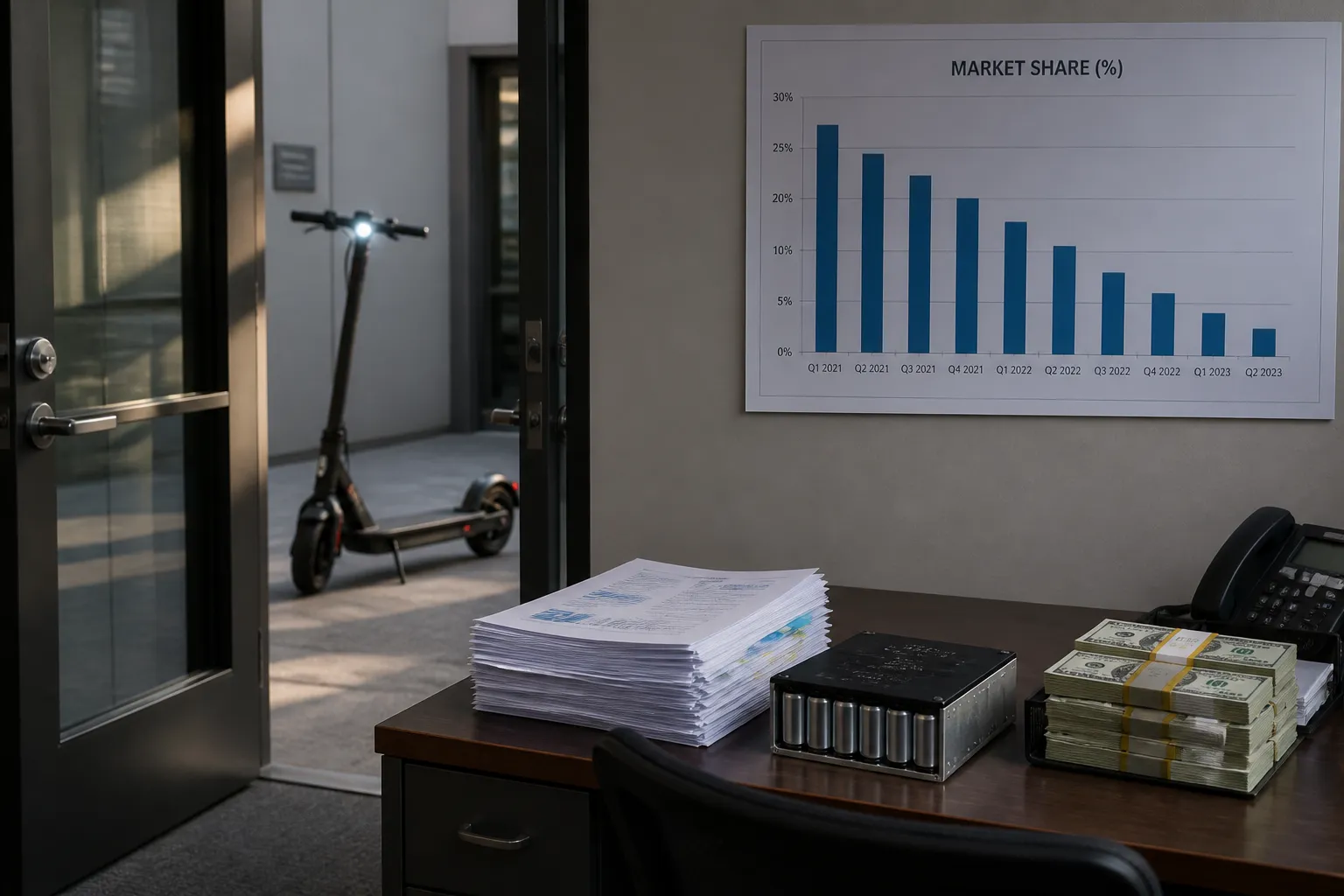
Market‑share data from Vahan for August shows that Ola’s share of electric‑two‑wheeler registrations sits at roughly 7 percent, a stark contrast to the 27–28 percent held by TVS and the low‑20 percent range of Bajaj. The company’s earlier strategy of selling through company‑owned stores has been replaced by a dealer‑led model, with the S1Z scooter priced from ₹79,999. Yet rivals such as Bajaj, TVS, Ather and Hero MotoCorp have broadened their line‑ups to include more mainstream and budget‑conscious models, leaving Ola heavily reliant on variations of its S1 platform.
The board’s approval of the ₹1,500 crore raise follows a modest capital infusion relative to the company’s cash burn. Ola has spent ₹4,859 crore over the past two financial years, according to its filings. While the new capital will provide the financial headroom needed to execute the turnaround plan, analysts note that capital alone will not restore market share. The resignation of COO Park, who cited personal reasons, adds to the leadership churn that has accompanied the company’s decline. The board’s decision to approve the fundraise shortly after the exit signals a focus on stabilising operations and maintaining investor confidence.
Ola’s shift to a dealer network is part of a broader industry trend toward distribution models that can scale more quickly than direct‑to‑consumer sales. The company’s early growth, driven by company‑owned stores, helped it build India’s largest electric‑two‑wheeler customer base of over 10 lakh riders. That foundation is now being leveraged to expand reach through independent dealers.
The market impact of the new fundraise remains to be seen. Investors will look for improvements in sales volumes, margins and cash burn in the next earnings cycle. The company’s upcoming quarterly results, scheduled for the end of September, will provide a clearer picture of whether the capital injection translates into stronger financial performance.
In the meantime, Ola’s board has also approved the re‑appointment of independent directors Shradha Sharma and Manoj Kumar Kohli, indicating a commitment to governance stability.
The company’s current situation is defined by a significant capital requirement, a leadership transition, and a market share that has fallen to fifth place in the electric‑two‑wheeler segment. The next few months will be critical as Ola seeks to deploy the new funds, expand its dealer network, and broaden its product portfolio to compete with rivals that have already diversified their offerings. The outcome of this turnaround effort will be closely watched by investors, regulators and industry analysts, as it reflects the broader challenges faced by electric‑vehicle manufacturers in India’s rapidly evolving market.
The new funds are earmarked for what the company calls “Ola 2.0,” a comprehensive rebuilding effort aimed at expanding a dealer‑led distribution network, launching affordable models such as the S1Z scooter, localising production, and scaling its battery‑cell manufacturing unit. The plan dovetails with an earlier May approval that set aside up to ₹2,000 crore for subsidiaries, allocating ₹1,500 crore to electric‑vehicle manufacturing and ₹500 crore to battery‑cell production.
Ola’s financial trajectory has taken a sharp downturn in recent years. For fiscal year 2025 the company reported a loss of ₹2,253 crore, and for fiscal year 2026 the loss widened to ₹1,833 crore. Annual revenue fell from ₹4,514 crore to ₹2,253 crore, while free cash‑outflow narrowed from ₹3,367 crore to ₹1,492 crore. The battery‑cell business, which generated only ₹20 crore in revenue, posted a loss of ₹319 crore and consumed ₹647 crore in cash.
Market‑share data from Vahan for August shows that Ola’s share of electric‑two‑wheeler registrations sits at roughly 7 percent, a stark contrast to the 27–28 percent held by TVS and the low‑20 percent range of Bajaj. The company’s earlier strategy of selling through company‑owned stores has been replaced by a dealer‑led model, with the S1Z scooter priced from ₹79,999. Yet rivals such as Bajaj, TVS, Ather and Hero MotoCorp have broadened their line‑ups to include more mainstream and budget‑conscious models, leaving Ola heavily reliant on variations of its S1 platform.
The board’s approval of the ₹1,500 crore raise follows a modest capital infusion relative to the company’s cash burn. Ola has spent ₹4,859 crore over the past two financial years, according to its filings. While the new capital will provide the financial headroom needed to execute the turnaround plan, analysts note that capital alone will not restore market share. The resignation of COO Park, who cited personal reasons, adds to the leadership churn that has accompanied the company’s decline. The board’s decision to approve the fundraise shortly after the exit signals a focus on stabilising operations and maintaining investor confidence.
Ola’s shift to a dealer network is part of a broader industry trend toward distribution models that can scale more quickly than direct‑to‑consumer sales. The company’s early growth, driven by company‑owned stores, helped it build India’s largest electric‑two‑wheeler customer base of over 10 lakh riders. That foundation is now being leveraged to expand reach through independent dealers.
The market impact of the new fundraise remains to be seen. Investors will look for improvements in sales volumes, margins and cash burn in the next earnings cycle. The company’s upcoming quarterly results, scheduled for the end of September, will provide a clearer picture of whether the capital injection translates into stronger financial performance.
In the meantime, Ola’s board has also approved the re‑appointment of independent directors Shradha Sharma and Manoj Kumar Kohli, indicating a commitment to governance stability.
The company’s current situation is defined by a significant capital requirement, a leadership transition, and a market share that has fallen to fifth place in the electric‑two‑wheeler segment. The next few months will be critical as Ola seeks to deploy the new funds, expand its dealer network, and broaden its product portfolio to compete with rivals that have already diversified their offerings. The outcome of this turnaround effort will be closely watched by investors, regulators and industry analysts, as it reflects the broader challenges faced by electric‑vehicle manufacturers in India’s rapidly evolving market.