Blab Business
NEPRA Endorses $58 Billion Power Expansion Plan Amid Regulatory Concerns
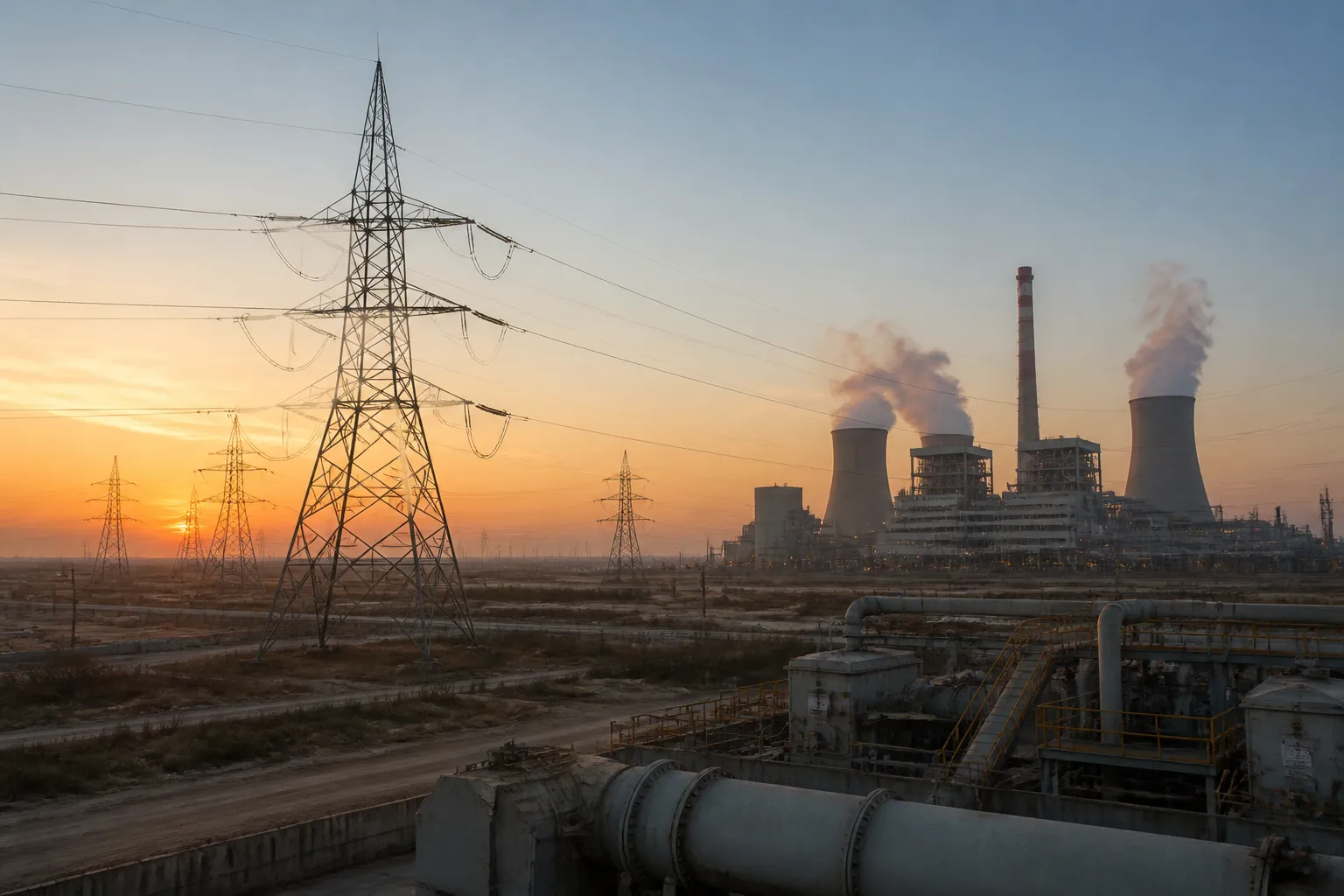
Pakistan’s power future takes a decisive turn as the National Electric Power Regulatory Authority (NEPRA) has formally approved the Integrated System Plan (ISP) 2025‑35. The 45‑page decision signals that the regulator is willing to support a decade‑long blueprint that will require roughly $58 billion to grow generation and transmission capacity through 2035.
The ISP, drafted by the Independent System & Market Operator (ISMO), charts a path to add 26,045 MW of generation. Of that total, 17,485 MW are already committed and 8,560 MW are slated for future construction. After the retirement of 2,577 MW of existing plants, Pakistan’s installed capacity would rise to 62,657 MW by 2035. The plan also earmarks 8,120 MW for net‑metering and estimates new generation costs at $47.08 billion.
Transmission upgrades are set to cost $10.65 billion, split between $4.6 billion for projects already underway or committed and $6.05 billion for new expansion. The transmission package includes power evacuation schemes, network reinforcements, new extra‑high‑voltage substations, transformer expansions, voltage‑control facilities, and a 40 MW on‑site plant for the Gwadar and Makran region to cushion disruptions to electricity imports from Iran.
NEPRA’s approval came after a review that revealed deep reservations from all three members of the regulator. The chairman and two other members each produced more than 12 pages of dissenting and advisory notes, questioning the inclusion and exclusion of several major projects and the plan’s apparent bypass of the Council of Common Interests (CCI). The CCI, a constitutional body that resolves disputes between the federation and provinces over power policy, was not consulted during the ISP’s preparation.
The regulator also flagged the plan’s use of a low‑growth business‑as‑usual scenario. The ISP assumes an average GDP growth rate of 3.52 % and projects peak demand rising from 26,950 MW in 2025 to 35,521 MW by 2035. NEPRA warned that the reference case may not fully capture Pakistan’s evolving energy needs.
Consumer‑end electricity tariffs form another point of contention. The Power Planning and Monitoring Company (PPMC) estimates that the base tariff could climb to Rs37.28 per unit by 2035, up from Rs34 per unit in 2024‑25. NEPRA has directed that the impact on consumer tariffs be properly calculated and incorporated into the main plan, and it criticized ISMO for denying responsibility for the accuracy, authenticity, and completeness of the data and projections used in the ISP.
In addition, NEPRA rejected a proposed $900 million investment in battery energy storage systems. The regulator stated that a detailed technical and economic study is required to determine the need, optimal capacity, operational requirements, and cost‑effectiveness of such storage before any commitment can be made.
The ISP’s approval marks a significant milestone in Pakistan’s long‑term energy strategy, but the regulator’s extensive observations underscore the need for further scrutiny. NEPRA’s decision is subject to the resolution of the noted concerns, particularly the alignment with CCI processes, the accuracy of tariff projections, and the feasibility of the battery storage proposal.
Implementation will involve coordination among multiple stakeholders, including ISMO, PPMC, provincial governments, and the National Grid Company. The next steps will likely include detailed technical reviews, tariff impact assessments, and a formal consultation with the CCI. The outcome of these processes will determine whether the ISP can be fully operationalized and whether the projected investment will materialise.
As Pakistan seeks to meet rising electricity demand and diversify its energy mix, the ISP represents a comprehensive approach to expanding generation and transmission capacity. However, the regulator’s reservations highlight the complexity of aligning technical, financial, and regulatory frameworks in a rapidly evolving energy landscape.
The situation remains fluid, with NEPRA’s observations pending further action. Stakeholders will need to address the regulator’s concerns before the ISP can be fully implemented, and the projected investment and capacity additions will be closely monitored in the coming months.
The ISP, drafted by the Independent System & Market Operator (ISMO), charts a path to add 26,045 MW of generation. Of that total, 17,485 MW are already committed and 8,560 MW are slated for future construction. After the retirement of 2,577 MW of existing plants, Pakistan’s installed capacity would rise to 62,657 MW by 2035. The plan also earmarks 8,120 MW for net‑metering and estimates new generation costs at $47.08 billion.
Transmission upgrades are set to cost $10.65 billion, split between $4.6 billion for projects already underway or committed and $6.05 billion for new expansion. The transmission package includes power evacuation schemes, network reinforcements, new extra‑high‑voltage substations, transformer expansions, voltage‑control facilities, and a 40 MW on‑site plant for the Gwadar and Makran region to cushion disruptions to electricity imports from Iran.
NEPRA’s approval came after a review that revealed deep reservations from all three members of the regulator. The chairman and two other members each produced more than 12 pages of dissenting and advisory notes, questioning the inclusion and exclusion of several major projects and the plan’s apparent bypass of the Council of Common Interests (CCI). The CCI, a constitutional body that resolves disputes between the federation and provinces over power policy, was not consulted during the ISP’s preparation.
The regulator also flagged the plan’s use of a low‑growth business‑as‑usual scenario. The ISP assumes an average GDP growth rate of 3.52 % and projects peak demand rising from 26,950 MW in 2025 to 35,521 MW by 2035. NEPRA warned that the reference case may not fully capture Pakistan’s evolving energy needs.
Consumer‑end electricity tariffs form another point of contention. The Power Planning and Monitoring Company (PPMC) estimates that the base tariff could climb to Rs37.28 per unit by 2035, up from Rs34 per unit in 2024‑25. NEPRA has directed that the impact on consumer tariffs be properly calculated and incorporated into the main plan, and it criticized ISMO for denying responsibility for the accuracy, authenticity, and completeness of the data and projections used in the ISP.
In addition, NEPRA rejected a proposed $900 million investment in battery energy storage systems. The regulator stated that a detailed technical and economic study is required to determine the need, optimal capacity, operational requirements, and cost‑effectiveness of such storage before any commitment can be made.
The ISP’s approval marks a significant milestone in Pakistan’s long‑term energy strategy, but the regulator’s extensive observations underscore the need for further scrutiny. NEPRA’s decision is subject to the resolution of the noted concerns, particularly the alignment with CCI processes, the accuracy of tariff projections, and the feasibility of the battery storage proposal.
Implementation will involve coordination among multiple stakeholders, including ISMO, PPMC, provincial governments, and the National Grid Company. The next steps will likely include detailed technical reviews, tariff impact assessments, and a formal consultation with the CCI. The outcome of these processes will determine whether the ISP can be fully operationalized and whether the projected investment will materialise.
As Pakistan seeks to meet rising electricity demand and diversify its energy mix, the ISP represents a comprehensive approach to expanding generation and transmission capacity. However, the regulator’s reservations highlight the complexity of aligning technical, financial, and regulatory frameworks in a rapidly evolving energy landscape.
The situation remains fluid, with NEPRA’s observations pending further action. Stakeholders will need to address the regulator’s concerns before the ISP can be fully implemented, and the projected investment and capacity additions will be closely monitored in the coming months.