Blab Business
IBMs $1B Quantum Chip Deal Fuels Stock Surge Amid Trump Praise and CHIPS Act Incentives
When a clip of President Trump lauding IBM’s chief executive Arvind Krishna resurfaced in May 2026, the market reacted as if the clip itself were the news. The video, taken from a White House business roundtable on Dec. 10, 2025, showed the former president calling Krishna a legend and noting that IBM’s stock had risen from a low to a very nice price. The clip was quickly shared on social media—often stripped of its original context—and its timing coincided with IBM’s announcement of a new partnership with the U.S. Department of Commerce.
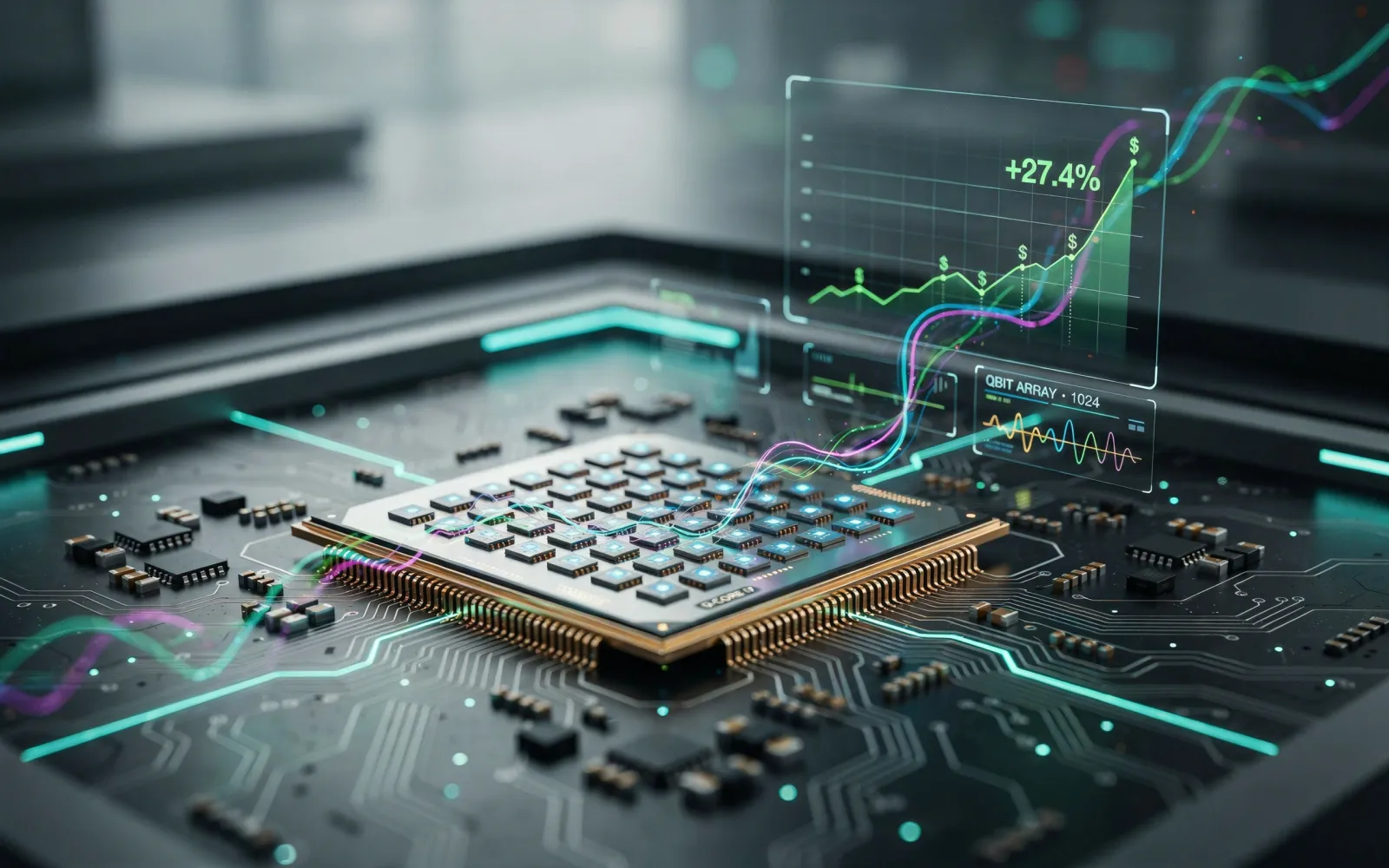
On May 21, 2026, IBM and the Department of Commerce revealed a proposed $1 billion CHIPS Act award to build America’s first purpose‑built quantum‑chip foundry. The facility, to be operated by a stand‑alone IBM subsidiary called Anderon and headquartered in Albany, New York, will receive the federal incentive as a proposed award, not cash already in hand. IBM will match the award with $1 billion of its own capital, plus intellectual property and workforce.
The award represents the largest slice of a $2.01 billion package that will be distributed across nine companies. GlobalFoundries is slated for $375 million, while Atom Computing, D‑Wave, Infleqtion, PsiQuantum, and Quantinuum each receive $100 million. Rigetti may receive up to $100 million and Diraq $38 million. In exchange for the incentives, the government takes minority, non‑controlling equity stakes in the recipients. IBM’s announcement disclosed no equity stake for Anderon, unlike GlobalFoundries, which confirmed a 1 % government stake, or Intel, whose CHIPS award was converted into a roughly 10 % stake last year.
Investor reaction was swift. IBM shares closed up about 12 % on the day of the announcement, the company’s biggest single‑day gain since January 2025. The rally continued into the following week after IBM detailed plans to invest more than $10 billion in quantum computing over five years and a separate $5 billion Red Hat cybersecurity push. By the May 29 close, the stock had risen to $297.80, a weekly gain of roughly 13 %.
The clip’s resurfacing may have amplified the market’s enthusiasm. The brief moment of praise was widely shared on social media in May 2026, often without the context that it was part of a broader discussion on technology policy. The timing of the clip’s circulation and the announcement of the quantum‑chip partnership likely contributed to the sharp rise in IBM’s share price.
In a separate development, Trump’s Q1 2026 periodic transaction report, filed with the U.S. Office of Government Ethics on May 8, lists IBM among the holdings. The filing shows eight IBM transactions between February and March 2026: four purchases and four sales, each in the smallest reporting bands of $1,001 to $50,000. Two of the purchases are tagged “unsolicited,” indicating they were placed by a money manager without the filer’s direction. The pattern of trades is typical of a broad, actively managed portfolio rather than a targeted investment.
The announcement of the quantum‑chip foundry and the accompanying federal incentives underscores the U.S. government’s continued focus on maintaining a competitive edge in advanced technology sectors. The CHIPS Act, enacted in 2022, authorizes roughly $280 billion for semiconductor research and manufacturing, with $52.7 billion earmarked for domestic production. The quantum initiative represents a new frontier within that framework.
IBM’s leadership has emphasized that the company’s long‑term strategy includes scaling quantum technology to achieve fault‑tolerant systems by 2029. The company’s commitment of $10 billion over five years signals a significant shift from experimental research toward commercial deployment. The lack of a government equity stake in Anderon may allow IBM greater operational flexibility, but it also means the federal incentive is structured purely as a financial incentive rather than a partnership.
The market will continue to watch IBM’s progress on quantum computing, the development of the Anderon facility, and the company’s broader cybersecurity investments. Upcoming earnings reports will provide further insight into how the new quantum initiatives translate into revenue and profitability.
In summary, IBM’s proposed quantum chip foundry, backed by a $1 billion CHIPS Act incentive and matched by the company’s own investment, has sparked a notable stock rally. The event coincided with a viral clip of President Trump praising IBM’s CEO, and the company’s recent trading activity reflects routine portfolio management rather than a concentrated bet on IBM’s future.
On May 21, 2026, IBM and the Department of Commerce revealed a proposed $1 billion CHIPS Act award to build America’s first purpose‑built quantum‑chip foundry. The facility, to be operated by a stand‑alone IBM subsidiary called Anderon and headquartered in Albany, New York, will receive the federal incentive as a proposed award, not cash already in hand. IBM will match the award with $1 billion of its own capital, plus intellectual property and workforce.
The award represents the largest slice of a $2.01 billion package that will be distributed across nine companies. GlobalFoundries is slated for $375 million, while Atom Computing, D‑Wave, Infleqtion, PsiQuantum, and Quantinuum each receive $100 million. Rigetti may receive up to $100 million and Diraq $38 million. In exchange for the incentives, the government takes minority, non‑controlling equity stakes in the recipients. IBM’s announcement disclosed no equity stake for Anderon, unlike GlobalFoundries, which confirmed a 1 % government stake, or Intel, whose CHIPS award was converted into a roughly 10 % stake last year.
Investor reaction was swift. IBM shares closed up about 12 % on the day of the announcement, the company’s biggest single‑day gain since January 2025. The rally continued into the following week after IBM detailed plans to invest more than $10 billion in quantum computing over five years and a separate $5 billion Red Hat cybersecurity push. By the May 29 close, the stock had risen to $297.80, a weekly gain of roughly 13 %.
The clip’s resurfacing may have amplified the market’s enthusiasm. The brief moment of praise was widely shared on social media in May 2026, often without the context that it was part of a broader discussion on technology policy. The timing of the clip’s circulation and the announcement of the quantum‑chip partnership likely contributed to the sharp rise in IBM’s share price.
In a separate development, Trump’s Q1 2026 periodic transaction report, filed with the U.S. Office of Government Ethics on May 8, lists IBM among the holdings. The filing shows eight IBM transactions between February and March 2026: four purchases and four sales, each in the smallest reporting bands of $1,001 to $50,000. Two of the purchases are tagged “unsolicited,” indicating they were placed by a money manager without the filer’s direction. The pattern of trades is typical of a broad, actively managed portfolio rather than a targeted investment.
The announcement of the quantum‑chip foundry and the accompanying federal incentives underscores the U.S. government’s continued focus on maintaining a competitive edge in advanced technology sectors. The CHIPS Act, enacted in 2022, authorizes roughly $280 billion for semiconductor research and manufacturing, with $52.7 billion earmarked for domestic production. The quantum initiative represents a new frontier within that framework.
IBM’s leadership has emphasized that the company’s long‑term strategy includes scaling quantum technology to achieve fault‑tolerant systems by 2029. The company’s commitment of $10 billion over five years signals a significant shift from experimental research toward commercial deployment. The lack of a government equity stake in Anderon may allow IBM greater operational flexibility, but it also means the federal incentive is structured purely as a financial incentive rather than a partnership.
The market will continue to watch IBM’s progress on quantum computing, the development of the Anderon facility, and the company’s broader cybersecurity investments. Upcoming earnings reports will provide further insight into how the new quantum initiatives translate into revenue and profitability.
In summary, IBM’s proposed quantum chip foundry, backed by a $1 billion CHIPS Act incentive and matched by the company’s own investment, has sparked a notable stock rally. The event coincided with a viral clip of President Trump praising IBM’s CEO, and the company’s recent trading activity reflects routine portfolio management rather than a concentrated bet on IBM’s future.