Blab Business
Container Shipping Costs Double as Iran War Drives Fuel Prices and Supply-Chain Strain
When the Iranian conflict erupted in February, the ocean freight that once moved goods from Shanghai to Los Angeles became twice as expensive.
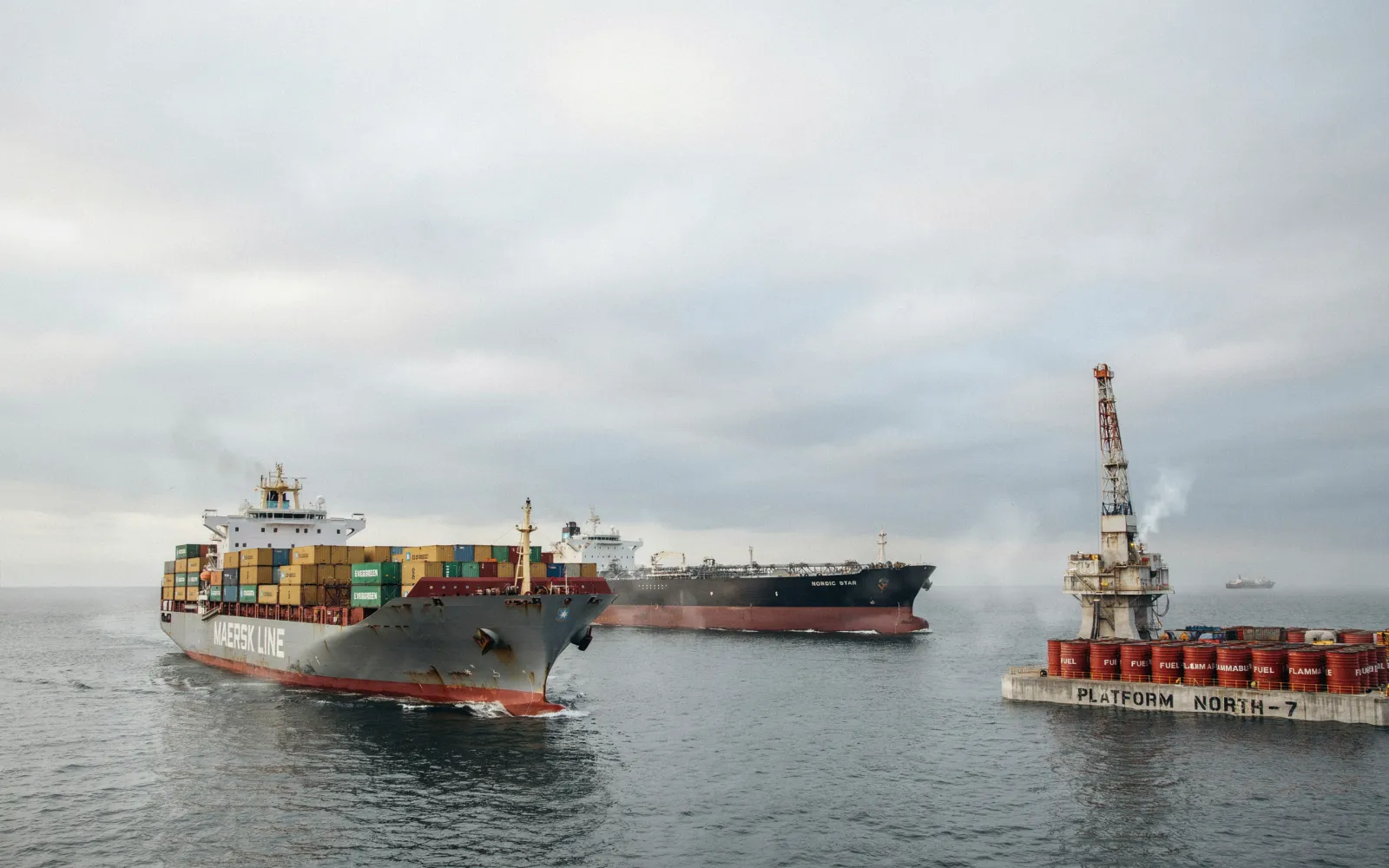
Since the war’s onset, the price of shipping a 40‑foot container from Asia to the United States has roughly doubled, propelled by a sharp climb in bunker fuel costs and a surge in demand from importers worried that prices will keep rising.
Off‑contract spot rates illustrate the jump. The latest Drewry World Container Index shows a rate of $4,565 for a Shanghai‑to‑Los Angeles shipment and $5,505 for Shanghai‑to‑New York—almost 100 % higher than the end‑February levels that marked the war’s start. Both Xeneta and Drewry report the same trend, although the rates remain well below the $16,000 peak seen early in the COVID‑19 pandemic.
Fuel prices have been the main catalyst. According to Ship & Bunker, the very‑low‑sulfur fuel oil (VLSFO) used on container ships has risen 55 % to $845 per metric ton across 20 major hubs since the war began. Prices vary widely: $1,211 in Fujairah, $770.50 in Singapore, $676 in Rotterdam, and $918 in Los Angeles. Because bunker fuel can account for up to 60 % of a vessel’s voyage cost, even modest price swings can push freight rates beyond what underlying demand would justify. Blue Water Strategy estimates that the Middle East conflict has added $5.5 billion in bunker fuel expenses since late February, with Hapag‑Lloyd alone spending as much as $50 million extra each week.
Carriers are passing the extra cost onto shippers. MSC, Maersk, CMA CGM and others have introduced emergency fuel surcharges on spot shipments, and many will roll those charges into annual contracts starting July 1. Importers are racing to lock in rates before the surcharges take effect. “Importers are once again racing the clock to avoid higher costs,” said Steve Hughes, CEO of HCS International.
The fuel crunch is also squeezing Asian factories. Reduced fuel availability can lower production output, raising prices and limiting the supply of components that U.S. importers rely on. Zac Rogers, lead author of the Logistics Managers’ Index, warned that “there will be less fuel for moving ships around, as well as less fuel to run the factories that are generating the components that are filling these ships up.” Some suppliers have begun front‑loading raw materials used for plastics and resins as a hedge, while factory owners in South and Southeast Asia face a choice between losses and shutdowns. Henning Gloystein, Eurasia Group, noted that “the effect is the same” even if the shortage is by cost rather than supply.
The broader economic picture is grim. U.S. Energy Secretary Chris Wright said lowering fuel prices will ultimately require a resolution with Iran to restore oil flow through the Strait of Hormuz, the only maritime route for about 20 % of the world’s oil trade. Hostilities have lasted more than 100 days with no clear end, and global oil inventories are depleting. Fuel analysts warn that bunker fuel supplies could take roughly a year to return to normal even if a deal is reached. The rising freight and fuel costs feed into already high U.S. inflation, presenting a challenge for the Trump administration.
At present, container shipping costs remain elevated, bunker fuel prices are high, and the supply chain is under pressure. The U.S. government is pursuing diplomatic options to ease the Strait of Hormuz blockade, while carriers and importers adjust contracts and pricing. The situation remains fluid, with the next major development likely to come from any breakthrough in the Iran conflict or a shift in global oil inventories.
Since the war’s onset, the price of shipping a 40‑foot container from Asia to the United States has roughly doubled, propelled by a sharp climb in bunker fuel costs and a surge in demand from importers worried that prices will keep rising.
Off‑contract spot rates illustrate the jump. The latest Drewry World Container Index shows a rate of $4,565 for a Shanghai‑to‑Los Angeles shipment and $5,505 for Shanghai‑to‑New York—almost 100 % higher than the end‑February levels that marked the war’s start. Both Xeneta and Drewry report the same trend, although the rates remain well below the $16,000 peak seen early in the COVID‑19 pandemic.
Fuel prices have been the main catalyst. According to Ship & Bunker, the very‑low‑sulfur fuel oil (VLSFO) used on container ships has risen 55 % to $845 per metric ton across 20 major hubs since the war began. Prices vary widely: $1,211 in Fujairah, $770.50 in Singapore, $676 in Rotterdam, and $918 in Los Angeles. Because bunker fuel can account for up to 60 % of a vessel’s voyage cost, even modest price swings can push freight rates beyond what underlying demand would justify. Blue Water Strategy estimates that the Middle East conflict has added $5.5 billion in bunker fuel expenses since late February, with Hapag‑Lloyd alone spending as much as $50 million extra each week.
Carriers are passing the extra cost onto shippers. MSC, Maersk, CMA CGM and others have introduced emergency fuel surcharges on spot shipments, and many will roll those charges into annual contracts starting July 1. Importers are racing to lock in rates before the surcharges take effect. “Importers are once again racing the clock to avoid higher costs,” said Steve Hughes, CEO of HCS International.
The fuel crunch is also squeezing Asian factories. Reduced fuel availability can lower production output, raising prices and limiting the supply of components that U.S. importers rely on. Zac Rogers, lead author of the Logistics Managers’ Index, warned that “there will be less fuel for moving ships around, as well as less fuel to run the factories that are generating the components that are filling these ships up.” Some suppliers have begun front‑loading raw materials used for plastics and resins as a hedge, while factory owners in South and Southeast Asia face a choice between losses and shutdowns. Henning Gloystein, Eurasia Group, noted that “the effect is the same” even if the shortage is by cost rather than supply.
The broader economic picture is grim. U.S. Energy Secretary Chris Wright said lowering fuel prices will ultimately require a resolution with Iran to restore oil flow through the Strait of Hormuz, the only maritime route for about 20 % of the world’s oil trade. Hostilities have lasted more than 100 days with no clear end, and global oil inventories are depleting. Fuel analysts warn that bunker fuel supplies could take roughly a year to return to normal even if a deal is reached. The rising freight and fuel costs feed into already high U.S. inflation, presenting a challenge for the Trump administration.
At present, container shipping costs remain elevated, bunker fuel prices are high, and the supply chain is under pressure. The U.S. government is pursuing diplomatic options to ease the Strait of Hormuz blockade, while carriers and importers adjust contracts and pricing. The situation remains fluid, with the next major development likely to come from any breakthrough in the Iran conflict or a shift in global oil inventories.