Blab Business
U.S. Strategic Petroleum Reserve Drops to Multi-Decade Low as Oil Prices Rise
Oil prices are climbing, and the U.S. Strategic Petroleum Reserve (SPR) has slipped to a multi‑decade low. The Energy Information Administration reported that the reserve stood at 349.2 million barrels as of the week ending June 5, a drawdown of nearly 9 million barrels per week. That pace has pushed the stockpile toward the smallest level seen since the Reagan administration.
Industry analysts and policymakers are watching closely. The last time the reserve approached this size was under President Biden in July 2023, when it held 346.7 million barrels. If the trend continues, the emergency crude stockpile could hit a floor not seen since August 1983, a scenario that would severely limit the government’s ability to respond to supply disruptions.
"Because as those inventories go down and production isn’t increased, you’re going to start seeing a significant impact at the pump," Mike Sommers, president and CEO of the American Petroleum Institute, told CNN. He added that the current drawdown is a concern because the U.S. has not experienced the same price surges that have occurred elsewhere.
Patrick De Haan, head of analysis at GasBuddy, told Fortune that the low level of the SPR is "pretty monumental." He cautioned that the longer the reserve remains low, the fewer tools the administration has to address rising costs.
The SPR was first tapped in large volumes during the Biden administration to address supply‑chain disruptions caused by the COVID‑19 pandemic and the Russian invasion of Ukraine. A Fortune report noted that the reserve declined by 243 million barrels during that period.
In March, the Trump administration released 172 million barrels from the SPR in response to the conflict with Iran and the resulting pressure on global oil supplies. Deliveries from the reserve began moving to market later that month, as the Energy Department said the releases were part of a broader effort to bring down oil prices.
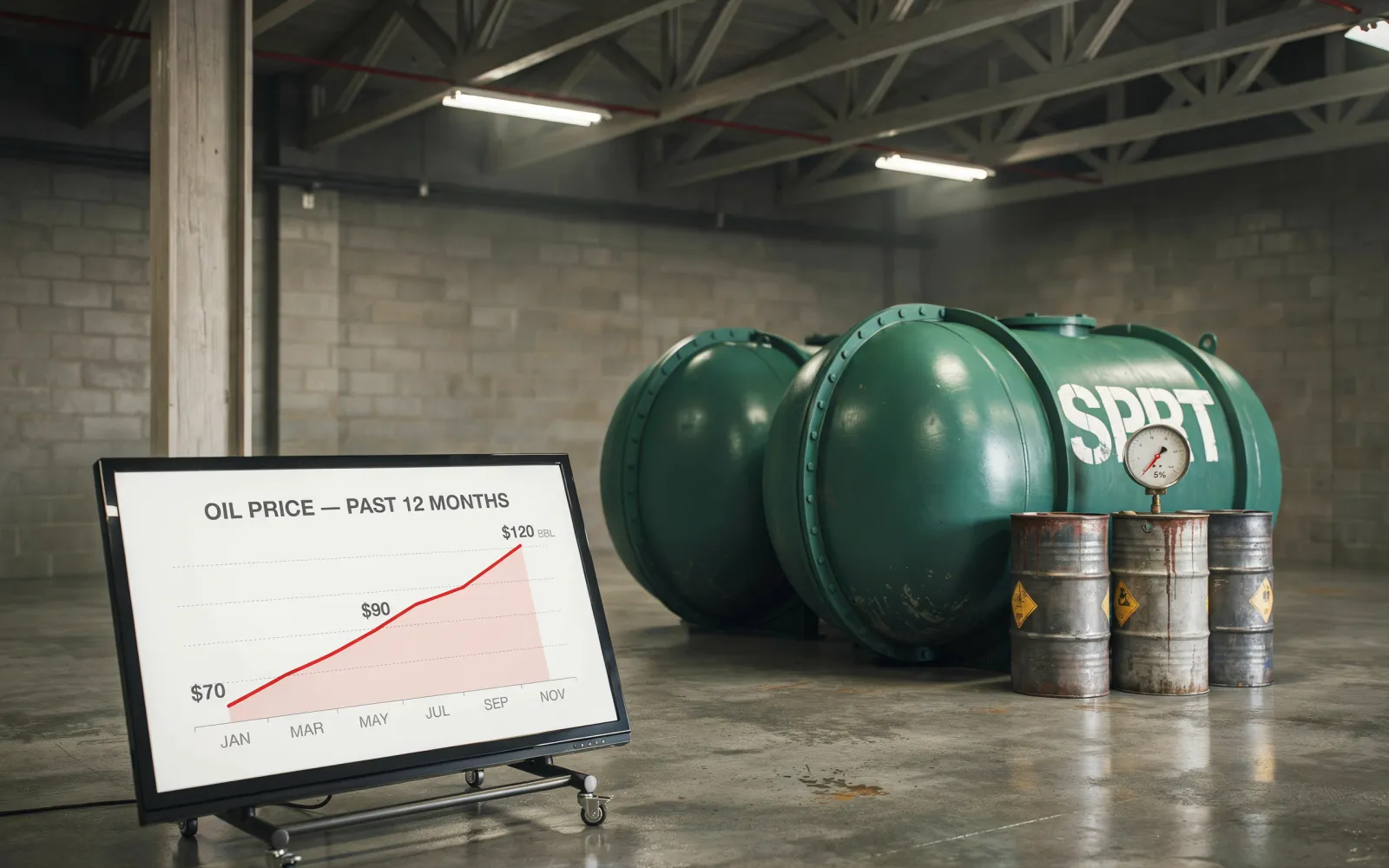
Oil prices have risen sharply in recent months. Energy prices increased 3.9 % in May amid disruptions to Middle Eastern supplies, and the price of gasoline was up 7 % month‑over‑month and 40.5 % year‑over‑year. The Bureau of Labor Statistics noted that the energy index accounted for more than 60 % of the overall consumer price index increase in May.
Sommers said the reserve’s drawdown is a warning sign. "We’re raising alarm bells right now. We’re at about 350 million barrels left in the Strategic Petroleum Reserve. You have to have about 20 % of that left for it to be operational, for our system to operate, so we’re getting to levels where we’re starting to be concerned," he said.
Under Secretary of Energy Kyle Haustveit told FOX Business that the government is borrowing barrels to meet near‑term supply challenges, but that the recipients of those barrels are returning more barrels to the reserve. He added that the average premium on the returned barrels is over 25 %.
The only short‑term solution, according to Sommers, is to reopen the Strait of Hormuz, which has been effectively closed during the war in Iran. The strait is a critical chokepoint for global oil trade, and its closure has contributed to the recent price spike.
The SPR is a key component of the U.S. energy‑security strategy. It is stored in underground salt caverns near major refining centers in Texas and Louisiana and can hold more than 700 million barrels of crude oil. The reserve is intended to provide a buffer against disruptions in the supply of petroleum.
The current drawdown raises questions about the reserve’s ability to respond to future shocks, such as geopolitical events or natural disasters. Industry observers are monitoring the situation closely as the U.S. continues to grapple with rising energy costs and supply‑chain vulnerabilities.
The next update on the SPR will be released in the following week’s petroleum status report. Market participants will also be watching the upcoming earnings reports of major oil producers and refiners, as well as any further policy decisions by the Department of Energy and the federal government regarding the reserve.
The situation remains fluid, and the U.S. government’s ability to manage the reserve will depend on both domestic production levels and international developments, particularly the status of the Strait of Hormuz.
Industry analysts and policymakers are watching closely. The last time the reserve approached this size was under President Biden in July 2023, when it held 346.7 million barrels. If the trend continues, the emergency crude stockpile could hit a floor not seen since August 1983, a scenario that would severely limit the government’s ability to respond to supply disruptions.
"Because as those inventories go down and production isn’t increased, you’re going to start seeing a significant impact at the pump," Mike Sommers, president and CEO of the American Petroleum Institute, told CNN. He added that the current drawdown is a concern because the U.S. has not experienced the same price surges that have occurred elsewhere.
Patrick De Haan, head of analysis at GasBuddy, told Fortune that the low level of the SPR is "pretty monumental." He cautioned that the longer the reserve remains low, the fewer tools the administration has to address rising costs.
The SPR was first tapped in large volumes during the Biden administration to address supply‑chain disruptions caused by the COVID‑19 pandemic and the Russian invasion of Ukraine. A Fortune report noted that the reserve declined by 243 million barrels during that period.
In March, the Trump administration released 172 million barrels from the SPR in response to the conflict with Iran and the resulting pressure on global oil supplies. Deliveries from the reserve began moving to market later that month, as the Energy Department said the releases were part of a broader effort to bring down oil prices.
Oil prices have risen sharply in recent months. Energy prices increased 3.9 % in May amid disruptions to Middle Eastern supplies, and the price of gasoline was up 7 % month‑over‑month and 40.5 % year‑over‑year. The Bureau of Labor Statistics noted that the energy index accounted for more than 60 % of the overall consumer price index increase in May.
Sommers said the reserve’s drawdown is a warning sign. "We’re raising alarm bells right now. We’re at about 350 million barrels left in the Strategic Petroleum Reserve. You have to have about 20 % of that left for it to be operational, for our system to operate, so we’re getting to levels where we’re starting to be concerned," he said.
Under Secretary of Energy Kyle Haustveit told FOX Business that the government is borrowing barrels to meet near‑term supply challenges, but that the recipients of those barrels are returning more barrels to the reserve. He added that the average premium on the returned barrels is over 25 %.
The only short‑term solution, according to Sommers, is to reopen the Strait of Hormuz, which has been effectively closed during the war in Iran. The strait is a critical chokepoint for global oil trade, and its closure has contributed to the recent price spike.
The SPR is a key component of the U.S. energy‑security strategy. It is stored in underground salt caverns near major refining centers in Texas and Louisiana and can hold more than 700 million barrels of crude oil. The reserve is intended to provide a buffer against disruptions in the supply of petroleum.
The current drawdown raises questions about the reserve’s ability to respond to future shocks, such as geopolitical events or natural disasters. Industry observers are monitoring the situation closely as the U.S. continues to grapple with rising energy costs and supply‑chain vulnerabilities.
The next update on the SPR will be released in the following week’s petroleum status report. Market participants will also be watching the upcoming earnings reports of major oil producers and refiners, as well as any further policy decisions by the Department of Energy and the federal government regarding the reserve.
The situation remains fluid, and the U.S. government’s ability to manage the reserve will depend on both domestic production levels and international developments, particularly the status of the Strait of Hormuz.