Blab Business
Berluti Opens Milan Boutique to Strengthen Local Presence and Focus on Luxury
Milan’s fashion scene just gained a new beacon of luxury with the opening of Berluti’s latest boutique on Via Gesù. Housed on the ground floor of the Four Seasons Hotel Milano, the 1,560‑square‑foot shop is the first European location to adopt the brand’s flagship retail concept that debuted in Tokyo five years ago.
The move marks a deliberate shift toward the most profitable segments and markets, according to Berluti chief executive officer Jean‑Marc Mansvelt. In a recent interview with WWD, Mansvelt explained that the new store aims to capture a larger share of local Italian shoppers than the former Via Montenapoleone flagship, which had largely catered to tourists. By concentrating on the core product mix—footwear, ready‑to‑wear, and leather goods—the house intends to deepen its relationship with a dedicated clientele.
Mansvelt also announced a change in the brand’s seasonal cadence. Instead of rolling out new collections each year, Berluti will now showcase a single, annual presentation during the men’s shows at Paris Fashion Week in June. The decision reflects a broader strategy to create a more focused luxury experience.
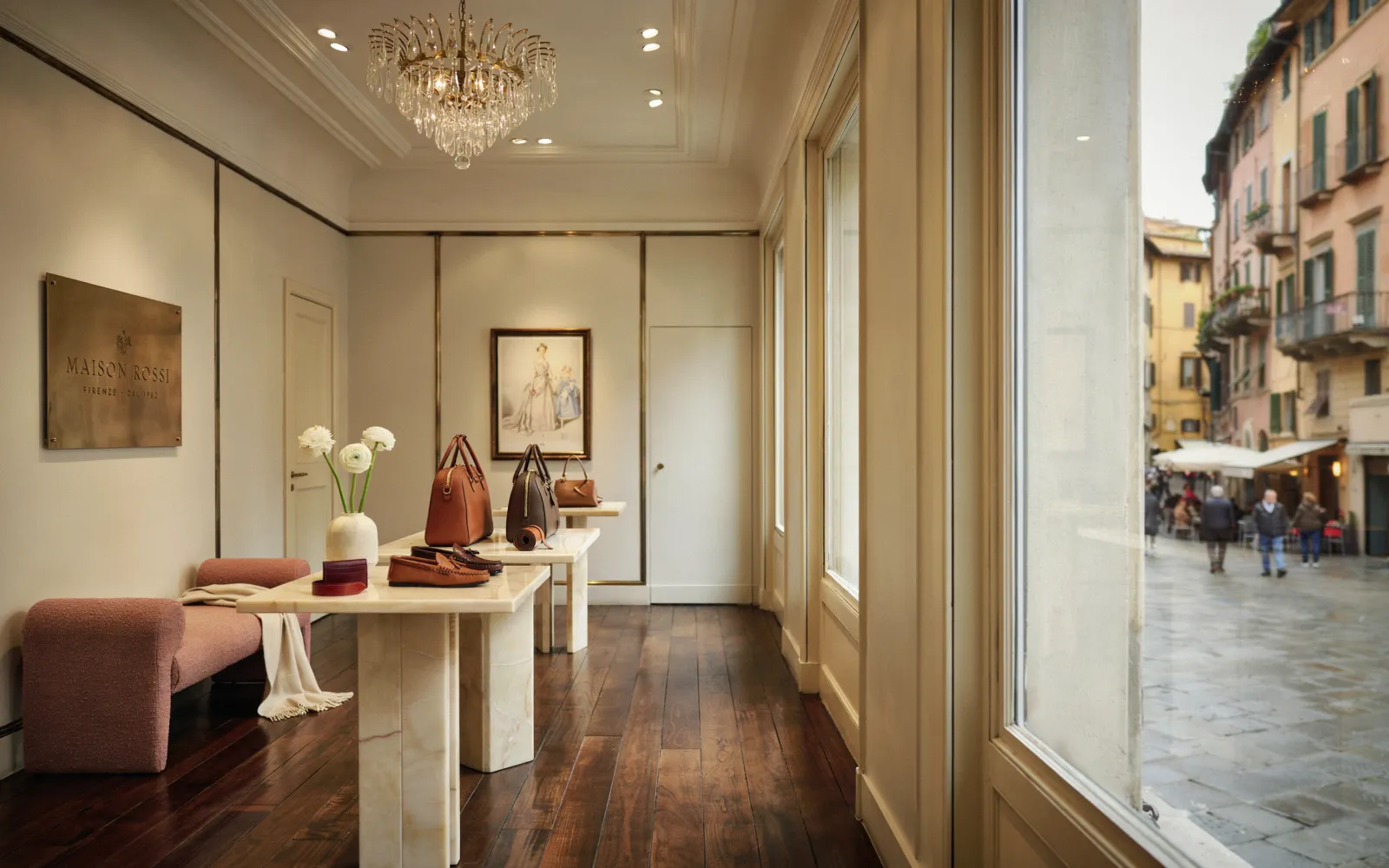
The boutique’s design foregrounds Berluti’s Italian heritage. Founded in 1895 by Alessandro Berluti of the Marche region, the house still produces many of its products in Ferrara, near Bologna. Mansvelt noted that the house’s “dual heritage” – French and Italian – generates complementary strengths, a theme that echoes in the shop’s layout. A single‑floor layout offers a more navigable space than the former two‑story flagship, while a neon sign in Italian proclaims “Italian Roots, Parisian Heart.” A glass case showcases a selection of patina varnishes applied to shoemaking lasts, and the central room—originally an inner courtyard—features the core footwear collection. Other areas display ready‑to‑wear pieces, leather goods, and artworks by Lorenzo Monnini, Gabriele Cappelli, and two Gianfranco Frattini armchairs.
The concept has already delivered measurable results. The Shanghai IFC Mall store, which reopened in August last year, reported a positive impact on revenue and attracted new customers. Mansvelt said the redesign made the space brighter and more inviting, lowering the psychological barrier for shoppers who had previously been deterred by a darker, more exclusive atmosphere.
Looking ahead, Berluti plans to renovate nine stores worldwide in 2026, including new sites in Shenzhen, Shanghai, and Chengdu in China; Fukuoka and Nagoya in Japan; and Dubai. The company will also open a store at the Landmark in Hong Kong later this month as part of the $400 million renovation of the premium shopping centre. In September, Berluti will launch a private members’ club on the first floor of its Ginza boutique, its largest market.
While the brand keeps its global retail footprint largely unchanged, it is closing two stores in second‑tier Chinese cities and shutting down operations in Australia. Mansvelt said the focus on “focused luxury” is a deliberate choice to deepen brand recognition rather than expand indiscriminately.
Financially, Berluti maintained stable revenues last year despite a 5 % decline in LVMH group sales amid a global luxury slump. Mansvelt highlighted that the house performed better than the group average and did not record a decline—a rare outcome for a menswear‑only brand. The company also reported high loyalty, visit frequency, and repeat purchases, the strongest metrics among LVMH’s fashion and leather‑goods brands.
Market performance remains strongest in Japan and South Korea, while China lags behind. Berluti’s core product mix—footwear, ready‑to‑wear, and leather goods—continues to focus on signature items such as the Andy loafer and the Deux Jours bag. Sneakers are the top footwear category but still account for less than half of sales. The brand has expanded its made‑to‑order and made‑to‑measure services and offers entry‑level personalization options.
Mansvelt noted that the house’s small size allows close contact with customers, enabling rapid adaptation to feedback. He added that lessons from sneaker development have informed the design of formal shoes, with lighter, more flexible models featuring rubber soles.
Berluti has not appointed an artistic director since Kris Van Assche left in 2021. Mansvelt indicated that the brand will not fill the role in the short term, though it may be reconsidered in the future.
The new Milan boutique exemplifies Berluti’s ongoing effort to balance its French heritage with Italian craftsmanship while pursuing a focused luxury strategy that prioritises core products and loyal customers over broad expansion.
The move marks a deliberate shift toward the most profitable segments and markets, according to Berluti chief executive officer Jean‑Marc Mansvelt. In a recent interview with WWD, Mansvelt explained that the new store aims to capture a larger share of local Italian shoppers than the former Via Montenapoleone flagship, which had largely catered to tourists. By concentrating on the core product mix—footwear, ready‑to‑wear, and leather goods—the house intends to deepen its relationship with a dedicated clientele.
Mansvelt also announced a change in the brand’s seasonal cadence. Instead of rolling out new collections each year, Berluti will now showcase a single, annual presentation during the men’s shows at Paris Fashion Week in June. The decision reflects a broader strategy to create a more focused luxury experience.
The boutique’s design foregrounds Berluti’s Italian heritage. Founded in 1895 by Alessandro Berluti of the Marche region, the house still produces many of its products in Ferrara, near Bologna. Mansvelt noted that the house’s “dual heritage” – French and Italian – generates complementary strengths, a theme that echoes in the shop’s layout. A single‑floor layout offers a more navigable space than the former two‑story flagship, while a neon sign in Italian proclaims “Italian Roots, Parisian Heart.” A glass case showcases a selection of patina varnishes applied to shoemaking lasts, and the central room—originally an inner courtyard—features the core footwear collection. Other areas display ready‑to‑wear pieces, leather goods, and artworks by Lorenzo Monnini, Gabriele Cappelli, and two Gianfranco Frattini armchairs.
The concept has already delivered measurable results. The Shanghai IFC Mall store, which reopened in August last year, reported a positive impact on revenue and attracted new customers. Mansvelt said the redesign made the space brighter and more inviting, lowering the psychological barrier for shoppers who had previously been deterred by a darker, more exclusive atmosphere.
Looking ahead, Berluti plans to renovate nine stores worldwide in 2026, including new sites in Shenzhen, Shanghai, and Chengdu in China; Fukuoka and Nagoya in Japan; and Dubai. The company will also open a store at the Landmark in Hong Kong later this month as part of the $400 million renovation of the premium shopping centre. In September, Berluti will launch a private members’ club on the first floor of its Ginza boutique, its largest market.
While the brand keeps its global retail footprint largely unchanged, it is closing two stores in second‑tier Chinese cities and shutting down operations in Australia. Mansvelt said the focus on “focused luxury” is a deliberate choice to deepen brand recognition rather than expand indiscriminately.
Financially, Berluti maintained stable revenues last year despite a 5 % decline in LVMH group sales amid a global luxury slump. Mansvelt highlighted that the house performed better than the group average and did not record a decline—a rare outcome for a menswear‑only brand. The company also reported high loyalty, visit frequency, and repeat purchases, the strongest metrics among LVMH’s fashion and leather‑goods brands.
Market performance remains strongest in Japan and South Korea, while China lags behind. Berluti’s core product mix—footwear, ready‑to‑wear, and leather goods—continues to focus on signature items such as the Andy loafer and the Deux Jours bag. Sneakers are the top footwear category but still account for less than half of sales. The brand has expanded its made‑to‑order and made‑to‑measure services and offers entry‑level personalization options.
Mansvelt noted that the house’s small size allows close contact with customers, enabling rapid adaptation to feedback. He added that lessons from sneaker development have informed the design of formal shoes, with lighter, more flexible models featuring rubber soles.
Berluti has not appointed an artistic director since Kris Van Assche left in 2021. Mansvelt indicated that the brand will not fill the role in the short term, though it may be reconsidered in the future.
The new Milan boutique exemplifies Berluti’s ongoing effort to balance its French heritage with Italian craftsmanship while pursuing a focused luxury strategy that prioritises core products and loyal customers over broad expansion.








