Blab Business
Europe Surpasses Americas as Mexicos Top Crude Export Market in April 2026
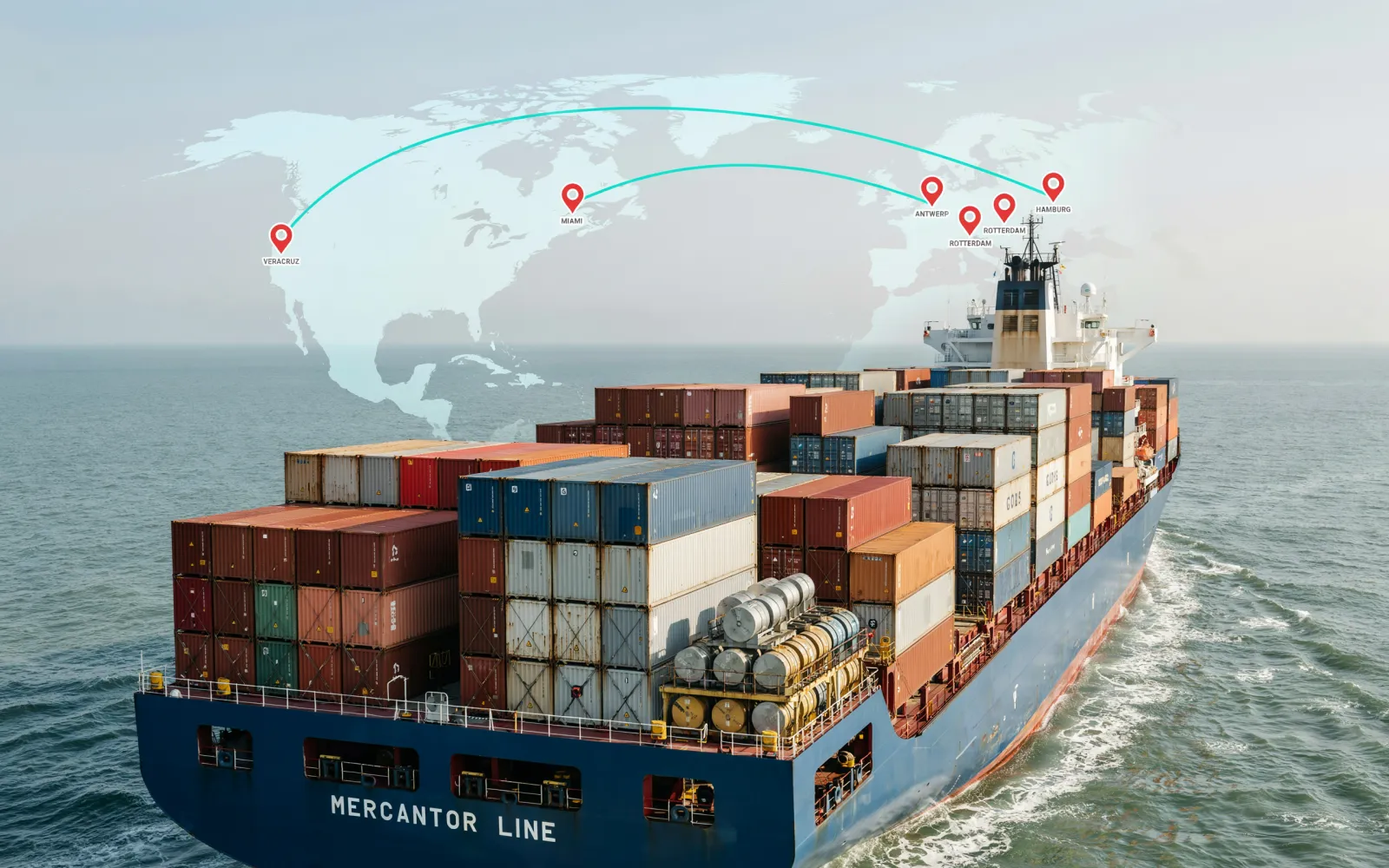
Europe overtook the Americas as the leading destination for Mexican crude in April 2026, taking 43.4 % of PEMEX’s total shipments. The state‑owned oil company exported an average of 418.2 million barrels per day (Mb/d) that month, generating the highest export revenue since May 2025.
The shift follows a long period during which the Americas—primarily the United States and Canada—had dominated PEMEX’s export portfolio. The new European share reflects a combination of higher freight rates and a growing appetite for Mexican crude among Atlantic‑basin refineries. PEMEX’s average export price in April rose to US$94 per barrel, the highest level since July 2022, and the spike in price is attributed to geopolitical tensions in the Strait of Hormuz.
The Strait of Hormuz has been a recurring source of volatility for global oil markets. In early 2026, renewed confrontations between the United States and Iran heightened fears that the narrow waterway could be closed, tightening supply and pushing benchmark prices higher. PEMEX’s ability to command a premium price in this environment has translated into a record export revenue for the month.
Beyond crude exports, Mexico’s energy sector is undergoing a series of coordinated initiatives. On June 3, 2026, the Mexican Petroleum Institute (IMP) and the National Engineer Associations Unit (UNAI) signed a General Collaboration Agreement. The framework, signed by IMP Director General Elizabeth Mar and UNAI President Pedro Sánchez, outlines joint action in research, technology development, talent formation, and the promotion of strategic projects aimed at advancing Mexico’s energy transition.
The same week, on June 8, Fermaca Dreams formally began construction of the Fermachem Agro‑Nitrogen Industrial Complex in Sapioris, Lerdo, Durango. The launch coincided with PEMEX’s announcement of a MX$93 billion petrochemical and fertilizer reactivation plan in Veracruz. Together, the two projects represent the most concentrated investment in domestic fertilizer production Mexico has seen in a generation and align with President Sheinbaum’s emphasis on food and energy sovereignty.
These developments illustrate a broader strategy to diversify Mexico’s energy exports and strengthen domestic value chains. While crude exports remain a key source of foreign exchange, the country is also investing in downstream processing and agricultural inputs.
Looking ahead, PEMEX’s export performance will be closely monitored as the company approaches its second‑quarter 2026 earnings release. Analysts will examine whether the April gains are sustainable amid fluctuating global prices and whether the company’s new petrochemical and fertilizer initiatives will offset any decline in upstream margins.
Regulatory bodies will also keep a watchful eye on the sector. The IMP‑UNAI agreement signals a move toward greater coordination between research institutions and industry, potentially influencing future policy on renewable energy and carbon management.
In summary, Europe’s emergence as PEMEX’s top export market in April 2026 underscores the impact of geopolitical risk on commodity flows and highlights Mexico’s efforts to broaden its energy footprint through strategic investments and collaborative research.
The shift follows a long period during which the Americas—primarily the United States and Canada—had dominated PEMEX’s export portfolio. The new European share reflects a combination of higher freight rates and a growing appetite for Mexican crude among Atlantic‑basin refineries. PEMEX’s average export price in April rose to US$94 per barrel, the highest level since July 2022, and the spike in price is attributed to geopolitical tensions in the Strait of Hormuz.
The Strait of Hormuz has been a recurring source of volatility for global oil markets. In early 2026, renewed confrontations between the United States and Iran heightened fears that the narrow waterway could be closed, tightening supply and pushing benchmark prices higher. PEMEX’s ability to command a premium price in this environment has translated into a record export revenue for the month.
Beyond crude exports, Mexico’s energy sector is undergoing a series of coordinated initiatives. On June 3, 2026, the Mexican Petroleum Institute (IMP) and the National Engineer Associations Unit (UNAI) signed a General Collaboration Agreement. The framework, signed by IMP Director General Elizabeth Mar and UNAI President Pedro Sánchez, outlines joint action in research, technology development, talent formation, and the promotion of strategic projects aimed at advancing Mexico’s energy transition.
The same week, on June 8, Fermaca Dreams formally began construction of the Fermachem Agro‑Nitrogen Industrial Complex in Sapioris, Lerdo, Durango. The launch coincided with PEMEX’s announcement of a MX$93 billion petrochemical and fertilizer reactivation plan in Veracruz. Together, the two projects represent the most concentrated investment in domestic fertilizer production Mexico has seen in a generation and align with President Sheinbaum’s emphasis on food and energy sovereignty.
These developments illustrate a broader strategy to diversify Mexico’s energy exports and strengthen domestic value chains. While crude exports remain a key source of foreign exchange, the country is also investing in downstream processing and agricultural inputs.
Looking ahead, PEMEX’s export performance will be closely monitored as the company approaches its second‑quarter 2026 earnings release. Analysts will examine whether the April gains are sustainable amid fluctuating global prices and whether the company’s new petrochemical and fertilizer initiatives will offset any decline in upstream margins.
Regulatory bodies will also keep a watchful eye on the sector. The IMP‑UNAI agreement signals a move toward greater coordination between research institutions and industry, potentially influencing future policy on renewable energy and carbon management.
In summary, Europe’s emergence as PEMEX’s top export market in April 2026 underscores the impact of geopolitical risk on commodity flows and highlights Mexico’s efforts to broaden its energy footprint through strategic investments and collaborative research.