Blab Business
Northland Power Rebounds After Dividend Cut as Hai Long and Baltic Power Projects Near Completion
Northland Power Inc. (TSX: NPI) has seen its stock recover after a 40 % dividend cut announced for 2026, a move that investors initially viewed as a setback. The dividend reduction, from CAD 1.00 to CAD 0.72 per share, was intended to free capital for growth projects, particularly the company’s offshore wind developments in Taiwan and Poland.
The announcement on 20 April 2026 triggered a sharp sell‑off, with shares falling more than 10 % on the first day of trading. A report in The Globe and Mail noted that the cut was coupled with a write‑down of over CAD 500 million related to the Nordsee One offshore wind farm. Despite the initial reaction, the stock has since rebounded, trading at a price‑to‑earnings ratio that remains below the average of its peer group, according to a recent analysis by Morningstar.
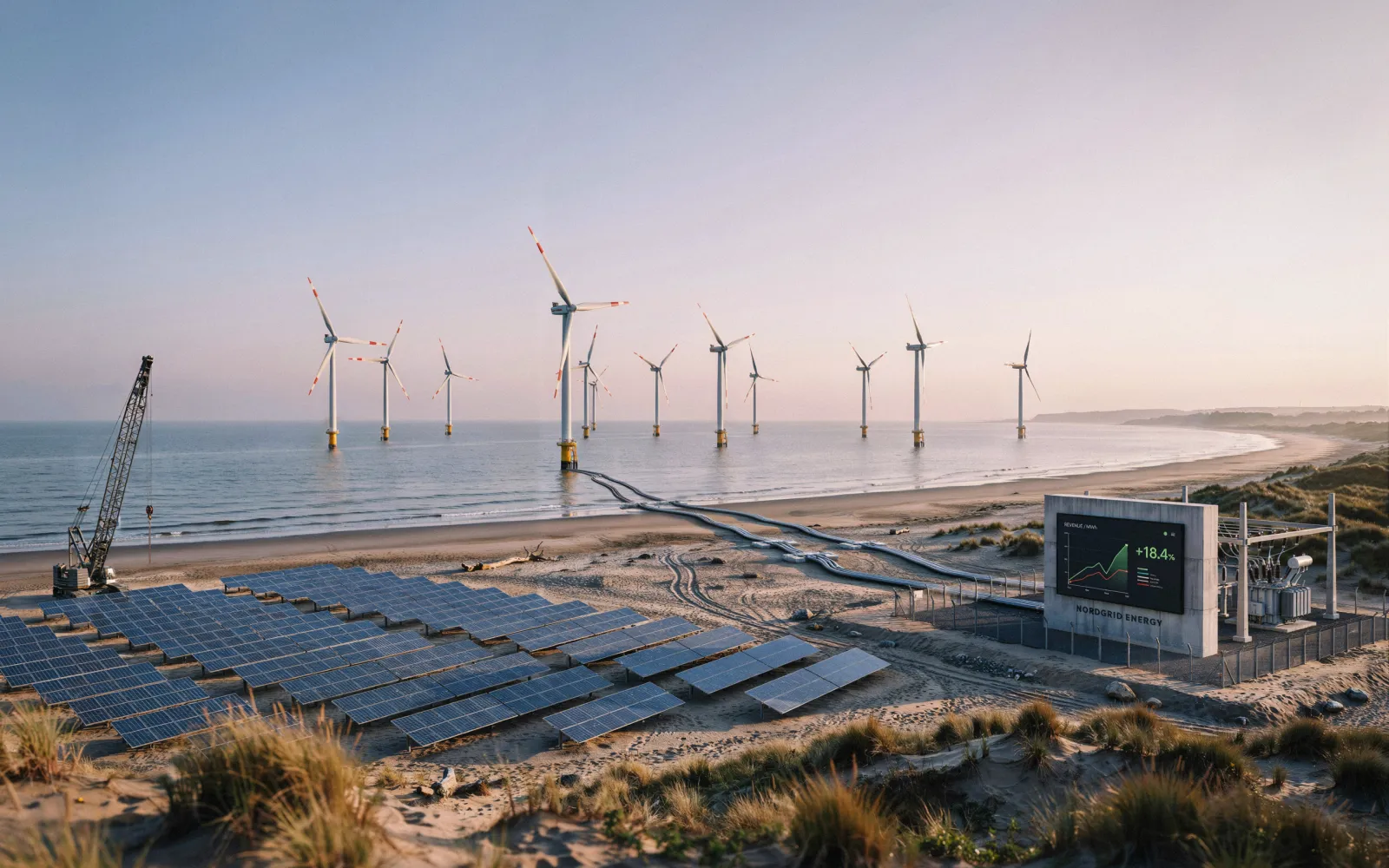
Northland’s strategy is to use the dividend reduction to strengthen its balance sheet and accelerate the construction of two key projects. The Hai Long offshore wind farm, located 45–70 km off the coast of Changhua County in the Taiwan Strait, is a 1.0 GW development that the company is building in partnership with Mitsui & Co. and Gentari International Renewables. According to a BNN Bloomberg press release dated 30 April 2026, the project’s first turbines are expected to reach commercial operation in 2027. The company has completed fabrication of the remaining components, and the project remains on schedule and within its original cost estimates.
In Poland, Northland is a joint venture partner with the Orlen Group on the Baltic Power offshore wind farm. The 1.2 GW project, the first of its kind in the Baltic Sea, has reached a critical milestone: all foundations have been installed and the onshore substation is being connected. A Poland’s Baltic Power news release reported that the first onshore connection was completed in early 2026, and the project is slated to begin operations in the second half of the year. The venture is expected to supply clean electricity to more than one million Polish households.
Financially, Northland projects a significant boost to free cash flow (FCF) from these developments. A company forecast released in 2025 projects that the Hai Long and Baltic Power projects will add approximately CAD 0.80 per share in FCF by 2030, a figure that would compress the company’s forward price‑to‑free‑cash‑flow multiple relative to peers. The company’s internal investment criteria include a 12 % internal rate of return (IRR) hurdle for new projects, and the two offshore wind farms are expected to meet or exceed that threshold.
Beyond the two projects, Northland maintains a pipeline of early‑to‑mid‑stage opportunities that could add up to 11 GW of potential capacity. The company’s 2025 financial report stated that it aims to double its operating capacity to nearly 7 GW by 2030 through a combination of new construction, asset acquisitions, and energy storage projects. The disciplined approach to project selection and the company’s focus on renewable energy assets are cited as key drivers of its long‑term growth strategy.
At present, Northland’s shares are trading at a valuation that many analysts consider attractive relative to other renewable‑energy stocks. The company’s upcoming quarterly earnings will provide further insight into the progress of the Hai Long and Baltic Power projects, as well as the impact of the dividend cut on cash flow. Investors will also watch for any updates on the company’s pipeline and potential acquisitions that could accelerate its 2030 capacity target.
In summary, Northland Power’s recent dividend cut has not deterred market confidence. The company’s offshore wind projects in Taiwan and Poland are on track, and the anticipated free‑cash‑flow contribution from these assets is expected to strengthen the firm’s financial position by 2030. The next earnings release will clarify the status of the projects and the company’s ability to meet its growth objectives.
The announcement on 20 April 2026 triggered a sharp sell‑off, with shares falling more than 10 % on the first day of trading. A report in The Globe and Mail noted that the cut was coupled with a write‑down of over CAD 500 million related to the Nordsee One offshore wind farm. Despite the initial reaction, the stock has since rebounded, trading at a price‑to‑earnings ratio that remains below the average of its peer group, according to a recent analysis by Morningstar.
Northland’s strategy is to use the dividend reduction to strengthen its balance sheet and accelerate the construction of two key projects. The Hai Long offshore wind farm, located 45–70 km off the coast of Changhua County in the Taiwan Strait, is a 1.0 GW development that the company is building in partnership with Mitsui & Co. and Gentari International Renewables. According to a BNN Bloomberg press release dated 30 April 2026, the project’s first turbines are expected to reach commercial operation in 2027. The company has completed fabrication of the remaining components, and the project remains on schedule and within its original cost estimates.
In Poland, Northland is a joint venture partner with the Orlen Group on the Baltic Power offshore wind farm. The 1.2 GW project, the first of its kind in the Baltic Sea, has reached a critical milestone: all foundations have been installed and the onshore substation is being connected. A Poland’s Baltic Power news release reported that the first onshore connection was completed in early 2026, and the project is slated to begin operations in the second half of the year. The venture is expected to supply clean electricity to more than one million Polish households.
Financially, Northland projects a significant boost to free cash flow (FCF) from these developments. A company forecast released in 2025 projects that the Hai Long and Baltic Power projects will add approximately CAD 0.80 per share in FCF by 2030, a figure that would compress the company’s forward price‑to‑free‑cash‑flow multiple relative to peers. The company’s internal investment criteria include a 12 % internal rate of return (IRR) hurdle for new projects, and the two offshore wind farms are expected to meet or exceed that threshold.
Beyond the two projects, Northland maintains a pipeline of early‑to‑mid‑stage opportunities that could add up to 11 GW of potential capacity. The company’s 2025 financial report stated that it aims to double its operating capacity to nearly 7 GW by 2030 through a combination of new construction, asset acquisitions, and energy storage projects. The disciplined approach to project selection and the company’s focus on renewable energy assets are cited as key drivers of its long‑term growth strategy.
At present, Northland’s shares are trading at a valuation that many analysts consider attractive relative to other renewable‑energy stocks. The company’s upcoming quarterly earnings will provide further insight into the progress of the Hai Long and Baltic Power projects, as well as the impact of the dividend cut on cash flow. Investors will also watch for any updates on the company’s pipeline and potential acquisitions that could accelerate its 2030 capacity target.
In summary, Northland Power’s recent dividend cut has not deterred market confidence. The company’s offshore wind projects in Taiwan and Poland are on track, and the anticipated free‑cash‑flow contribution from these assets is expected to strengthen the firm’s financial position by 2030. The next earnings release will clarify the status of the projects and the company’s ability to meet its growth objectives.








