Blab Business
Span, Nvidia-Backed Startup, Proposes Home-Mounted Mini AI Data Centers
Picture a sleek, silent AI hub perched on a residential porch, humming softly as it crunches data for the next generation of machine‑learning applications. That vision is the core of Span’s proposal, a venture backed by Nvidia that seeks to transform ordinary backyards into high‑performance edge computing nodes.
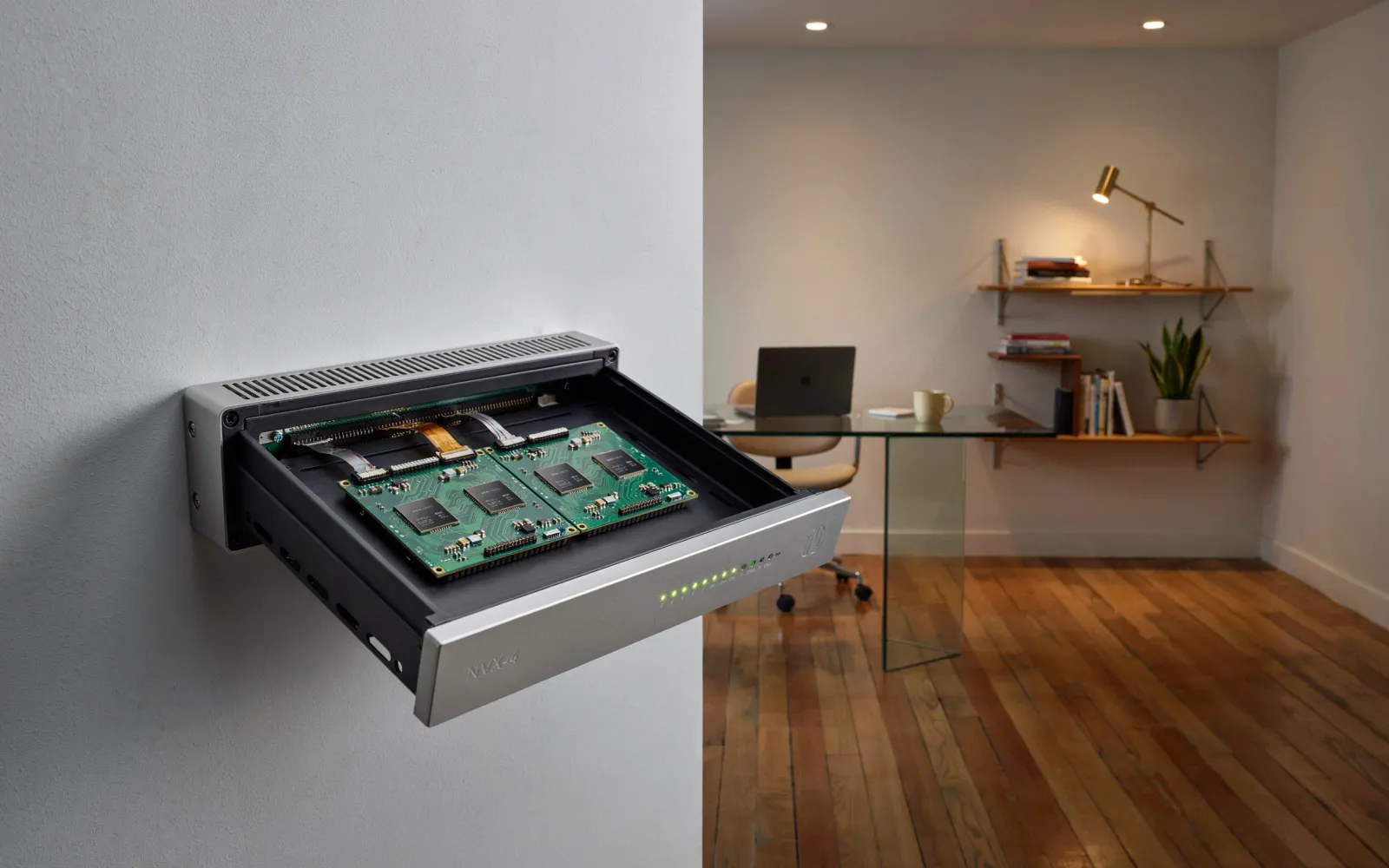
Span’s flagship unit, dubbed the XFRA node, is engineered to fit on a typical residential wall. Each node houses 16 Nvidia GPUs, four CPUs, and three terabytes of RAM, according to the startup’s specifications. The hardware is intended to run AI workloads that would otherwise be routed to sprawling, centralized data centers.
In exchange for hosting an XFRA node, Span promises homeowners free electricity, a dedicated high‑bandwidth internet line, and backup batteries to keep the system online during power interruptions. The company emphasizes that the unit is quiet and discreet, and that it consumes less energy per compute cycle than a conventional rack‑mounted data center.
The partnership with Nvidia is a key pillar of the initiative. Span has access to Nvidia’s CUDA platform and its AI operating system, which allow workloads to be distributed across multiple nodes efficiently. Nvidia’s dominance in GPU supply for training and inference gives Span a robust software ecosystem and a competitive advantage in deploying the XFRA nodes.
However, the idea has not gone unnoticed by local communities and regulators. Data‑center expansion has already faced opposition in parts of the United States and Europe, where residents have protested the strain on power grids, water usage, and environmental impact. Industry analysts warn that adding a home‑mounted node could raise local electricity bills and affect grid stability.
Span is not alone in exploring micro‑data‑center deployments. Other edge‑computing firms, such as Axelera AI and Formalize, are also developing small, distributed compute solutions that can be installed in commercial or residential settings. The growing demand for AI workloads that require lower latency and higher throughput is driving the edge infrastructure market.
The startup has yet to disclose a launch date, pricing details beyond the promised free utilities, or the scale of its deployment plans. It has also not explained how it will handle cooling, maintenance, and security for units installed on private property—issues that will be critical for regulators and homeowners alike.
As the AI boom continues to drive demand for GPU‑based compute, the proposition of turning homes into data centers remains a novel but contentious idea. Span’s next steps will involve navigating zoning and building codes, securing supply‑chain logistics for the XFRA nodes, and demonstrating that the projected energy savings and performance benefits outweigh the additional load on residential grids. The company’s progress will be closely watched by investors, utilities, and local governments.
Span’s flagship unit, dubbed the XFRA node, is engineered to fit on a typical residential wall. Each node houses 16 Nvidia GPUs, four CPUs, and three terabytes of RAM, according to the startup’s specifications. The hardware is intended to run AI workloads that would otherwise be routed to sprawling, centralized data centers.
In exchange for hosting an XFRA node, Span promises homeowners free electricity, a dedicated high‑bandwidth internet line, and backup batteries to keep the system online during power interruptions. The company emphasizes that the unit is quiet and discreet, and that it consumes less energy per compute cycle than a conventional rack‑mounted data center.
The partnership with Nvidia is a key pillar of the initiative. Span has access to Nvidia’s CUDA platform and its AI operating system, which allow workloads to be distributed across multiple nodes efficiently. Nvidia’s dominance in GPU supply for training and inference gives Span a robust software ecosystem and a competitive advantage in deploying the XFRA nodes.
However, the idea has not gone unnoticed by local communities and regulators. Data‑center expansion has already faced opposition in parts of the United States and Europe, where residents have protested the strain on power grids, water usage, and environmental impact. Industry analysts warn that adding a home‑mounted node could raise local electricity bills and affect grid stability.
Span is not alone in exploring micro‑data‑center deployments. Other edge‑computing firms, such as Axelera AI and Formalize, are also developing small, distributed compute solutions that can be installed in commercial or residential settings. The growing demand for AI workloads that require lower latency and higher throughput is driving the edge infrastructure market.
The startup has yet to disclose a launch date, pricing details beyond the promised free utilities, or the scale of its deployment plans. It has also not explained how it will handle cooling, maintenance, and security for units installed on private property—issues that will be critical for regulators and homeowners alike.
As the AI boom continues to drive demand for GPU‑based compute, the proposition of turning homes into data centers remains a novel but contentious idea. Span’s next steps will involve navigating zoning and building codes, securing supply‑chain logistics for the XFRA nodes, and demonstrating that the projected energy savings and performance benefits outweigh the additional load on residential grids. The company’s progress will be closely watched by investors, utilities, and local governments.