Blab Business
General Motors Expands into Sodium-Ion Energy Storage and Grid-Connected EVs
General Motors (GM) has unveiled a two‑pronged strategy that moves it beyond the showroom: sodium‑ion batteries for grid‑scale storage and a vehicle‑to‑grid (V2G) network that could tie up to 52,000 of its electric cars to the power grid by 2030. The announcement, made in Detroit, also introduced Energy Pass, a single‑app charging solution that unifies payment and access across the nation’s major public networks.
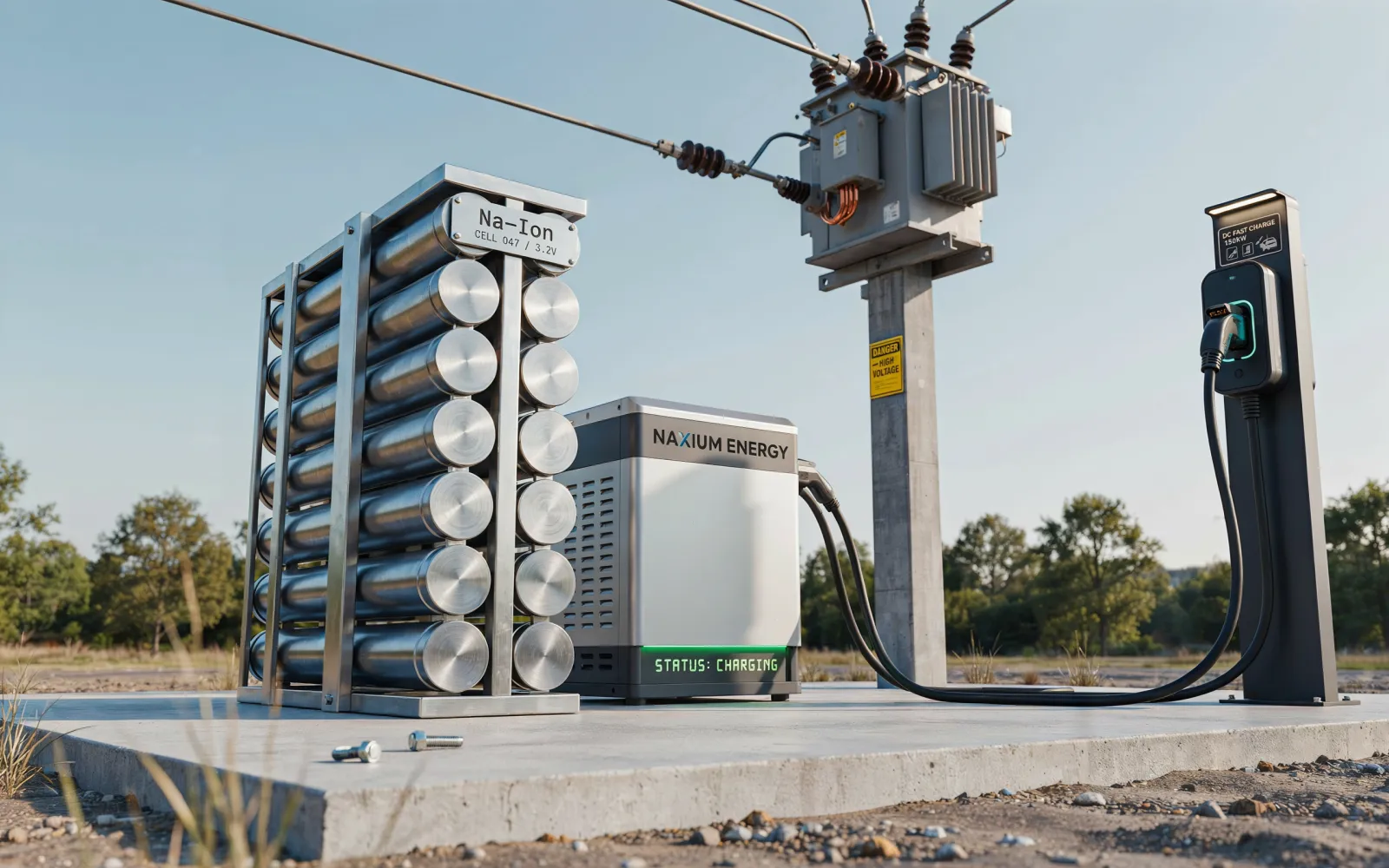
Sodium‑ion is the newest chemistry in GM’s battery lineup, overseen by Vice President of Battery and Sustainability Kurt Kelty. The company already fields lithium‑iron‑phosphate (LFP) cells in the Chevy Bolt, nickel‑manganese‑cobalt (NMC) cells in most current models, and is developing lithium‑manganese‑rich (LMR) chemistry for larger trucks and SUVs. Sodium‑ion will be co‑developed with U.S. startup Peak Energy, which has run pilot projects with several utilities.
Prismatic sodium‑ion cells require no active cooling, cutting pack complexity and cost. They also endure extreme temperatures and, over their lifespan, are projected to cost 20 % less than LFP batteries—the dominant chemistry in today’s energy‑storage systems. According to GM, sodium is 1,000 times more abundant than lithium and the raw materials needed for sodium‑ion batteries are largely available in North America. The automaker has earmarked $900 million for battery research with the goal of keeping the supply chain on the continent.
The push into grid‑scale storage comes as U.S. EV sales have slowed after the expiration of federal tax credits. Automakers that have invested heavily in domestic battery production are looking for new uses for that capacity. Energy‑storage systems can absorb surplus renewable generation and release power when demand peaks—a need that is growing with the rise of AI data centers.
GM is also pursuing V2G capabilities. Roughly 250,000 of its EVs already support bidirectional charging. With a software update, owners can activate V2G through a home‑installed unit that GM will provide at an additional cost. In a pilot with Pacific Gas & Electric (PG&E), GM plans to connect 52,000 EVs to the grid, potentially powering 120,000 homes for up to a week.
Energy Pass, launched this week, is integrated into GM’s existing mobile apps—myChevrolet, myCadillac, and myGMC. The app lets owners locate, start, and pay for charging at networks including Electrify America, ChargePoint, Ionna, EVgo, and Tesla Superchargers. GM also announced that all 2027 models will feature a native NACS charging port and Plug & Charge capability.
The automaker’s move into energy storage and V2G is not unique. Tesla sells residential and commercial batteries, and Ford has begun its own energy‑storage initiatives. GM’s strategy reflects a broader industry trend of automakers diversifying into power‑grid services.
While the company reported $7.1 billion in charges linked to a pullback in its EV ambitions last year, GM’s new initiatives position it as an energy company as well as a vehicle manufacturer. Whether the energy‑storage and grid‑connected EV programs will become significant revenue streams or primarily serve as a hedge against a slowing EV market remains to be seen.
The next few months will bring additional data from the PG&E pilot and from the first sodium‑ion energy‑storage system that Peak Energy and GM plan to deploy. Investors and analysts will likely watch how these programs affect GM’s balance sheet and whether the company can capitalize on the growing demand for grid resilience and renewable integration.
In summary, GM is expanding its battery portfolio to include sodium‑ion cells for stationary storage, partnering with Peak Energy, and aiming to connect tens of thousands of its EVs to the grid. The Energy Pass app consolidates charging across major networks, and all 2027 models will feature NACS ports. These moves signal GM’s intent to play a larger role in the energy sector while addressing supply‑chain and market challenges in the EV space.
Sodium‑ion is the newest chemistry in GM’s battery lineup, overseen by Vice President of Battery and Sustainability Kurt Kelty. The company already fields lithium‑iron‑phosphate (LFP) cells in the Chevy Bolt, nickel‑manganese‑cobalt (NMC) cells in most current models, and is developing lithium‑manganese‑rich (LMR) chemistry for larger trucks and SUVs. Sodium‑ion will be co‑developed with U.S. startup Peak Energy, which has run pilot projects with several utilities.
Prismatic sodium‑ion cells require no active cooling, cutting pack complexity and cost. They also endure extreme temperatures and, over their lifespan, are projected to cost 20 % less than LFP batteries—the dominant chemistry in today’s energy‑storage systems. According to GM, sodium is 1,000 times more abundant than lithium and the raw materials needed for sodium‑ion batteries are largely available in North America. The automaker has earmarked $900 million for battery research with the goal of keeping the supply chain on the continent.
The push into grid‑scale storage comes as U.S. EV sales have slowed after the expiration of federal tax credits. Automakers that have invested heavily in domestic battery production are looking for new uses for that capacity. Energy‑storage systems can absorb surplus renewable generation and release power when demand peaks—a need that is growing with the rise of AI data centers.
GM is also pursuing V2G capabilities. Roughly 250,000 of its EVs already support bidirectional charging. With a software update, owners can activate V2G through a home‑installed unit that GM will provide at an additional cost. In a pilot with Pacific Gas & Electric (PG&E), GM plans to connect 52,000 EVs to the grid, potentially powering 120,000 homes for up to a week.
Energy Pass, launched this week, is integrated into GM’s existing mobile apps—myChevrolet, myCadillac, and myGMC. The app lets owners locate, start, and pay for charging at networks including Electrify America, ChargePoint, Ionna, EVgo, and Tesla Superchargers. GM also announced that all 2027 models will feature a native NACS charging port and Plug & Charge capability.
The automaker’s move into energy storage and V2G is not unique. Tesla sells residential and commercial batteries, and Ford has begun its own energy‑storage initiatives. GM’s strategy reflects a broader industry trend of automakers diversifying into power‑grid services.
While the company reported $7.1 billion in charges linked to a pullback in its EV ambitions last year, GM’s new initiatives position it as an energy company as well as a vehicle manufacturer. Whether the energy‑storage and grid‑connected EV programs will become significant revenue streams or primarily serve as a hedge against a slowing EV market remains to be seen.
The next few months will bring additional data from the PG&E pilot and from the first sodium‑ion energy‑storage system that Peak Energy and GM plan to deploy. Investors and analysts will likely watch how these programs affect GM’s balance sheet and whether the company can capitalize on the growing demand for grid resilience and renewable integration.
In summary, GM is expanding its battery portfolio to include sodium‑ion cells for stationary storage, partnering with Peak Energy, and aiming to connect tens of thousands of its EVs to the grid. The Energy Pass app consolidates charging across major networks, and all 2027 models will feature NACS ports. These moves signal GM’s intent to play a larger role in the energy sector while addressing supply‑chain and market challenges in the EV space.