Blab Business
SpaceX Debuts on Nasdaq, Shares Surge 19% as Company Reaches $1.77 Trillion Valuation
SpaceX’s first public listing on Nasdaq lit up Wall Street, with shares leaping 19 percent on the day they opened, propelling the company’s market value past $1.77 trillion and catapulting Elon Musk into the U.S. trillion‑dollar club.
On Friday, June 12 2026, the privately‑held aerospace firm priced its stock at $135 a share, selling 555 million shares to raise $75 billion. The offering was the largest IPO ever recorded, and the filing and Nasdaq MarketSite in New York confirmed a valuation of $1.77 trillion.
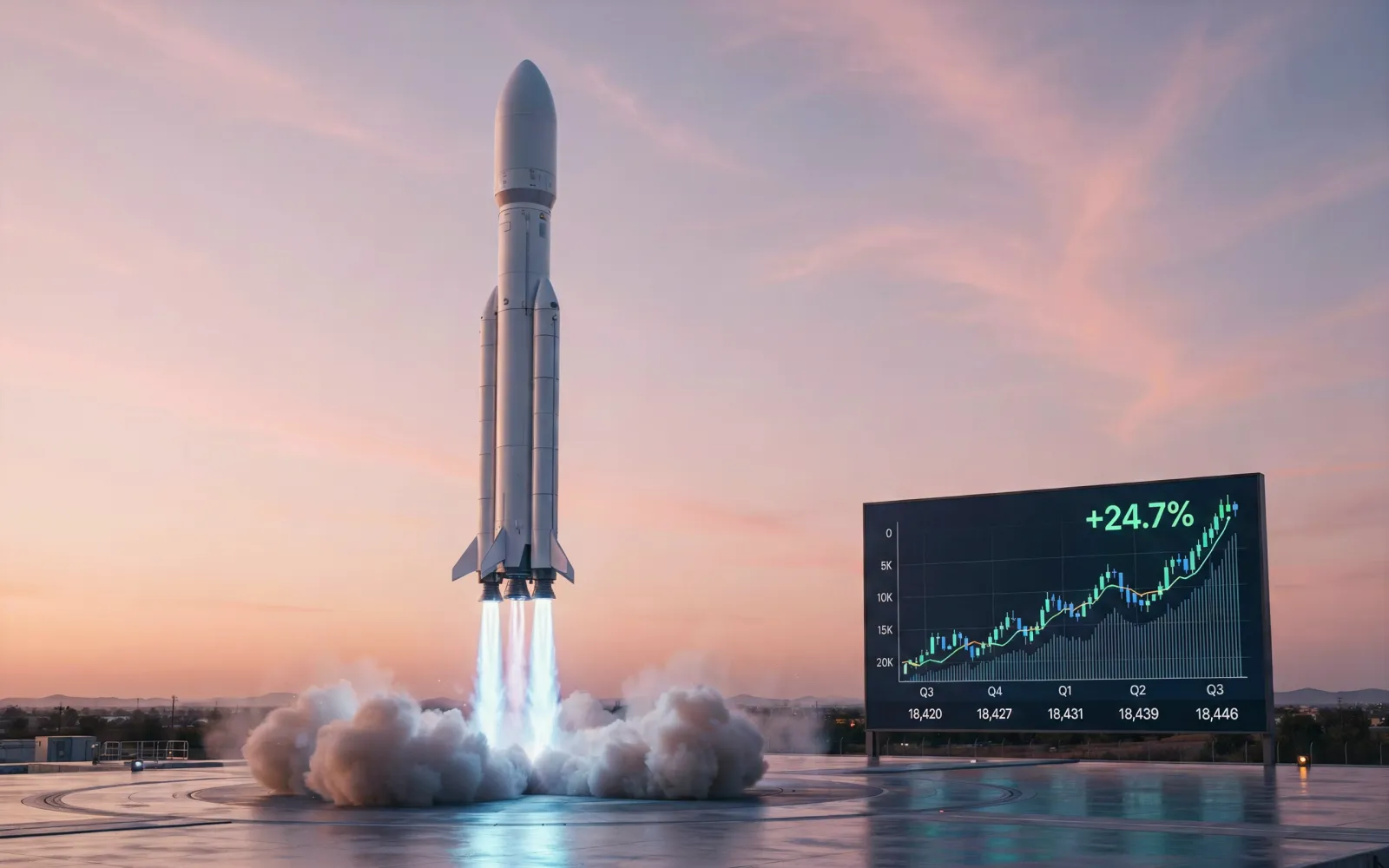
The market reaction was swift. Opening at $150, the stock climbed to a high of $176.52 before settling at $160.95, a 19 percent gain over the offering price. It became the biggest first‑day jump for a U.S. IPO in more than a decade, underscoring the appetite for SpaceX’s blend of cutting‑edge launch capability and growing satellite‑internet business.
Demand came from both institutional investors and retail buyers. The company’s S‑1 filing allocated 20 percent of the shares to retail investors, a move that helped broaden the ownership base. Analysts noted that the surge reflected confidence in SpaceX’s record launch cadence, its expanding Starlink network, and the ambitious Starship program.
The IPO’s success also lifted Musk’s net worth to roughly $1.1 trillion, according to Forbes. Musk had already been listed as the world’s richest person in 2025; the new equity valuation pushed his wealth past the trillion‑dollar mark.
SpaceX’s trajectory has been defined by rapid technological milestones. After launching Falcon 1 into orbit in 2008, the company introduced Falcon 9 and Dragon 1, securing NASA’s Commercial Orbital Transportation Services contracts. In 2015, it achieved the first successful landing of a reusable first‑stage booster, a breakthrough that underpins its cost‑reduction strategy.
In 2019, the company rolled out the first operational Starlink satellite, building a broadband constellation that now serves large parts of the United States, Canada, and portions of Europe and Australia. Starlink has become SpaceX’s primary revenue engine.
Meanwhile, Starship, the two‑stage, fully reusable launch vehicle designed to replace Falcon 9 and Falcon Heavy, has completed 12 test flights as of May 2026. The program has seen seven successful missions and five failures, yet the company remains committed to advancing the vehicle’s capability to carry crew and cargo to low‑Earth orbit, the Moon, and beyond.
Proceeds from the IPO will fund rocket development, expand Starlink, and support artificial‑intelligence research following the acquisition of Musk’s AI firm xAI, according to the filing. The company also earmarked capital for future infrastructure and talent expansion.
The Nasdaq MarketSite hosted a bell‑ringing ceremony featuring President and COO Gwynne Shotwell and CEO Elon Musk. The event attracted global media attention, with coverage from the BBC, Al Jazeera, and Business Insider.
Regulatory approval came from the Securities and Exchange Commission, and SpaceX traded under the ticker SPCX. By the close of its first day, the company’s market capitalization had eclipsed $2 trillion, placing it among the world’s most valuable public firms.
Beyond the headline numbers, the IPO signals a shift in the aerospace and technology sectors. Investors are now betting on the continued importance of satellite‑internet services and reusable launch technology, while the market takes note of Musk’s track record of scaling complex engineering projects.
Shares remain volatile as SpaceX navigates its development cycle and faces competition from other launch providers. The company is slated to report Q2 earnings in September, a key moment for investors to gauge progress on Starship and subscriber growth for Starlink.
In short, SpaceX’s Nasdaq debut has rewritten the rules for aerospace IPOs, set a new record for size, and elevated Elon Musk into the trillion‑dollar echelon. The company’s future performance will hinge on the success of its launch vehicle program, the expansion of its satellite‑internet network, and the execution of its broader strategic initiatives.
On Friday, June 12 2026, the privately‑held aerospace firm priced its stock at $135 a share, selling 555 million shares to raise $75 billion. The offering was the largest IPO ever recorded, and the filing and Nasdaq MarketSite in New York confirmed a valuation of $1.77 trillion.
The market reaction was swift. Opening at $150, the stock climbed to a high of $176.52 before settling at $160.95, a 19 percent gain over the offering price. It became the biggest first‑day jump for a U.S. IPO in more than a decade, underscoring the appetite for SpaceX’s blend of cutting‑edge launch capability and growing satellite‑internet business.
Demand came from both institutional investors and retail buyers. The company’s S‑1 filing allocated 20 percent of the shares to retail investors, a move that helped broaden the ownership base. Analysts noted that the surge reflected confidence in SpaceX’s record launch cadence, its expanding Starlink network, and the ambitious Starship program.
The IPO’s success also lifted Musk’s net worth to roughly $1.1 trillion, according to Forbes. Musk had already been listed as the world’s richest person in 2025; the new equity valuation pushed his wealth past the trillion‑dollar mark.
SpaceX’s trajectory has been defined by rapid technological milestones. After launching Falcon 1 into orbit in 2008, the company introduced Falcon 9 and Dragon 1, securing NASA’s Commercial Orbital Transportation Services contracts. In 2015, it achieved the first successful landing of a reusable first‑stage booster, a breakthrough that underpins its cost‑reduction strategy.
In 2019, the company rolled out the first operational Starlink satellite, building a broadband constellation that now serves large parts of the United States, Canada, and portions of Europe and Australia. Starlink has become SpaceX’s primary revenue engine.
Meanwhile, Starship, the two‑stage, fully reusable launch vehicle designed to replace Falcon 9 and Falcon Heavy, has completed 12 test flights as of May 2026. The program has seen seven successful missions and five failures, yet the company remains committed to advancing the vehicle’s capability to carry crew and cargo to low‑Earth orbit, the Moon, and beyond.
Proceeds from the IPO will fund rocket development, expand Starlink, and support artificial‑intelligence research following the acquisition of Musk’s AI firm xAI, according to the filing. The company also earmarked capital for future infrastructure and talent expansion.
The Nasdaq MarketSite hosted a bell‑ringing ceremony featuring President and COO Gwynne Shotwell and CEO Elon Musk. The event attracted global media attention, with coverage from the BBC, Al Jazeera, and Business Insider.
Regulatory approval came from the Securities and Exchange Commission, and SpaceX traded under the ticker SPCX. By the close of its first day, the company’s market capitalization had eclipsed $2 trillion, placing it among the world’s most valuable public firms.
Beyond the headline numbers, the IPO signals a shift in the aerospace and technology sectors. Investors are now betting on the continued importance of satellite‑internet services and reusable launch technology, while the market takes note of Musk’s track record of scaling complex engineering projects.
Shares remain volatile as SpaceX navigates its development cycle and faces competition from other launch providers. The company is slated to report Q2 earnings in September, a key moment for investors to gauge progress on Starship and subscriber growth for Starlink.
In short, SpaceX’s Nasdaq debut has rewritten the rules for aerospace IPOs, set a new record for size, and elevated Elon Musk into the trillion‑dollar echelon. The company’s future performance will hinge on the success of its launch vehicle program, the expansion of its satellite‑internet network, and the execution of its broader strategic initiatives.