Blab Business
Iraq Cancels $764 Million Baghdad Airport Expansion Over Corruption Allegations
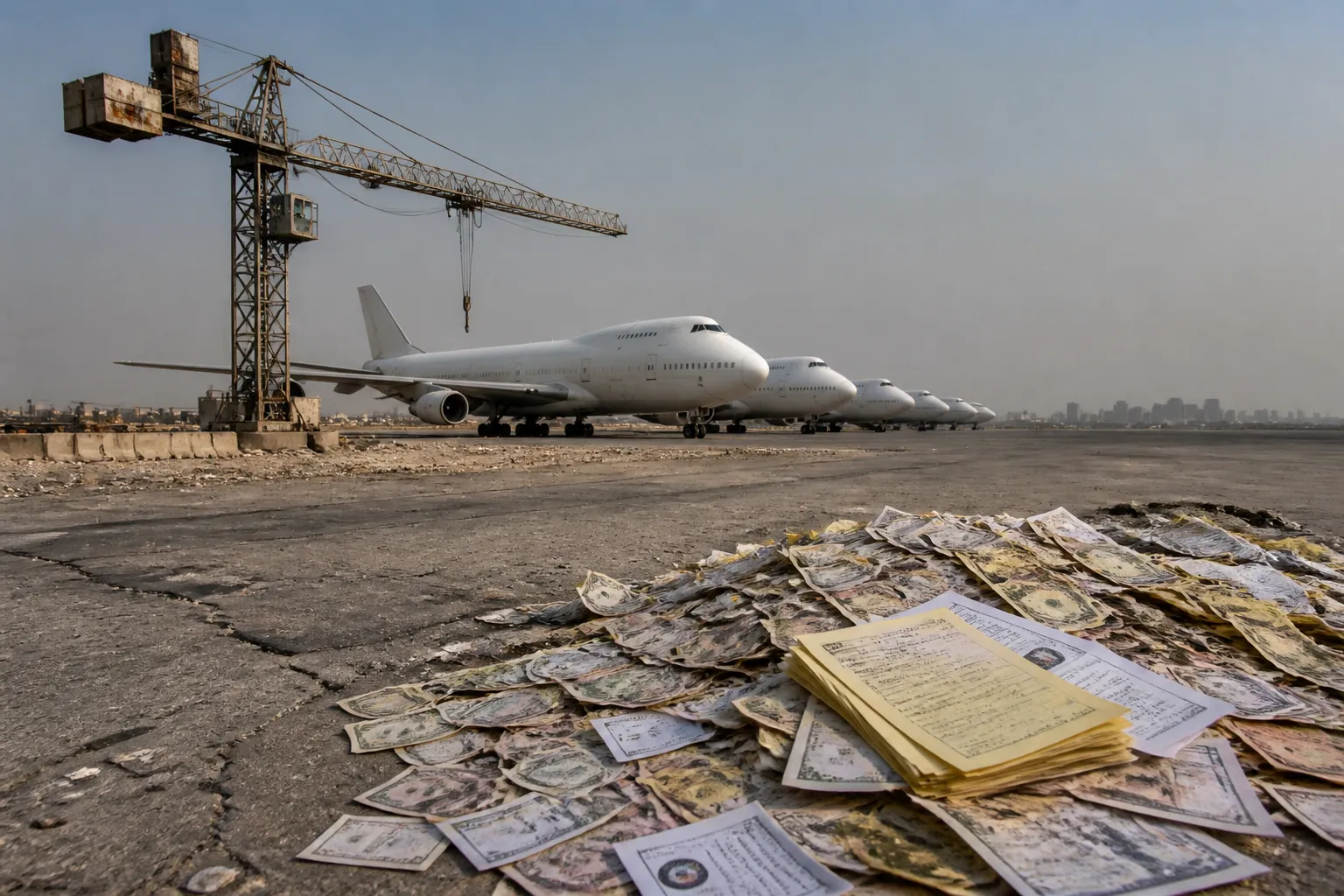
On Sunday, June 14, 2026, Baghdad’s Prime Minister Ali Falih al‑Zaidi announced that the government would terminate the $764 million expansion contract for Baghdad International Airport (BIAP) and the related regional cross‑border railway project. The decision follows an internal audit that uncovered widespread tender manipulation, procedural irregularities and structurally flawed contract clauses, according to a formal brief released by the Iraqi News Agency (INA) and corroborated by Reuters.
The BIAP expansion had originally been awarded during the administration of former Prime Minister Mohammed Shia al‑Sudani. The project was won by a joint venture between Corporación América Airports (CAAP), an aviation‑management firm headquartered in Luxembourg, and Amwaj International, a prominent Iraqi real‑estate developer. The consortium’s bid promised a revenue‑sharing ratio of 43.05 percent, higher than competitors.
Under the master plan, a new passenger terminal would accommodate 9 million passengers annually in its first phase, with a potential expansion to 15 million. The proposal also called for airside infrastructure rehabilitation, the construction of a dedicated headquarters for the Iraqi Civil Aviation Authority (ICAA), and mandatory technical training for Iraqi aviation personnel. The project was expected to modernise BIAP’s runways, boarding bridges and ground‑support equipment.
The audit revealed that the tender process had been manipulated to favour the CAAP‑Amwaj consortium. It also identified procedural anomalies that violated standard procurement rules and highlighted contract clauses that could allow for excessive financial leakage. The findings prompted the Zaidi cabinet to issue a unified executive order that cancelled both the airport expansion and the cross‑border railway initiative.
The cancellation signals a shift in the new administration’s approach to public‑private partnerships. Political observers note that the Prime Minister is using the decision to demonstrate a zero‑tolerance stance on legacy contracts tainted by corruption or insider favoritism. The government plans to restructure the aviation and transit portfolios, favouring state‑funded development strategies or highly transparent international bidding processes that eliminate intermediary financial leakage.
The move comes amid broader reform efforts by the Zaidi government, which has pledged to improve public accountability and financial transparency across all sectors. The cancellation also reflects the administration’s commitment to enforce stricter procurement standards and to prevent corruption from undermining large infrastructure projects.
The decision has implications for the aviation industry in Iraq. BIAP currently serves around 8 million passengers annually and is the country’s largest airport. The cancellation delays the airport’s planned capacity expansion and may affect future connectivity plans. The government has not yet announced a replacement procurement strategy or a new timeline for the project.
The cancellation also raises questions about the future of the cross‑border railway initiative, which was intended to improve regional trade links. No official statement has been released regarding the railway’s status.
The Iraqi government has not yet indicated whether it will seek a new bidder for the airport project or whether it will pursue a different development model. The Ministry of Finance has stated that it will review all pending infrastructure contracts to ensure compliance with updated procurement regulations.
The cancellation underscores the challenges Iraq faces in managing large public infrastructure projects. It also highlights the importance of transparent procurement processes in maintaining investor confidence and ensuring that public funds are used efficiently.
The situation remains fluid, and the government has pledged to keep stakeholders informed as it develops a new strategy for BIAP’s expansion and the cross‑border railway project.
The BIAP expansion had originally been awarded during the administration of former Prime Minister Mohammed Shia al‑Sudani. The project was won by a joint venture between Corporación América Airports (CAAP), an aviation‑management firm headquartered in Luxembourg, and Amwaj International, a prominent Iraqi real‑estate developer. The consortium’s bid promised a revenue‑sharing ratio of 43.05 percent, higher than competitors.
Under the master plan, a new passenger terminal would accommodate 9 million passengers annually in its first phase, with a potential expansion to 15 million. The proposal also called for airside infrastructure rehabilitation, the construction of a dedicated headquarters for the Iraqi Civil Aviation Authority (ICAA), and mandatory technical training for Iraqi aviation personnel. The project was expected to modernise BIAP’s runways, boarding bridges and ground‑support equipment.
The audit revealed that the tender process had been manipulated to favour the CAAP‑Amwaj consortium. It also identified procedural anomalies that violated standard procurement rules and highlighted contract clauses that could allow for excessive financial leakage. The findings prompted the Zaidi cabinet to issue a unified executive order that cancelled both the airport expansion and the cross‑border railway initiative.
The cancellation signals a shift in the new administration’s approach to public‑private partnerships. Political observers note that the Prime Minister is using the decision to demonstrate a zero‑tolerance stance on legacy contracts tainted by corruption or insider favoritism. The government plans to restructure the aviation and transit portfolios, favouring state‑funded development strategies or highly transparent international bidding processes that eliminate intermediary financial leakage.
The move comes amid broader reform efforts by the Zaidi government, which has pledged to improve public accountability and financial transparency across all sectors. The cancellation also reflects the administration’s commitment to enforce stricter procurement standards and to prevent corruption from undermining large infrastructure projects.
The decision has implications for the aviation industry in Iraq. BIAP currently serves around 8 million passengers annually and is the country’s largest airport. The cancellation delays the airport’s planned capacity expansion and may affect future connectivity plans. The government has not yet announced a replacement procurement strategy or a new timeline for the project.
The cancellation also raises questions about the future of the cross‑border railway initiative, which was intended to improve regional trade links. No official statement has been released regarding the railway’s status.
The Iraqi government has not yet indicated whether it will seek a new bidder for the airport project or whether it will pursue a different development model. The Ministry of Finance has stated that it will review all pending infrastructure contracts to ensure compliance with updated procurement regulations.
The cancellation underscores the challenges Iraq faces in managing large public infrastructure projects. It also highlights the importance of transparent procurement processes in maintaining investor confidence and ensuring that public funds are used efficiently.
The situation remains fluid, and the government has pledged to keep stakeholders informed as it develops a new strategy for BIAP’s expansion and the cross‑border railway project.








