Blab Business
ASMS and ProClime Partner to Develop Biochar-Based Soil Enhancers
On July 29 2026, Avio Smart Market Stack Limited (ASMS)—formerly Bartronics India Ltd.—announced a partnership with ProClime Services Private Limited to co‑create biochar‑based soil enhancers that promise to lift crop yields across India.
The deal blends ASMS’s deep‑rooted rural distribution network, agricultural know‑how and formulation expertise with ProClime’s niche in biochar production and carbon‑project development. ASMS said the collaboration will concentrate on crafting scientifically validated biochar‑integrated fertilizer blends that boost soil fertility, improve water retention, raise crop yields and lock carbon for the long term.
A cornerstone of the initiative is the assessment of biochar sourced from sustainable feedstocks such as bamboo, lantana, senna, pine needles and assorted agricultural residues. Together, the companies will identify the optimal mix for commercial rollout through laboratory testing, field trials and agronomic studies.
Raja Krishna Murthy Morla, Head of Agri‑Tech Business at ASMS, added that the partnership will also explore ways to generate carbon credits via biochar application, giving farmers a potential new income stream.
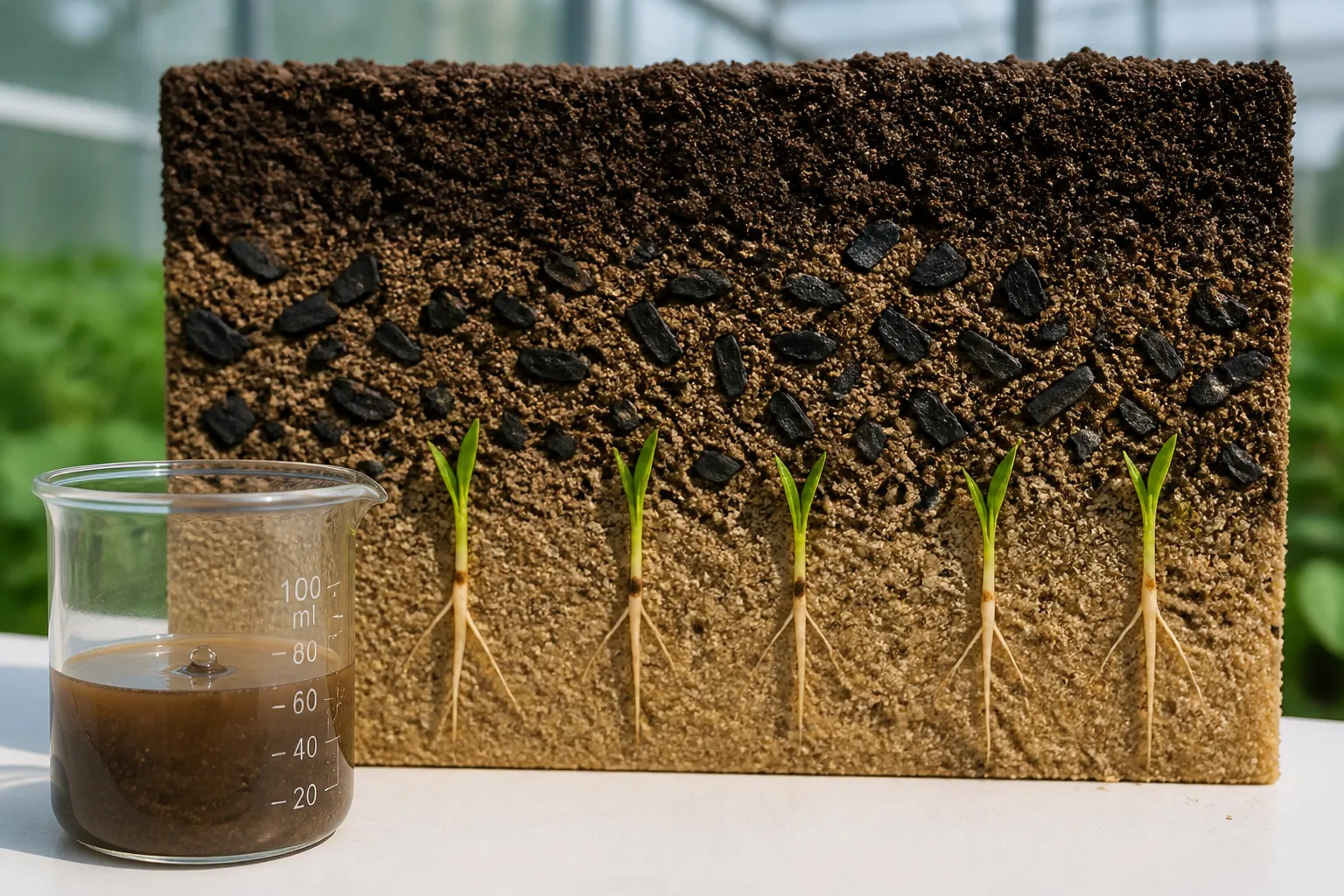
Biochar—char‑like material produced by pyrolysing biomass in an oxygen‑limited environment—has long been recognised for its soil‑health benefits. The International Biochar Initiative defines it as a solid that, when applied to soil, can increase aeration, curb greenhouse‑gas emissions, enhance fertility, reduce nutrient leaching and raise water‑holding capacity. Reviews published in 2025 and 2026 have documented its ability to improve crop productivity and contribute to climate‑change mitigation through carbon sequestration.
India’s agricultural sector still wrestles with crop‑residue burning, which pollutes the air and degrades soil. Turning those residues into biochar offers a way to convert waste into a valuable soil amendment while sequestering carbon for potentially thousands of years. The partnership’s focus on feedstocks such as bamboo and senna aligns with national initiatives that promote sustainable agriculture and integrate biochar into existing residue‑management schemes.
The agreement also positions the two firms to tap India’s emerging carbon‑credit market. By producing biochar that can be certified for carbon removal, the partners could supply credits to buyers seeking to offset emissions, echoing recent large‑scale biochar projects that have attracted corporate buyers.
While the announcement outlines the strategic intent and research focus, neither company has yet revealed a timetable for product launch or pilot deployment. Both ASMS and ProClime said the next phase will involve detailed formulation trials and validation studies to ensure the blends meet agronomic and environmental standards.
The collaboration marks a concrete step toward mainstreaming biochar in Indian agriculture. If successful, it could give farmers a dual benefit: higher yields and an additional revenue stream from carbon credits. Progress will likely be tracked through forthcoming research reports and, potentially, future earnings disclosures that reflect the commercialization of biochar‑based products.
In the coming months, stakeholders will watch for updates on field‑trial results, certification milestones and any regulatory approvals required for biochar application and carbon‑credit issuance. The outcome of this partnership could shape the broader adoption of biochar in India’s agricultural sector and help the country meet its climate‑mitigation targets.
The deal blends ASMS’s deep‑rooted rural distribution network, agricultural know‑how and formulation expertise with ProClime’s niche in biochar production and carbon‑project development. ASMS said the collaboration will concentrate on crafting scientifically validated biochar‑integrated fertilizer blends that boost soil fertility, improve water retention, raise crop yields and lock carbon for the long term.
A cornerstone of the initiative is the assessment of biochar sourced from sustainable feedstocks such as bamboo, lantana, senna, pine needles and assorted agricultural residues. Together, the companies will identify the optimal mix for commercial rollout through laboratory testing, field trials and agronomic studies.
Raja Krishna Murthy Morla, Head of Agri‑Tech Business at ASMS, added that the partnership will also explore ways to generate carbon credits via biochar application, giving farmers a potential new income stream.
Biochar—char‑like material produced by pyrolysing biomass in an oxygen‑limited environment—has long been recognised for its soil‑health benefits. The International Biochar Initiative defines it as a solid that, when applied to soil, can increase aeration, curb greenhouse‑gas emissions, enhance fertility, reduce nutrient leaching and raise water‑holding capacity. Reviews published in 2025 and 2026 have documented its ability to improve crop productivity and contribute to climate‑change mitigation through carbon sequestration.
India’s agricultural sector still wrestles with crop‑residue burning, which pollutes the air and degrades soil. Turning those residues into biochar offers a way to convert waste into a valuable soil amendment while sequestering carbon for potentially thousands of years. The partnership’s focus on feedstocks such as bamboo and senna aligns with national initiatives that promote sustainable agriculture and integrate biochar into existing residue‑management schemes.
The agreement also positions the two firms to tap India’s emerging carbon‑credit market. By producing biochar that can be certified for carbon removal, the partners could supply credits to buyers seeking to offset emissions, echoing recent large‑scale biochar projects that have attracted corporate buyers.
While the announcement outlines the strategic intent and research focus, neither company has yet revealed a timetable for product launch or pilot deployment. Both ASMS and ProClime said the next phase will involve detailed formulation trials and validation studies to ensure the blends meet agronomic and environmental standards.
The collaboration marks a concrete step toward mainstreaming biochar in Indian agriculture. If successful, it could give farmers a dual benefit: higher yields and an additional revenue stream from carbon credits. Progress will likely be tracked through forthcoming research reports and, potentially, future earnings disclosures that reflect the commercialization of biochar‑based products.
In the coming months, stakeholders will watch for updates on field‑trial results, certification milestones and any regulatory approvals required for biochar application and carbon‑credit issuance. The outcome of this partnership could shape the broader adoption of biochar in India’s agricultural sector and help the country meet its climate‑mitigation targets.