Blab Business
Mexico and Switzerland Strengthen Ties with $2.1 B in New Investment Commitments
On Wednesday, Mexican President Claudia Sheinbaum met Swiss Confederation President Guy Parmelin at the National Palace in Mexico City to discuss trade and investment. The meeting, which coincided with the 80th anniversary of diplomatic relations between the two countries, reaffirmed Mexico’s commitment to modernize the free‑trade agreement (FTA) with the European Free Trade Association (EFTA) and to expand Swiss investment that already exceeds US$2.1 billion.
Parmelin arrived with his wife, Caroline Merotto, and a delegation of 16 business leaders, including executives from Swiss firms that operate in Mexico. Mexican Foreign Minister Roberto Velasco had outlined the delegation’s composition in a morning press conference. The ceremony featured the national anthems of both countries and an official photograph.
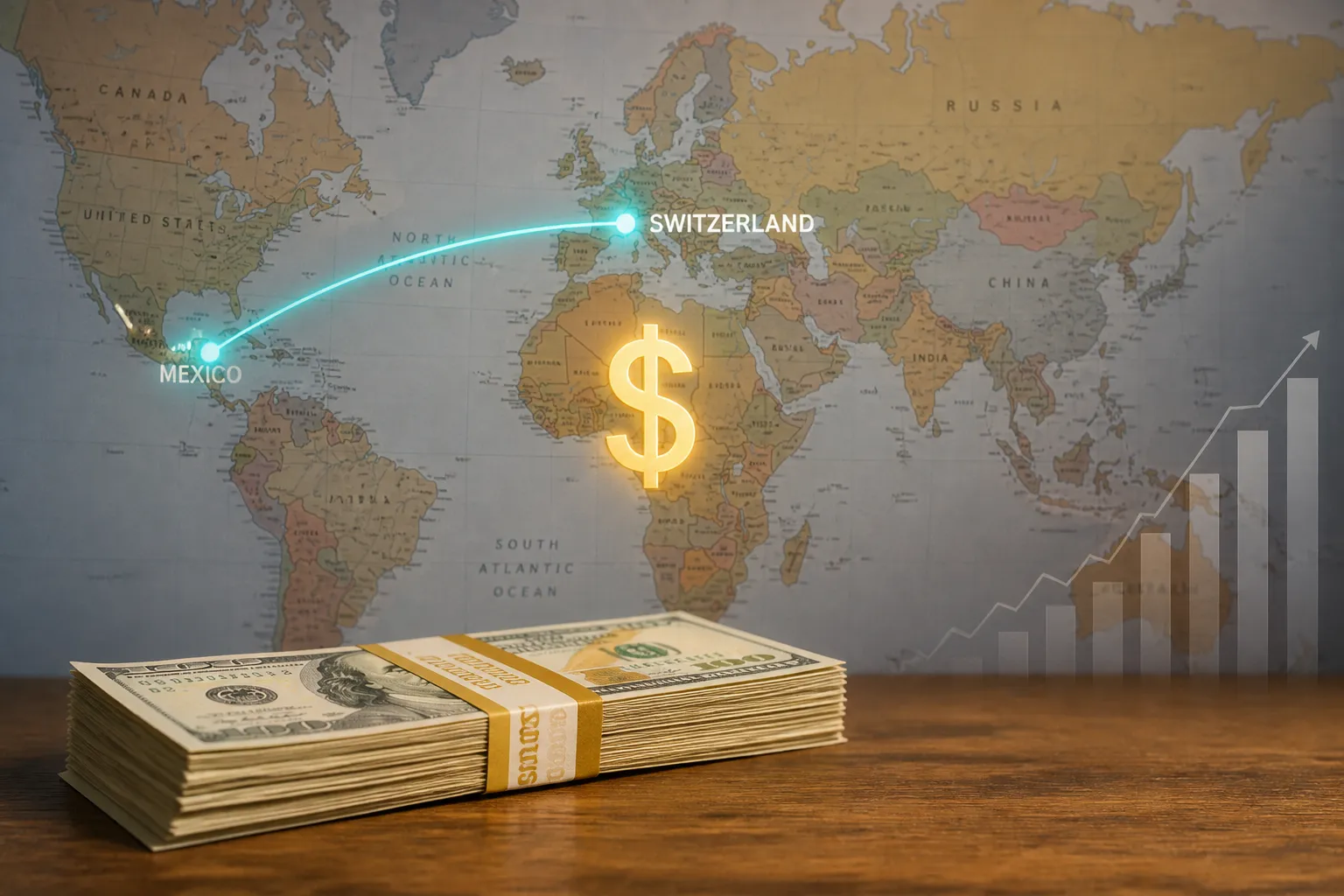
According to figures presented during the bilateral meeting, Switzerland is the sixth‑largest source of foreign direct investment (FDI) in Mexico, with investments totaling US$2.1 billion in 2025. Bilateral trade between the two countries reached US$4.2 billion last year. Mexican officials highlighted efforts to simplify administrative procedures for international investors and to facilitate Swiss corporate expansions in strategic sectors such as pharmaceuticals, finance, technology, and manufacturing.
Sheinbaum said the meeting was "very productive and very cordial" and that it had a special meaning because 2026 marks 80 years of diplomatic relations between Mexico and Switzerland. She confirmed Swiss confidence in Mexico’s economic initiative, Plan México, and agreed to continue working on the trade agreement. Parmelin noted that the delegation’s purpose was to establish themselves in Mexico and contribute to the implementation of Plan México, adding that Switzerland is the sixth‑largest country in terms of investment volume in Mexico.
Mexico is pursuing trade diversification amid uncertainty surrounding the upcoming review of the United States‑Mexico‑Canada Agreement (USMCA). Sheinbaum has emphasized that Mexico’s economic growth does not depend exclusively on a single trade agreement, citing the modernization of the European Union‑Mexico Economic Partnership signed in May. Parmelin’s North American tour, which also includes visits to the United States and Canada, reflects Switzerland’s interest in expanding its economic presence throughout the region.
Beyond industrial and financial cooperation, the leaders discussed expanding scientific collaboration and exploring the integration of Switzerland’s dual vocational education model into Mexican institutions. They reviewed joint efforts related to international law, peaceful conflict resolution, and cultural heritage protection. Under a bilateral agreement signed in 2018, Switzerland helped intercept and repatriate 67 historical artifacts to Mexico. Sheinbaum highlighted this cooperation, noting that the return of those objects has strengthened ties beyond economics.
Parmelin added that the discussions also focused on strengthening scientific relations and highlighted cooperation in fighting illicit trafficking of cultural heritage objects, thanks to the 2018 agreement.
According to statements from both governments, Mexican ministries will continue holding working sessions with the Swiss delegation to advance the trade and investment frameworks discussed during the visit. However, no definitive timeline or official schedule for signing updated agreements has been announced.
The visit underscores Mexico’s strategy to broaden trade partners and attract foreign investment while Switzerland seeks to deepen its economic footprint in Mexico and the broader North American region. The outcomes of the discussions will shape the next phase of the EFTA free‑trade agreement and inform Mexico’s broader trade‑diversification strategy as the USMCA review approaches.
Parmelin arrived with his wife, Caroline Merotto, and a delegation of 16 business leaders, including executives from Swiss firms that operate in Mexico. Mexican Foreign Minister Roberto Velasco had outlined the delegation’s composition in a morning press conference. The ceremony featured the national anthems of both countries and an official photograph.
According to figures presented during the bilateral meeting, Switzerland is the sixth‑largest source of foreign direct investment (FDI) in Mexico, with investments totaling US$2.1 billion in 2025. Bilateral trade between the two countries reached US$4.2 billion last year. Mexican officials highlighted efforts to simplify administrative procedures for international investors and to facilitate Swiss corporate expansions in strategic sectors such as pharmaceuticals, finance, technology, and manufacturing.
Sheinbaum said the meeting was "very productive and very cordial" and that it had a special meaning because 2026 marks 80 years of diplomatic relations between Mexico and Switzerland. She confirmed Swiss confidence in Mexico’s economic initiative, Plan México, and agreed to continue working on the trade agreement. Parmelin noted that the delegation’s purpose was to establish themselves in Mexico and contribute to the implementation of Plan México, adding that Switzerland is the sixth‑largest country in terms of investment volume in Mexico.
Mexico is pursuing trade diversification amid uncertainty surrounding the upcoming review of the United States‑Mexico‑Canada Agreement (USMCA). Sheinbaum has emphasized that Mexico’s economic growth does not depend exclusively on a single trade agreement, citing the modernization of the European Union‑Mexico Economic Partnership signed in May. Parmelin’s North American tour, which also includes visits to the United States and Canada, reflects Switzerland’s interest in expanding its economic presence throughout the region.
Beyond industrial and financial cooperation, the leaders discussed expanding scientific collaboration and exploring the integration of Switzerland’s dual vocational education model into Mexican institutions. They reviewed joint efforts related to international law, peaceful conflict resolution, and cultural heritage protection. Under a bilateral agreement signed in 2018, Switzerland helped intercept and repatriate 67 historical artifacts to Mexico. Sheinbaum highlighted this cooperation, noting that the return of those objects has strengthened ties beyond economics.
Parmelin added that the discussions also focused on strengthening scientific relations and highlighted cooperation in fighting illicit trafficking of cultural heritage objects, thanks to the 2018 agreement.
According to statements from both governments, Mexican ministries will continue holding working sessions with the Swiss delegation to advance the trade and investment frameworks discussed during the visit. However, no definitive timeline or official schedule for signing updated agreements has been announced.
The visit underscores Mexico’s strategy to broaden trade partners and attract foreign investment while Switzerland seeks to deepen its economic footprint in Mexico and the broader North American region. The outcomes of the discussions will shape the next phase of the EFTA free‑trade agreement and inform Mexico’s broader trade‑diversification strategy as the USMCA review approaches.