Blab Business
SpaceX Surpasses 10,000 Starlink Satellites, Sets Stage for 100,000-Satellite Ambition
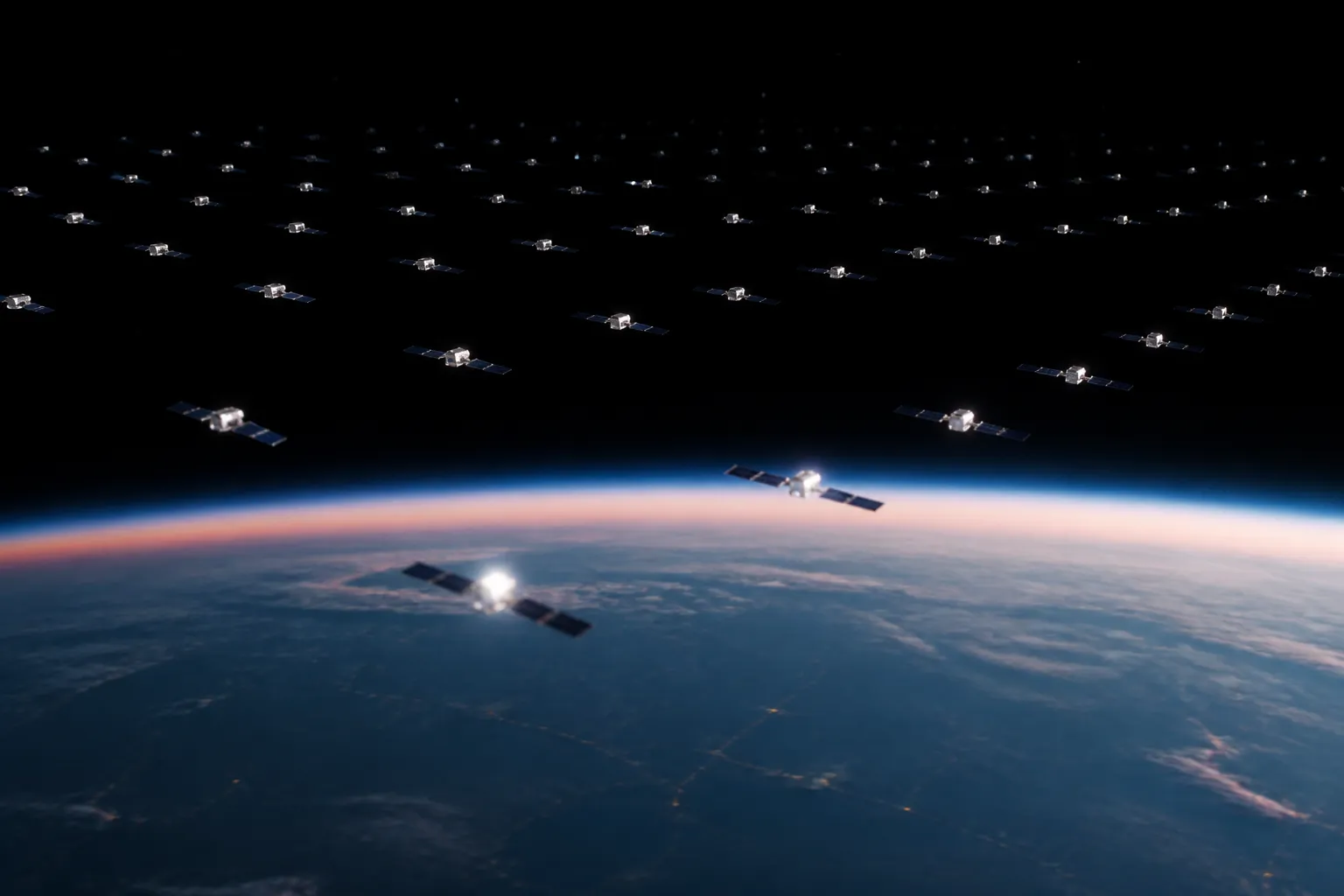
On the evening of June 16 2026, a Falcon 9 launched from Vandenberg Space Force Base carried 20 new Starlink satellites into low‑Earth orbit. The second stage released the payload at about 550 km, adding the 10,413th active Starlink to the constellation and making it the largest single‑operator fleet in orbit.
The 10,000‑satellite milestone marks the first time a single company has owned more than half of all operational satellites in Earth orbit. SpaceX data show that roughly two‑thirds of every satellite in orbit—whether weather, GPS, communications, scientific probes, or student cubesats—are Starlinks. Since 2019 the company has launched a Falcon 9 with 20 or more Starlinks roughly every four to five days. In the first six months of 2026 it launched more than 1,500 satellites, a pace that exceeds the total number of active satellites operated by any nation other than the United States.
SpaceX’s current fleet consists of V2 Mini satellites that weigh about 800 kg each and are designed to last roughly five years. When a satellite’s krypton‑powered Hall‑effect thrusters can no longer maintain its orbit, ground controllers command a deorbit burn that causes the craft to re‑enter the atmosphere and burn up. The company has de‑orbited about 2.6 satellites per day between December 2025 and May 2026. Collision‑avoidance operations use conjunction data from the U.S. Space Force and perform tens of thousands of avoidance maneuvers every six months. The increasing density of objects in the 550‑km shell, combined with other megaconstellations such as China’s Guowang and Qianfan and Amazon’s Project Kuiper, raises the risk of a Kessler‑style cascade. Engineers at SpaceX argue that the low altitude of its satellites is an advantage because debris at 550 km will naturally de‑orbit within five to ten years if left unattended.
In a bid to expand the network, SpaceX has filed an application with the U.S. Federal Communications Commission for permission to operate up to 100,000 third‑generation Starlink satellites. The Gen 3 design is expected to weigh close to 2,000 kg, include laser links for satellite‑to‑satellite routing, and deliver on the order of a terabit per second of bandwidth per craft. Even a fraction of that fleet—30,000 satellites—would make Starlink larger than the sum of all other operators on Earth.
Starlink’s service now serves more than 5 million subscribers in more than 100 countries as of mid‑2026, delivering broadband to remote regions such as mountain villages in Chile, farming cooperatives in Kenya, ships in the Pacific, and scientific outposts worldwide. The network has also become a strategic asset in conflict zones, most notably in Ukraine, where terminals have supported frontline communications since 2022. The constellation’s visibility has drawn attention from the astronomical community; wide‑field surveys such as the Vera C. Rubin Observatory have had to develop software to mask Starlink tracks in long exposures. During twilight dozens of Starlinks are visible to the naked eye, and a launch can produce a train of bright points moving across the sky.
SpaceX remains a public company after its June 12, 2026 IPO, but Elon Musk retains 85 % of voting power through super‑voting stock. The company’s dominance in both launch services and satellite connectivity has led to comparisons with other large infrastructure assets, but no other private entity currently holds a comparable share of the global satellite fleet.
The current situation leaves several questions unresolved. SpaceX has not yet begun deploying Gen 3 satellites, and the FCC application for 100,000 satellites is still pending. The long‑term sustainability of a megaconstellation in the 550‑km shell will depend on continued collision‑avoidance operations and on how other operators respond to the growing orbital density. Investors and regulators will watch the next earnings reports and FCC decisions closely as the company moves toward its next phase of expansion.
The 10,000‑satellite milestone marks the first time a single company has owned more than half of all operational satellites in Earth orbit. SpaceX data show that roughly two‑thirds of every satellite in orbit—whether weather, GPS, communications, scientific probes, or student cubesats—are Starlinks. Since 2019 the company has launched a Falcon 9 with 20 or more Starlinks roughly every four to five days. In the first six months of 2026 it launched more than 1,500 satellites, a pace that exceeds the total number of active satellites operated by any nation other than the United States.
SpaceX’s current fleet consists of V2 Mini satellites that weigh about 800 kg each and are designed to last roughly five years. When a satellite’s krypton‑powered Hall‑effect thrusters can no longer maintain its orbit, ground controllers command a deorbit burn that causes the craft to re‑enter the atmosphere and burn up. The company has de‑orbited about 2.6 satellites per day between December 2025 and May 2026. Collision‑avoidance operations use conjunction data from the U.S. Space Force and perform tens of thousands of avoidance maneuvers every six months. The increasing density of objects in the 550‑km shell, combined with other megaconstellations such as China’s Guowang and Qianfan and Amazon’s Project Kuiper, raises the risk of a Kessler‑style cascade. Engineers at SpaceX argue that the low altitude of its satellites is an advantage because debris at 550 km will naturally de‑orbit within five to ten years if left unattended.
In a bid to expand the network, SpaceX has filed an application with the U.S. Federal Communications Commission for permission to operate up to 100,000 third‑generation Starlink satellites. The Gen 3 design is expected to weigh close to 2,000 kg, include laser links for satellite‑to‑satellite routing, and deliver on the order of a terabit per second of bandwidth per craft. Even a fraction of that fleet—30,000 satellites—would make Starlink larger than the sum of all other operators on Earth.
Starlink’s service now serves more than 5 million subscribers in more than 100 countries as of mid‑2026, delivering broadband to remote regions such as mountain villages in Chile, farming cooperatives in Kenya, ships in the Pacific, and scientific outposts worldwide. The network has also become a strategic asset in conflict zones, most notably in Ukraine, where terminals have supported frontline communications since 2022. The constellation’s visibility has drawn attention from the astronomical community; wide‑field surveys such as the Vera C. Rubin Observatory have had to develop software to mask Starlink tracks in long exposures. During twilight dozens of Starlinks are visible to the naked eye, and a launch can produce a train of bright points moving across the sky.
SpaceX remains a public company after its June 12, 2026 IPO, but Elon Musk retains 85 % of voting power through super‑voting stock. The company’s dominance in both launch services and satellite connectivity has led to comparisons with other large infrastructure assets, but no other private entity currently holds a comparable share of the global satellite fleet.
The current situation leaves several questions unresolved. SpaceX has not yet begun deploying Gen 3 satellites, and the FCC application for 100,000 satellites is still pending. The long‑term sustainability of a megaconstellation in the 550‑km shell will depend on continued collision‑avoidance operations and on how other operators respond to the growing orbital density. Investors and regulators will watch the next earnings reports and FCC decisions closely as the company moves toward its next phase of expansion.