Blab Business
Palfinger Supplies 160-m Davit Cranes for Two UK Offshore Wind Projects
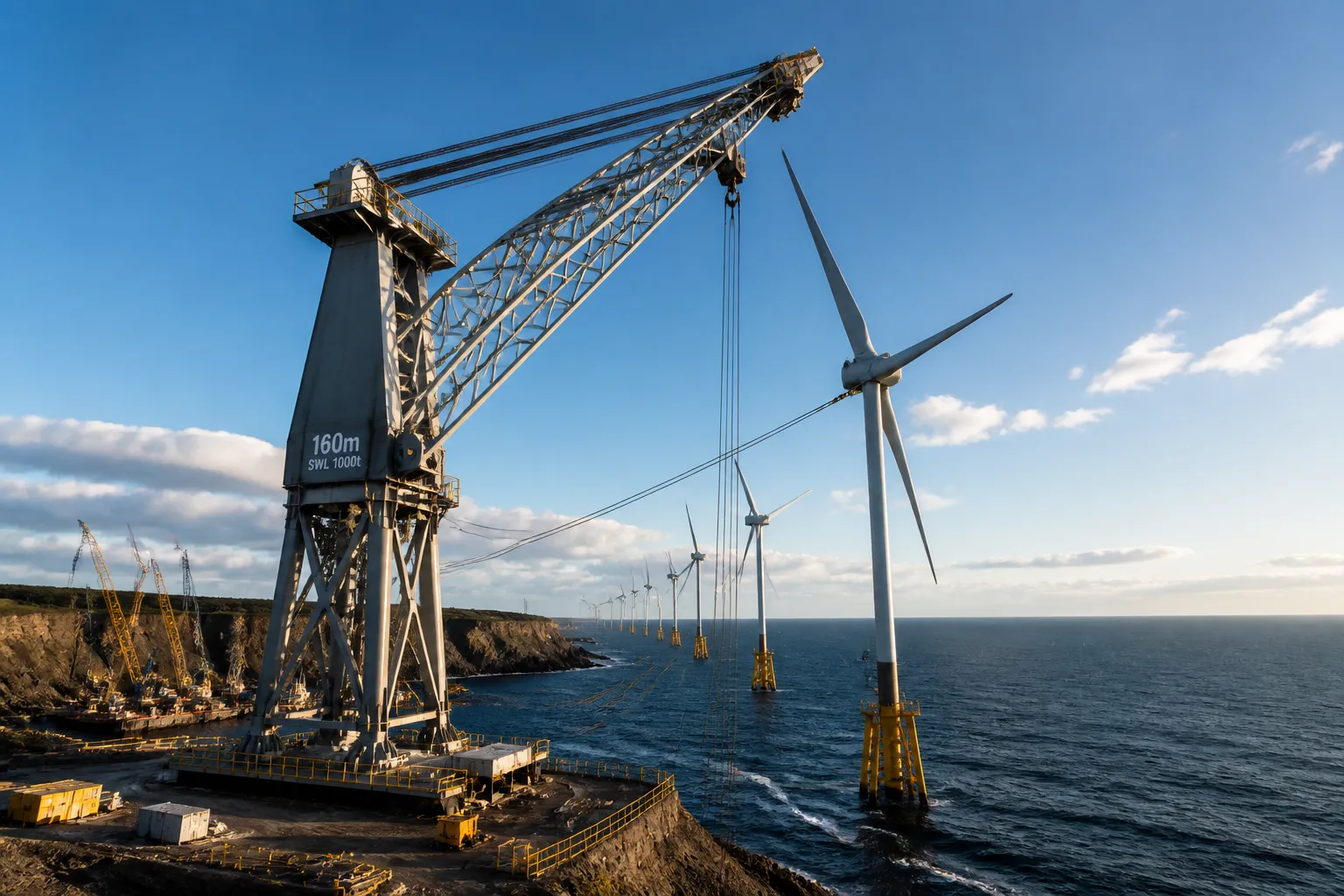
Palfinger AG, the Austrian marine‑crane manufacturer, has secured orders for its PF 160‑5 m davit cranes to support the construction and maintenance of two offshore wind farms off the east coast of England. The company will deliver 64 cranes for the 960‑MW East Anglia Two project and 96 cranes for the 1.4‑GW East Anglia Three project.
Designed for the rigors of marine environments, the cranes will handle material, maintenance and service tasks on turbine platforms. Palfinger says the davits will be installed on each turbine’s support structure, allowing crews to lift and position components safely during construction and routine maintenance.
"Wind energy is one of the defining growth markets of our time, and demand for reliable offshore solutions is rising fast across the globe," said Iavor Markov, Palfinger’s global key account and segment manager for offshore wind. "We at Palfinger anticipated this shift early and made offshore wind a central part of our marine business. With our reliable and high‑performance lifting solutions, we support customers in operating offshore wind farms safely and efficiently over their entire lifecycle. East Anglia Two is a major renewable energy project, and we are proud to contribute our expertise once again."
East Anglia Two, developed by ScottishPower Renewables, sits 37.5 km off Lowestoft and will host 64 Siemens Gamesa SG14‑236 DD turbines. The 960‑MW capacity is enough to power roughly 950,000 homes. The East Anglia Three farm, which began construction in 2022, will add an additional 1.4 GW of capacity.
The two farms belong to the larger East Anglia Array, a cluster of projects that could reach a combined capacity of up to 7.2 GW and supply electricity to more than 2.25 million homes across the UK.
Palfinger’s delivery schedule for East Anglia Two calls for completion by the end of 2026, aligning with the farm’s construction timeline. While a specific window for East Anglia Three has not yet been announced, the cranes will be installed as turbines are commissioned.
The procurement of 160‑m davit cranes reflects the broader trend of increasing investment in offshore wind. In 2026, the United Kingdom’s offshore wind farms were operating at about 16 GW of nameplate capacity, with another 10.4 GW under construction. The government has awarded contracts for difference to support an additional 6.7 GW, and the East Anglia Array is a key part of the country’s strategy to reach 76 GW of offshore capacity by the 2030s.
Palfinger’s involvement in both East Anglia Two and Three underscores the company’s commitment to the offshore wind sector. The firm has previously supplied davit cranes for other large projects, including the German and Dutch TenneT offshore substations and the 12‑unit Dragados installation.
As construction of East Anglia Three progresses, the cranes will play a critical role in ensuring that turbine components are installed and maintained with precision. The project’s completion will bring the East Anglia Array closer to its target of 1.4 GW, contributing significantly to the UK’s renewable energy mix.
In summary, Palfinger’s delivery of 160‑m davit cranes to East Anglia Two and Three is a key logistical step in the development of two of the United Kingdom’s largest offshore wind farms. The cranes will support material handling and maintenance tasks on turbine platforms, helping to keep construction on schedule and ensuring safe operation throughout the farms’ lifecycles. The projects are expected to be fully operational by 2026, with the cranes arriving in time to meet the farms’ construction and maintenance timelines.
Designed for the rigors of marine environments, the cranes will handle material, maintenance and service tasks on turbine platforms. Palfinger says the davits will be installed on each turbine’s support structure, allowing crews to lift and position components safely during construction and routine maintenance.
"Wind energy is one of the defining growth markets of our time, and demand for reliable offshore solutions is rising fast across the globe," said Iavor Markov, Palfinger’s global key account and segment manager for offshore wind. "We at Palfinger anticipated this shift early and made offshore wind a central part of our marine business. With our reliable and high‑performance lifting solutions, we support customers in operating offshore wind farms safely and efficiently over their entire lifecycle. East Anglia Two is a major renewable energy project, and we are proud to contribute our expertise once again."
East Anglia Two, developed by ScottishPower Renewables, sits 37.5 km off Lowestoft and will host 64 Siemens Gamesa SG14‑236 DD turbines. The 960‑MW capacity is enough to power roughly 950,000 homes. The East Anglia Three farm, which began construction in 2022, will add an additional 1.4 GW of capacity.
The two farms belong to the larger East Anglia Array, a cluster of projects that could reach a combined capacity of up to 7.2 GW and supply electricity to more than 2.25 million homes across the UK.
Palfinger’s delivery schedule for East Anglia Two calls for completion by the end of 2026, aligning with the farm’s construction timeline. While a specific window for East Anglia Three has not yet been announced, the cranes will be installed as turbines are commissioned.
The procurement of 160‑m davit cranes reflects the broader trend of increasing investment in offshore wind. In 2026, the United Kingdom’s offshore wind farms were operating at about 16 GW of nameplate capacity, with another 10.4 GW under construction. The government has awarded contracts for difference to support an additional 6.7 GW, and the East Anglia Array is a key part of the country’s strategy to reach 76 GW of offshore capacity by the 2030s.
Palfinger’s involvement in both East Anglia Two and Three underscores the company’s commitment to the offshore wind sector. The firm has previously supplied davit cranes for other large projects, including the German and Dutch TenneT offshore substations and the 12‑unit Dragados installation.
As construction of East Anglia Three progresses, the cranes will play a critical role in ensuring that turbine components are installed and maintained with precision. The project’s completion will bring the East Anglia Array closer to its target of 1.4 GW, contributing significantly to the UK’s renewable energy mix.
In summary, Palfinger’s delivery of 160‑m davit cranes to East Anglia Two and Three is a key logistical step in the development of two of the United Kingdom’s largest offshore wind farms. The cranes will support material handling and maintenance tasks on turbine platforms, helping to keep construction on schedule and ensuring safe operation throughout the farms’ lifecycles. The projects are expected to be fully operational by 2026, with the cranes arriving in time to meet the farms’ construction and maintenance timelines.