Blab Business
Japans Kumamoto Earthquake Disrupts Semiconductor Supply Chain
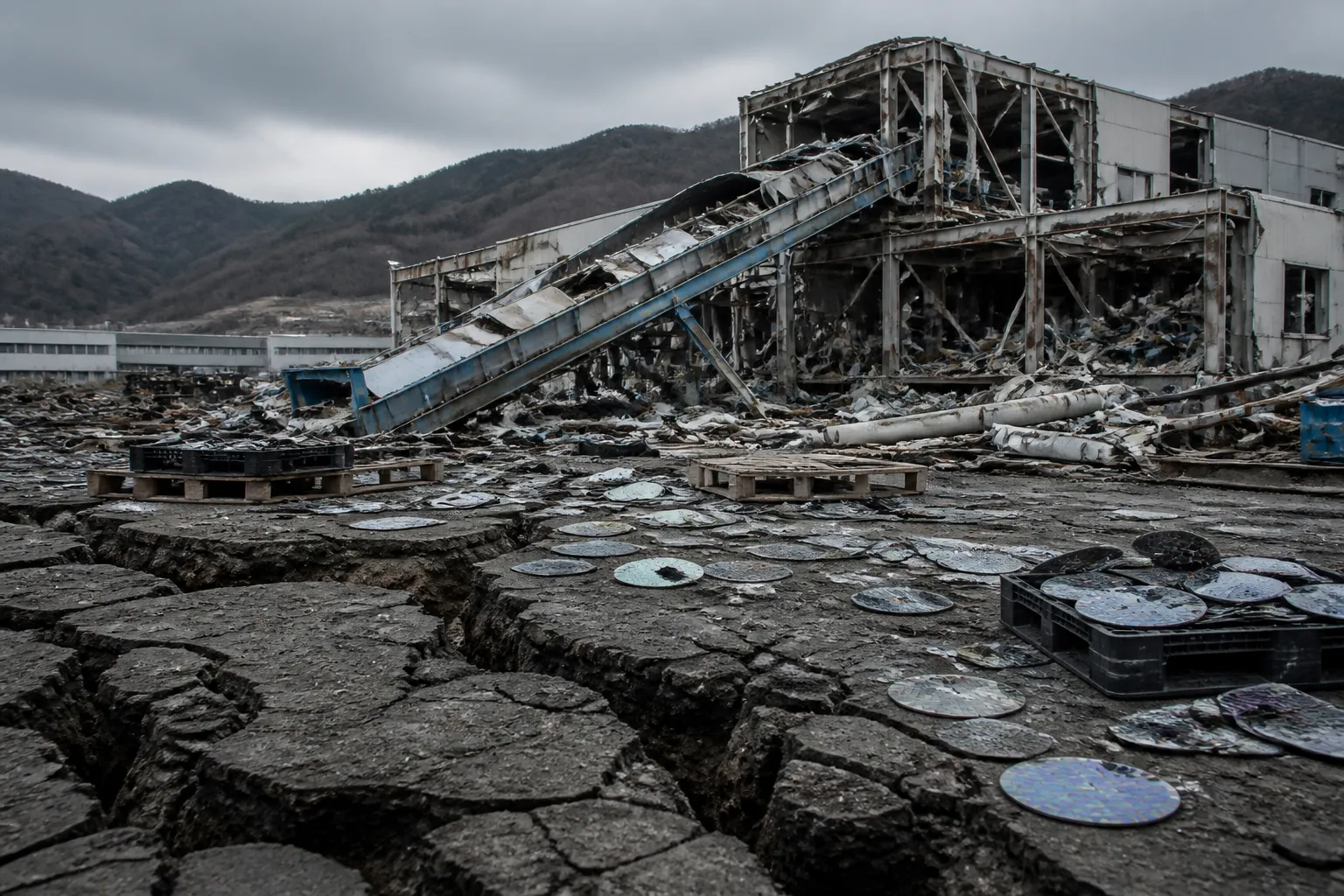
A 7.1‑meter quake struck Kumamoto Prefecture on July 28, 2026, and almost immediately sent shockwaves through Japan’s semiconductor sector. The tremor halted operations at several key facilities, prompting swift evacuations and production suspensions.
Taiwan Semiconductor Manufacturing Co. (TSMC), Sony Group, and Tokyo Electron all ordered employees out of their Kumamoto plants while safety crews assessed the damage. Renesas Electronics shut down two sites after finding cracks, water leaks, and fallen ceiling panels, though no injuries were reported. The shutdowns were temporary, with the companies still evaluating the full extent of the damage.
Tokyo Electron’s Kumamoto plant is a linchpin for the industry. Its coaters and developers—essential for the photolithography steps of chip fabrication—make up more than 90 % of the global market, and its share approaches 100 % for the most advanced process nodes. A prolonged interruption could delay the installation of new production lines at fabs worldwide.
The impact feels markedly different from the 2016 Kumamoto earthquakes. Back then, the semiconductor market was weaker and some facilities remained offline for about a month. Today, demand for advanced chips—especially those used in artificial‑intelligence applications—is soaring, and many manufacturers are waiting on equipment deliveries from Tokyo Electron and other suppliers. Even a month‑long delay could ripple through the global supply chain more dramatically than a decade ago.
Tokyo Electron is slated to report its April‑June earnings on July 31. Analysts expect the company to address the quake’s effect on its operations, although a detailed damage assessment may not be complete by that date.
Japanese manufacturers have long contended with frequent seismic activity. Industry experts note that plants tend to recover more quickly after a second or third quake, thanks to detailed manuals and robust response systems. Japan’s disaster‑preparedness measures rank among the world’s most advanced, and the semiconductor industry has adapted by developing extensive countermeasures.
Dispersing semiconductor production to reduce risk has been discussed, but it remains difficult for equipment makers. The manufacturing of semiconductor tools relies on highly skilled workers and a tightly knit network of subcontractors and suppliers. Setting up separate teams at multiple sites would be inefficient and costly.
Kumamoto remains a central hub for semiconductor manufacturing. TSMC’s JASM fab and other plants reinforce Japan’s reputation as a reliable location for chip production, even amid geopolitical tensions. Industry analysts say the earthquake is unlikely to shift investment away from Japan.
The event underscores the critical importance of business‑continuity planning, including measures to safeguard supply chains and restore operations swiftly after natural disasters. Companies across the semiconductor value chain are monitoring the situation closely as inspections continue and the industry prepares for the next quarter’s earnings releases.
In short, the Kumamoto earthquake has temporarily halted production at several key semiconductor facilities, raised concerns about potential shipment delays—especially from Tokyo Electron—and highlighted the need for robust disaster‑response strategies in a sector that is vital to global technology supply chains.
Taiwan Semiconductor Manufacturing Co. (TSMC), Sony Group, and Tokyo Electron all ordered employees out of their Kumamoto plants while safety crews assessed the damage. Renesas Electronics shut down two sites after finding cracks, water leaks, and fallen ceiling panels, though no injuries were reported. The shutdowns were temporary, with the companies still evaluating the full extent of the damage.
Tokyo Electron’s Kumamoto plant is a linchpin for the industry. Its coaters and developers—essential for the photolithography steps of chip fabrication—make up more than 90 % of the global market, and its share approaches 100 % for the most advanced process nodes. A prolonged interruption could delay the installation of new production lines at fabs worldwide.
The impact feels markedly different from the 2016 Kumamoto earthquakes. Back then, the semiconductor market was weaker and some facilities remained offline for about a month. Today, demand for advanced chips—especially those used in artificial‑intelligence applications—is soaring, and many manufacturers are waiting on equipment deliveries from Tokyo Electron and other suppliers. Even a month‑long delay could ripple through the global supply chain more dramatically than a decade ago.
Tokyo Electron is slated to report its April‑June earnings on July 31. Analysts expect the company to address the quake’s effect on its operations, although a detailed damage assessment may not be complete by that date.
Japanese manufacturers have long contended with frequent seismic activity. Industry experts note that plants tend to recover more quickly after a second or third quake, thanks to detailed manuals and robust response systems. Japan’s disaster‑preparedness measures rank among the world’s most advanced, and the semiconductor industry has adapted by developing extensive countermeasures.
Dispersing semiconductor production to reduce risk has been discussed, but it remains difficult for equipment makers. The manufacturing of semiconductor tools relies on highly skilled workers and a tightly knit network of subcontractors and suppliers. Setting up separate teams at multiple sites would be inefficient and costly.
Kumamoto remains a central hub for semiconductor manufacturing. TSMC’s JASM fab and other plants reinforce Japan’s reputation as a reliable location for chip production, even amid geopolitical tensions. Industry analysts say the earthquake is unlikely to shift investment away from Japan.
The event underscores the critical importance of business‑continuity planning, including measures to safeguard supply chains and restore operations swiftly after natural disasters. Companies across the semiconductor value chain are monitoring the situation closely as inspections continue and the industry prepares for the next quarter’s earnings releases.
In short, the Kumamoto earthquake has temporarily halted production at several key semiconductor facilities, raised concerns about potential shipment delays—especially from Tokyo Electron—and highlighted the need for robust disaster‑response strategies in a sector that is vital to global technology supply chains.








