Blab Business
South Africa Faces Investment Headwinds as Heystek Declares Offshore Funds Will Not Return, Tourism Surges, and FIFAs $20 bn Plan Sparks Debate
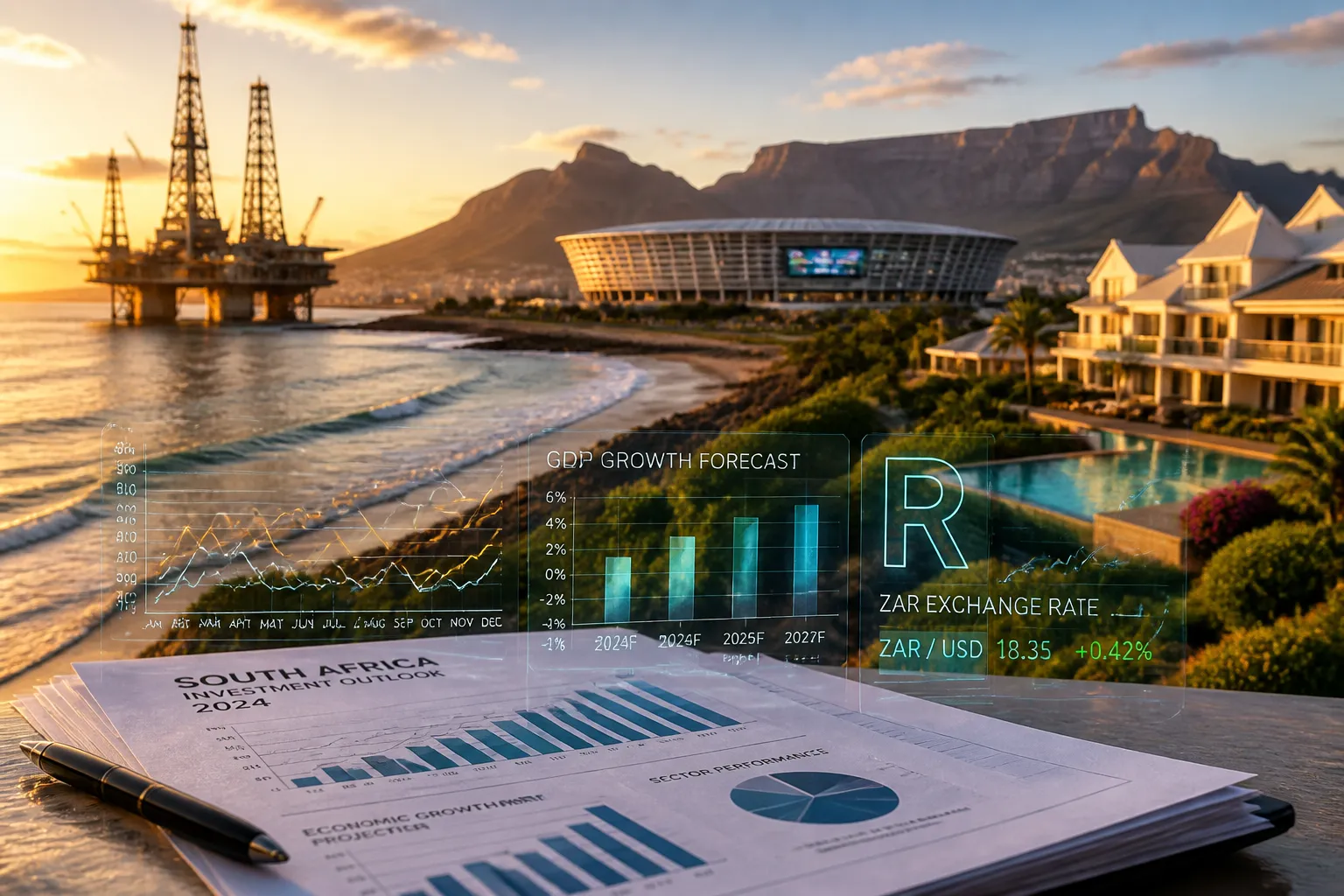
Magnus Heystek, the co‑founder of Brenthurst Wealth, told attendees of the 2026 BizNews Conference in Hermanus that none of the money he has invested abroad will be repatriated to South Africa. The statement comes after a year of strong global and local commodity markets that have lifted South Africa’s stock indices, yet Heystek warned that recent gains mask weak fundamentals and long‑term growth prospects.
Heystek’s remarks echo a long‑standing bearish view on South African assets. Since founding Brenthurst in 2004, he has consistently cautioned that the country’s investment climate is not yet ready for a robust recovery. In a March 2026 interview with Billionaires Africa, he said the country’s “market gains are a mirage” and that “none of my offshore money will return to South Africa.” The comments were repeated at the BizNews Conference, where Heystek emphasized that foreign investors are still hesitant to commit to the country.
While the investment sentiment appears cautious, South Africa’s tourism sector has posted a record high. Tourism South Africa reported 8.5 million international visitors last year, a 49 percent increase from the previous year. The surge is largely driven by tourists from the BRICS bloc—Brazil, Russia, India, China and South Africa—whose numbers now outnumber United States visitors to the country. The rise in BRICS tourism is part of a broader trend that sees emerging economies becoming more attractive destinations for leisure travel.
The tourism uptick has implications for the broader economy. Increased visitor spending supports hospitality, transport and retail sectors, and the government has highlighted the sector’s role in job creation. However, the growth also raises questions about infrastructure capacity and sustainability, especially as climate risks become more permanent, a concern noted by insurers in recent reports.
In a separate development that could affect South Africa’s sports tourism, FIFA President Gianni Infantino unveiled a $20 billion commercial vehicle called the FIFA Forward Enterprise (FFE). The proposal would spin off FIFA’s commercial operations into a new company and offer each of the 211 national associations a $20 million incentive to join. The plan also includes a one‑off $20 million bonus for signing up.
The proposal has drawn criticism from UEFA, which warned that accepting the offer would undermine FIFA’s governance. UEFA members agreed to boycott FIFA if the World Cup commercial plans were pursued. Infantino’s plan has also attracted scrutiny from the media, with several outlets noting that the move could shift the balance of power between FIFA and its member associations.
The potential impact on South Africa’s sports tourism is unclear. A successful FFE could increase the visibility of the World Cup and other FIFA tournaments, potentially drawing more fans to the country. Conversely, the controversy could dampen enthusiasm among stakeholders who fear a loss of control over the sport’s commercial direction.
In the same week, a former City of London stockbroker released a manual titled Cityboy: How Psychopaths Win Big in Business, Politics – but Lose in Life. The publication, which discusses traits such as boldness and lack of empathy, has been cited in academic discussions about leadership styles. While the book does not directly address South Africa, its themes resonate with the broader conversation about risk tolerance in investment and corporate governance.
The current landscape shows a country at a crossroads. Heystek’s warning signals continued caution among high‑net‑worth investors, while tourism data suggests a growing appetite for South Africa among emerging‑market travelers. FIFA’s proposed commercial restructuring adds another layer of uncertainty for the sports sector. Upcoming events—including the next FIFA World Cup in 2026 and the South African government’s review of investment incentives—will likely shape the trajectory of the country’s economic prospects.
The unresolved questions remain: Will foreign investors heed Heystek’s caution or will the tourism boom spur renewed confidence? How will FIFA’s $20 bn proposal influence the global football calendar and South Africa’s role within it? And can the country balance growth with the environmental and infrastructural challenges highlighted by insurers and tourism officials? The answers will unfold over the coming months as policy makers, investors and sporting bodies navigate these intertwined developments.
Heystek’s remarks echo a long‑standing bearish view on South African assets. Since founding Brenthurst in 2004, he has consistently cautioned that the country’s investment climate is not yet ready for a robust recovery. In a March 2026 interview with Billionaires Africa, he said the country’s “market gains are a mirage” and that “none of my offshore money will return to South Africa.” The comments were repeated at the BizNews Conference, where Heystek emphasized that foreign investors are still hesitant to commit to the country.
While the investment sentiment appears cautious, South Africa’s tourism sector has posted a record high. Tourism South Africa reported 8.5 million international visitors last year, a 49 percent increase from the previous year. The surge is largely driven by tourists from the BRICS bloc—Brazil, Russia, India, China and South Africa—whose numbers now outnumber United States visitors to the country. The rise in BRICS tourism is part of a broader trend that sees emerging economies becoming more attractive destinations for leisure travel.
The tourism uptick has implications for the broader economy. Increased visitor spending supports hospitality, transport and retail sectors, and the government has highlighted the sector’s role in job creation. However, the growth also raises questions about infrastructure capacity and sustainability, especially as climate risks become more permanent, a concern noted by insurers in recent reports.
In a separate development that could affect South Africa’s sports tourism, FIFA President Gianni Infantino unveiled a $20 billion commercial vehicle called the FIFA Forward Enterprise (FFE). The proposal would spin off FIFA’s commercial operations into a new company and offer each of the 211 national associations a $20 million incentive to join. The plan also includes a one‑off $20 million bonus for signing up.
The proposal has drawn criticism from UEFA, which warned that accepting the offer would undermine FIFA’s governance. UEFA members agreed to boycott FIFA if the World Cup commercial plans were pursued. Infantino’s plan has also attracted scrutiny from the media, with several outlets noting that the move could shift the balance of power between FIFA and its member associations.
The potential impact on South Africa’s sports tourism is unclear. A successful FFE could increase the visibility of the World Cup and other FIFA tournaments, potentially drawing more fans to the country. Conversely, the controversy could dampen enthusiasm among stakeholders who fear a loss of control over the sport’s commercial direction.
In the same week, a former City of London stockbroker released a manual titled Cityboy: How Psychopaths Win Big in Business, Politics – but Lose in Life. The publication, which discusses traits such as boldness and lack of empathy, has been cited in academic discussions about leadership styles. While the book does not directly address South Africa, its themes resonate with the broader conversation about risk tolerance in investment and corporate governance.
The current landscape shows a country at a crossroads. Heystek’s warning signals continued caution among high‑net‑worth investors, while tourism data suggests a growing appetite for South Africa among emerging‑market travelers. FIFA’s proposed commercial restructuring adds another layer of uncertainty for the sports sector. Upcoming events—including the next FIFA World Cup in 2026 and the South African government’s review of investment incentives—will likely shape the trajectory of the country’s economic prospects.
The unresolved questions remain: Will foreign investors heed Heystek’s caution or will the tourism boom spur renewed confidence? How will FIFA’s $20 bn proposal influence the global football calendar and South Africa’s role within it? And can the country balance growth with the environmental and infrastructural challenges highlighted by insurers and tourism officials? The answers will unfold over the coming months as policy makers, investors and sporting bodies navigate these intertwined developments.