Blab Business
DP World and Gulf Group Secure $100 Million Special Economic Zone in Mombasa, Kenya
A 535‑acre parcel in Jomvu Sub‑County, on the mainland side of Mombasa, will be converted into a fully operational special economic zone (SEZ) after an agreement worth more than KSh 12 billion (about US$100 million) was signed between Dubai‑based DP World and the Gulf Group of Companies, controlled by Kenyan businessman Suleiman Shahbal.
The deal was announced in Nairobi, where the formal signing is scheduled for 8 September at State House in the presence of President William Ruto. According to reports, 67 companies have already confirmed participation before construction has begun.
The land that will host the SEZ previously served as a cattle staging ground under the Kenya Meat Commission and is currently leased from the Mombasa County Government. The project will focus on manufacturers, logistics operators, exporters and technology firms.
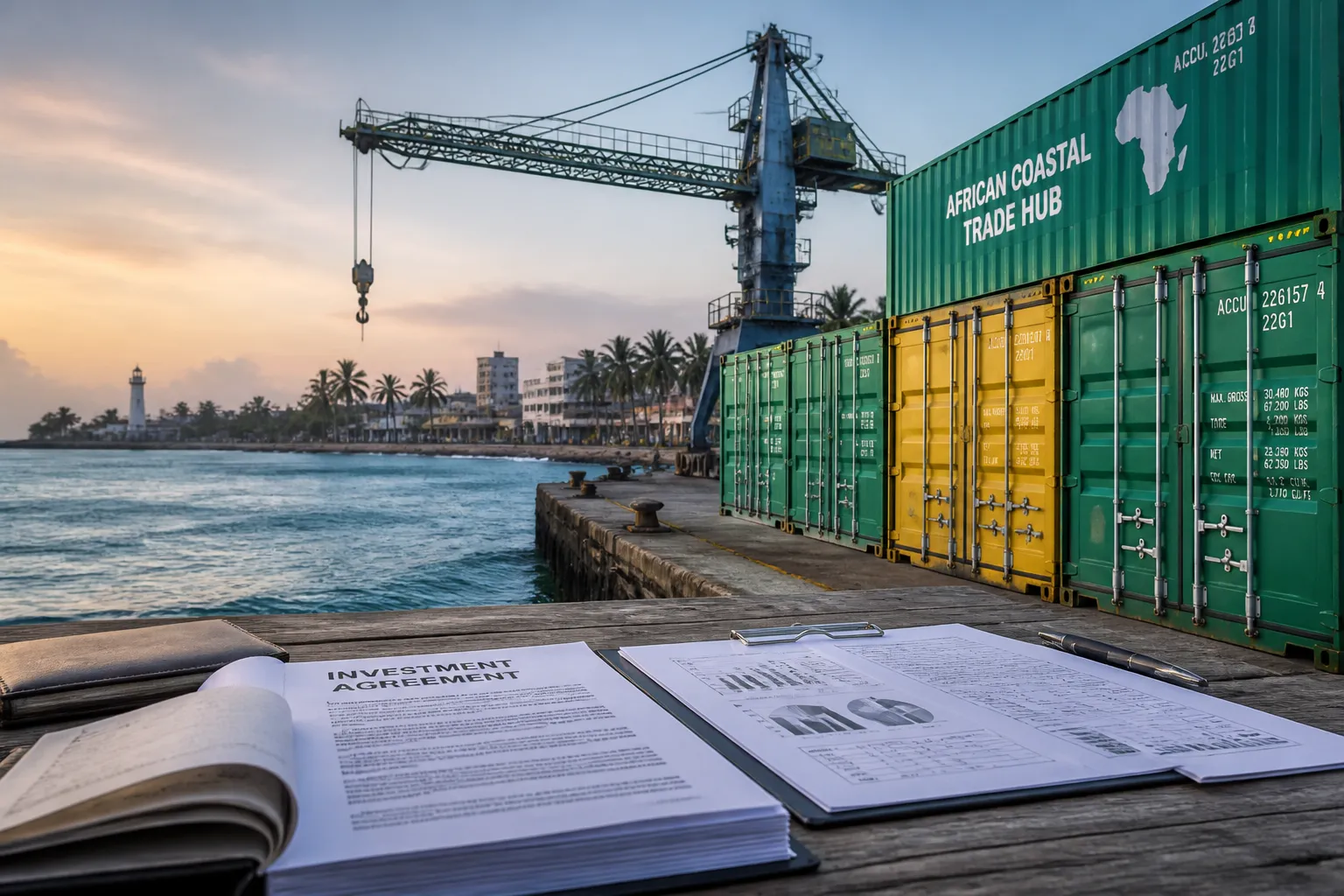
DP World’s involvement follows a pattern the company has repeated in several markets. By owning terminal operations and the industrial land that feeds them, the company can capture value that exceeds the margin on moving containers. A SEZ adjacent to a major port shortens the distance between factory and ship, reducing inland transport costs – the largest single element of the delivered cost of East African exports.
Mombasa is the principal gateway not only for Kenya but for a wider hinterland that reaches Uganda, Rwanda, South Sudan and eastern Democratic Republic of Congo. Cargo that clears through Mombasa serves a market far larger than Kenya alone. The commercial logic is straightforward: value captured on land behind the quay can exceed the margin on moving boxes across it.
Industrial parks across the continent have a long record of being built and then standing largely empty. Pre‑committed demand at this scale changes the risk profile of the project substantially. The 67 companies that have signed up before construction is underway are a key indicator of the SEZ’s potential to become a manufacturing base for the wider region.
If the Northern Corridor remains slow, the zone may become a well‑located warehouse park – useful, but a smaller prize than the one being described. The pre‑commitment of tenants is worth taking seriously, but it is not the same as rent paid after the zone is operational.
For Kenya, the appeal is capital that arrives without adding to sovereign debt. A privately funded zone is a different proposition from a state‑borrowed infrastructure programme, and it is particularly welcome given the fiscal pressure the country is under.
The signing on 8 September will confirm the terms of the agreement. The more meaningful test will come later, when the first tenants either take occupancy or quietly withdraw.
The SEZ is part of a broader trend of Gulf investment in African ports and logistics. DP World has been among the most active parties, and each new site extends a network that now spans several African coastlines.
The project’s success will depend on several factors: the speed of construction, the ability of the zone to deliver on the promised infrastructure, the performance of the Northern Corridor and the willingness of the 67 pre‑committed companies to move into the new facilities.
Until the formal signing and subsequent construction milestones, the agreement remains a significant development for Kenya’s industrial and logistics sectors, but it is still early to assess the full impact on the country’s economy.
The deal was announced in Nairobi, where the formal signing is scheduled for 8 September at State House in the presence of President William Ruto. According to reports, 67 companies have already confirmed participation before construction has begun.
The land that will host the SEZ previously served as a cattle staging ground under the Kenya Meat Commission and is currently leased from the Mombasa County Government. The project will focus on manufacturers, logistics operators, exporters and technology firms.
DP World’s involvement follows a pattern the company has repeated in several markets. By owning terminal operations and the industrial land that feeds them, the company can capture value that exceeds the margin on moving containers. A SEZ adjacent to a major port shortens the distance between factory and ship, reducing inland transport costs – the largest single element of the delivered cost of East African exports.
Mombasa is the principal gateway not only for Kenya but for a wider hinterland that reaches Uganda, Rwanda, South Sudan and eastern Democratic Republic of Congo. Cargo that clears through Mombasa serves a market far larger than Kenya alone. The commercial logic is straightforward: value captured on land behind the quay can exceed the margin on moving boxes across it.
Industrial parks across the continent have a long record of being built and then standing largely empty. Pre‑committed demand at this scale changes the risk profile of the project substantially. The 67 companies that have signed up before construction is underway are a key indicator of the SEZ’s potential to become a manufacturing base for the wider region.
If the Northern Corridor remains slow, the zone may become a well‑located warehouse park – useful, but a smaller prize than the one being described. The pre‑commitment of tenants is worth taking seriously, but it is not the same as rent paid after the zone is operational.
For Kenya, the appeal is capital that arrives without adding to sovereign debt. A privately funded zone is a different proposition from a state‑borrowed infrastructure programme, and it is particularly welcome given the fiscal pressure the country is under.
The signing on 8 September will confirm the terms of the agreement. The more meaningful test will come later, when the first tenants either take occupancy or quietly withdraw.
The SEZ is part of a broader trend of Gulf investment in African ports and logistics. DP World has been among the most active parties, and each new site extends a network that now spans several African coastlines.
The project’s success will depend on several factors: the speed of construction, the ability of the zone to deliver on the promised infrastructure, the performance of the Northern Corridor and the willingness of the 67 pre‑committed companies to move into the new facilities.
Until the formal signing and subsequent construction milestones, the agreement remains a significant development for Kenya’s industrial and logistics sectors, but it is still early to assess the full impact on the country’s economy.