Blab Business
PG&E Shares Drop 20% After Q2 Earnings Amid Ongoing Wildfire Liability Concerns
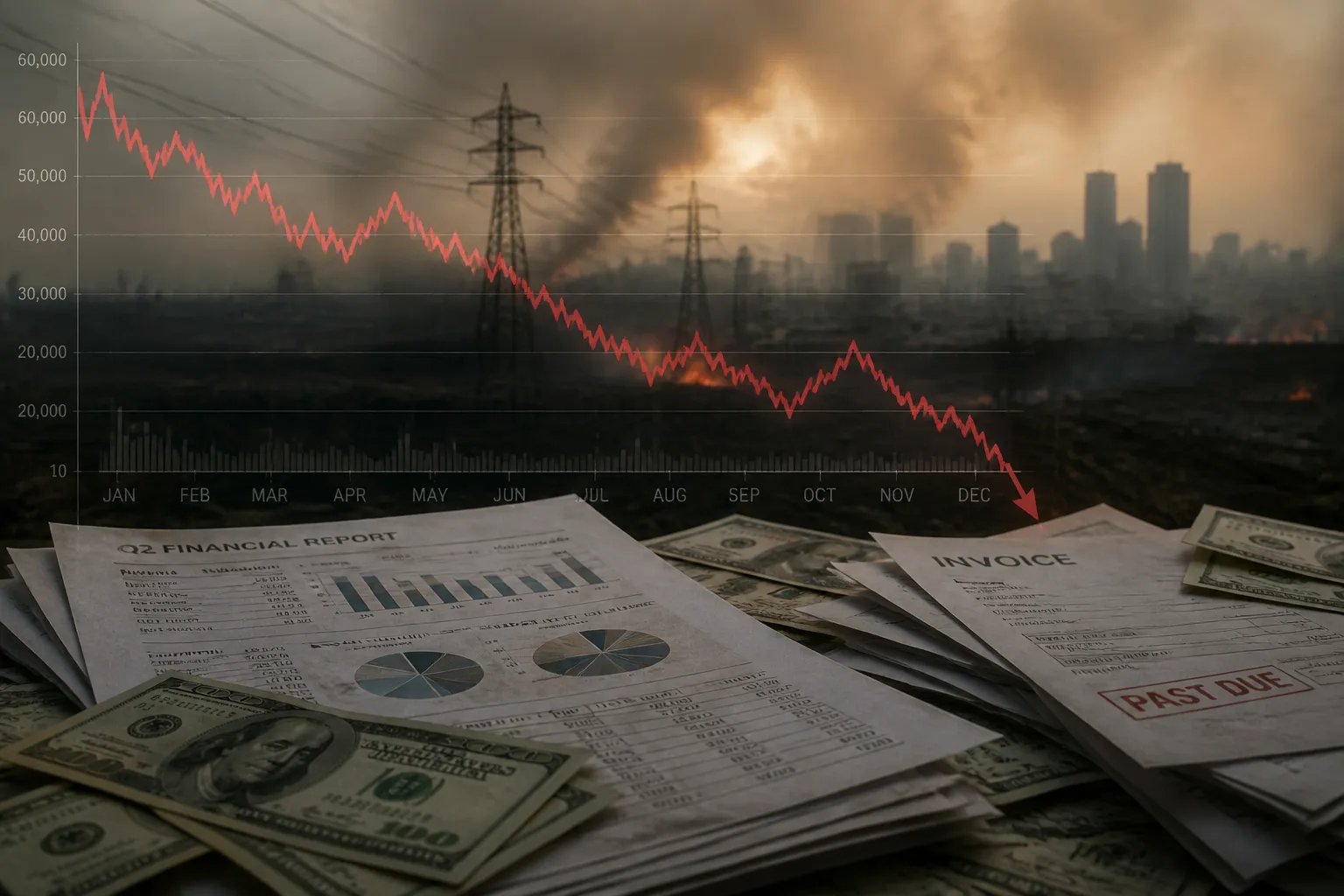
In the two days after releasing its second‑quarter 2026 earnings, Pacific Gas & Electric Company’s stock tumbled more than 20%, sending shock waves through a market already wary of the company’s wildfire exposure.
PG&E reported GAAP earnings of $0.33 per share and non‑GAAP core earnings of $0.40 for the July quarter—numbers that matched the consensus estimates from analysts. The utility also reaffirmed its full‑year non‑GAAP core earnings guidance of $1.64 to $1.66 per diluted share. The results were announced in a press release on July 23, 2026, followed by a conference call at 11:00 a.m. Eastern Time.
Despite the solid operating performance, the share price—trading near $13–$14 before the earnings—slid sharply after a September 2 commentary piece highlighted the legal and regulatory risks that continue to weigh on the company. Written by a senior analyst for a value‑investment newsletter, the article warned that PG E’s market valuation should be discounted to reflect the potential liability from California wildfires.
PG E’s wildfire liability saga began with the 2018 Camp Fire, the deadliest blaze in California history. Investigations by the California Department of Forestry and Fire Protection determined that the company’s equipment was a primary cause of the fire. The resulting exposure was estimated at $30 billion, prompting PG E to file for Chapter 11 bankruptcy in 2019. The company emerged from bankruptcy in June 2020 after a court‑approved settlement plan.
Regulatory scrutiny remains intense. The California Public Utilities Commission (CPUC) oversees PG E’s operations and has imposed requirements to reduce the risk of future fires, including mandatory power shutoffs during high‑wind periods. Meanwhile, the California FAIR Plan—a state‑run insurance pool for properties that cannot obtain coverage in the regulated market—has seen its loss exposure surge from $50 billion in 2018 to $768 billion in 2026.
Financially, PG E is holding its own. In the first half of 2026, the company posted GAAP earnings of $0.72 per share, up from $0.51 in the same period a year earlier. Operating income and cash flow from operations have also improved, bolstering the company’s ability to service its debt.
Yet the market’s reaction underscores a lingering fear that PG E could face additional costs tied to wildfire liability—settlements, insurance premiums, and capital expenditures for infrastructure upgrades. The 20% drop in the stock price reflects this concern, even as the company’s quarterly results were in line with expectations.
Looking ahead, investors will focus on PG E’s next earnings release in October 2026. The company has not yet issued a guidance update for the third quarter, but analysts expect it to maintain its non‑GAAP core earnings guidance for the year. The regulatory environment may also shift, with the CPUC and the California Energy Commission slated to review wildfire mitigation requirements in the coming months.
In sum, PG E’s latest earnings met forecasts, but the company’s valuation remains under pressure from the enduring wildfire liability risk. The sharp decline in its share price illustrates how regulatory and legal developments can swiftly reshape investor sentiment and impact a utility’s future profitability.
PG&E reported GAAP earnings of $0.33 per share and non‑GAAP core earnings of $0.40 for the July quarter—numbers that matched the consensus estimates from analysts. The utility also reaffirmed its full‑year non‑GAAP core earnings guidance of $1.64 to $1.66 per diluted share. The results were announced in a press release on July 23, 2026, followed by a conference call at 11:00 a.m. Eastern Time.
Despite the solid operating performance, the share price—trading near $13–$14 before the earnings—slid sharply after a September 2 commentary piece highlighted the legal and regulatory risks that continue to weigh on the company. Written by a senior analyst for a value‑investment newsletter, the article warned that PG E’s market valuation should be discounted to reflect the potential liability from California wildfires.
PG E’s wildfire liability saga began with the 2018 Camp Fire, the deadliest blaze in California history. Investigations by the California Department of Forestry and Fire Protection determined that the company’s equipment was a primary cause of the fire. The resulting exposure was estimated at $30 billion, prompting PG E to file for Chapter 11 bankruptcy in 2019. The company emerged from bankruptcy in June 2020 after a court‑approved settlement plan.
Regulatory scrutiny remains intense. The California Public Utilities Commission (CPUC) oversees PG E’s operations and has imposed requirements to reduce the risk of future fires, including mandatory power shutoffs during high‑wind periods. Meanwhile, the California FAIR Plan—a state‑run insurance pool for properties that cannot obtain coverage in the regulated market—has seen its loss exposure surge from $50 billion in 2018 to $768 billion in 2026.
Financially, PG E is holding its own. In the first half of 2026, the company posted GAAP earnings of $0.72 per share, up from $0.51 in the same period a year earlier. Operating income and cash flow from operations have also improved, bolstering the company’s ability to service its debt.
Yet the market’s reaction underscores a lingering fear that PG E could face additional costs tied to wildfire liability—settlements, insurance premiums, and capital expenditures for infrastructure upgrades. The 20% drop in the stock price reflects this concern, even as the company’s quarterly results were in line with expectations.
Looking ahead, investors will focus on PG E’s next earnings release in October 2026. The company has not yet issued a guidance update for the third quarter, but analysts expect it to maintain its non‑GAAP core earnings guidance for the year. The regulatory environment may also shift, with the CPUC and the California Energy Commission slated to review wildfire mitigation requirements in the coming months.
In sum, PG E’s latest earnings met forecasts, but the company’s valuation remains under pressure from the enduring wildfire liability risk. The sharp decline in its share price illustrates how regulatory and legal developments can swiftly reshape investor sentiment and impact a utility’s future profitability.