Blab Business
Modine Manufacturing Shifts Focus to Climate and Data-Center Cooling Amid Strategic Divestitures and Acquisitions
Modine Manufacturing Company (NYSE:MOD) is rewriting its playbook, trading its long‑standing automotive and industrial thermal roots for a new frontier in climate‑focused and data‑center cooling solutions.
In the third quarter of fiscal 2026, Modine posted a 31% year‑over‑year jump in revenue, powered by a 51% surge in its Climate Solutions segment and a 78% rise in data‑center sales. The company lifted its full‑year outlook, now targeting 20%–25% total revenue growth and adjusted EBITDA of $455 million to $475 million. These projections follow the addition of $119 million in incremental revenue from three acquisitions announced during the fourth‑quarter earnings call.
The pivot began with the divestiture of Modine’s Performance Technologies unit. In May 2026, the company agreed to sell the business to Gentherm Incorporated (NASDAQ:THRM) for roughly $1 billion, a price about 6.8 times the unit’s trailing 12‑month EBITDA. The transaction closed in the first quarter of 2027, removing a legacy line that had served automotive and industrial customers for decades.
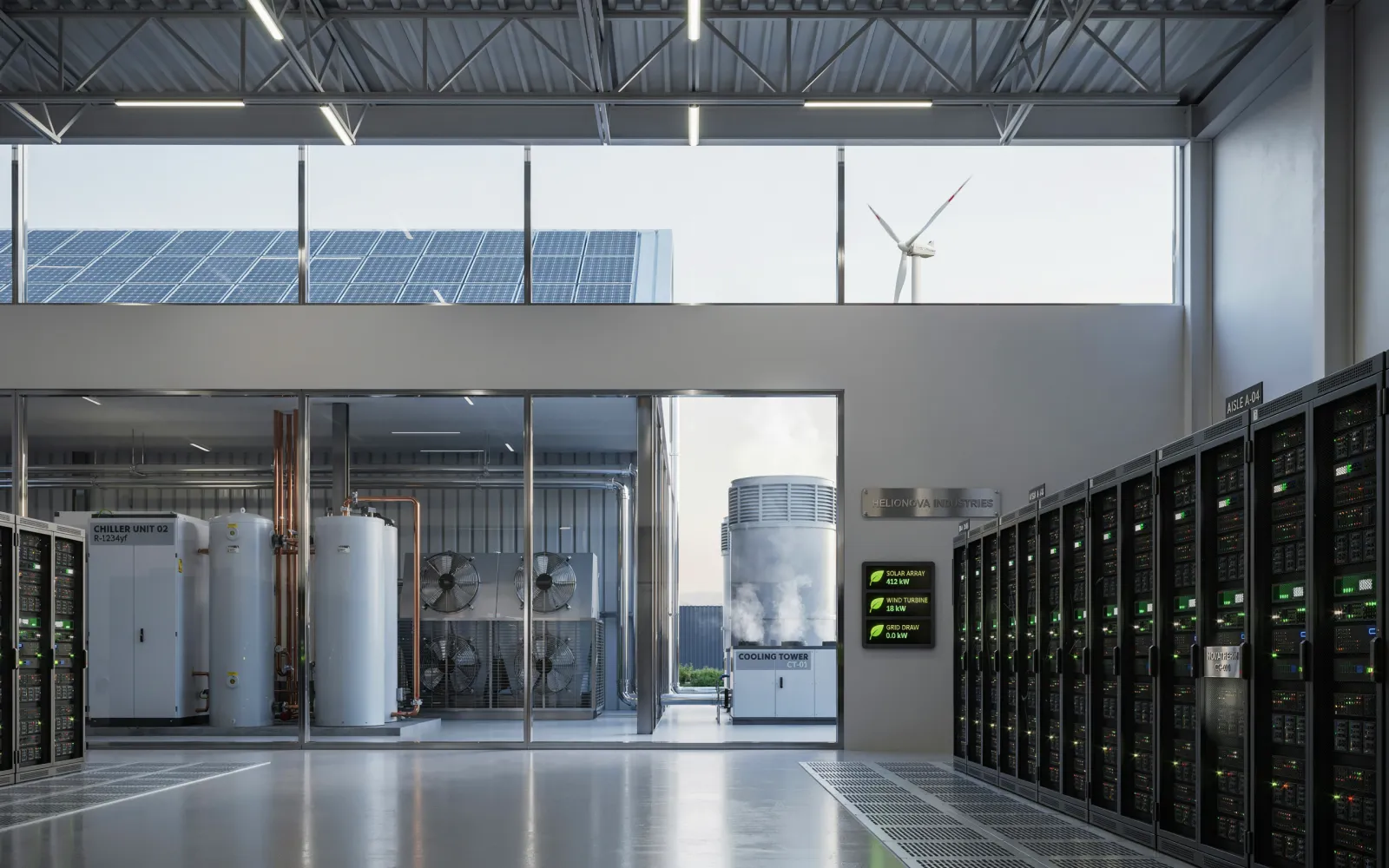
With the divestiture behind it, Modine can now concentrate on its growing Climate Solutions and data‑center cooling lines. Climate Solutions supplies heat‑transfer systems for commercial HVAC, industrial cooling, and emerging zero‑emission vehicle applications. Its data‑center portfolio includes liquid cooling units for GPU servers and dry coolers designed for high‑density racks—markets that are expanding as AI workloads push power densities higher.
Modine’s story is one of breadth and longevity. Founded in 1916 by Arthur B. Modine, the company pioneered the Spirex radiator for tractors and later produced the Turbotube radiator for Ford Model T cars. During World War II it built aftercoolers for the P‑51 Mustang. In the post‑war era it introduced the Airditioner HVAC unit, expanded into Europe in 1990, and acquired German heat‑transfer firm Längerer & Reich in 1993.
Today, Modine employs roughly 11,000 people worldwide and operates manufacturing facilities in the United States, Canada, Italy, Hungary, the United Kingdom, and China. The company’s recent acquisitions—though not named in public filings—were described as “strategic” and aimed at bolstering its HVAC portfolio.
Leadership moves mirror the shift. In December 2025, Modine’s president and CEO sold nearly 32,000 shares, a transaction valued at about $51 million, according to a filing with the Securities and Exchange Commission. While the sale was an insider transaction, it coincided with the company’s broader realignment.
Industry analysts note that Modine’s pivot aligns with broader trends. The data‑center cooling market is expanding as artificial‑intelligence workloads increase power density, while climate‑solution demand rises amid global decarbonization efforts. Modine’s patented heat‑transfer technologies and its established relationships with hyperscalers and OEMs position it to capture a share of these growth areas.
Regulatory developments have not yet directly impacted Modine’s transition. The company has not announced any pending investigations or regulatory actions. Its recent earnings guidance reflects confidence in the new business mix, though the company cautions that the transition will involve restructuring costs.
Looking ahead, Modine’s next earnings release is scheduled for the end of Q1 2027. Investors will be watching for updates on the Gentherm divestiture completion, the performance of the newly acquired HVAC assets, and any further strategic moves that could reshape the company’s portfolio.
In sum, Modine Manufacturing is moving away from its legacy automotive and industrial thermal management roots toward a focus on climate solutions and data‑center cooling. The divestiture of Performance Technologies and the addition of new HVAC assets signal a deliberate shift to higher‑margin, high‑growth markets. The company’s guidance for fiscal 2026 reflects optimism about this new direction, while the upcoming earnings release will provide further insight into the progress of its transformation.
In the third quarter of fiscal 2026, Modine posted a 31% year‑over‑year jump in revenue, powered by a 51% surge in its Climate Solutions segment and a 78% rise in data‑center sales. The company lifted its full‑year outlook, now targeting 20%–25% total revenue growth and adjusted EBITDA of $455 million to $475 million. These projections follow the addition of $119 million in incremental revenue from three acquisitions announced during the fourth‑quarter earnings call.
The pivot began with the divestiture of Modine’s Performance Technologies unit. In May 2026, the company agreed to sell the business to Gentherm Incorporated (NASDAQ:THRM) for roughly $1 billion, a price about 6.8 times the unit’s trailing 12‑month EBITDA. The transaction closed in the first quarter of 2027, removing a legacy line that had served automotive and industrial customers for decades.
With the divestiture behind it, Modine can now concentrate on its growing Climate Solutions and data‑center cooling lines. Climate Solutions supplies heat‑transfer systems for commercial HVAC, industrial cooling, and emerging zero‑emission vehicle applications. Its data‑center portfolio includes liquid cooling units for GPU servers and dry coolers designed for high‑density racks—markets that are expanding as AI workloads push power densities higher.
Modine’s story is one of breadth and longevity. Founded in 1916 by Arthur B. Modine, the company pioneered the Spirex radiator for tractors and later produced the Turbotube radiator for Ford Model T cars. During World War II it built aftercoolers for the P‑51 Mustang. In the post‑war era it introduced the Airditioner HVAC unit, expanded into Europe in 1990, and acquired German heat‑transfer firm Längerer & Reich in 1993.
Today, Modine employs roughly 11,000 people worldwide and operates manufacturing facilities in the United States, Canada, Italy, Hungary, the United Kingdom, and China. The company’s recent acquisitions—though not named in public filings—were described as “strategic” and aimed at bolstering its HVAC portfolio.
Leadership moves mirror the shift. In December 2025, Modine’s president and CEO sold nearly 32,000 shares, a transaction valued at about $51 million, according to a filing with the Securities and Exchange Commission. While the sale was an insider transaction, it coincided with the company’s broader realignment.
Industry analysts note that Modine’s pivot aligns with broader trends. The data‑center cooling market is expanding as artificial‑intelligence workloads increase power density, while climate‑solution demand rises amid global decarbonization efforts. Modine’s patented heat‑transfer technologies and its established relationships with hyperscalers and OEMs position it to capture a share of these growth areas.
Regulatory developments have not yet directly impacted Modine’s transition. The company has not announced any pending investigations or regulatory actions. Its recent earnings guidance reflects confidence in the new business mix, though the company cautions that the transition will involve restructuring costs.
Looking ahead, Modine’s next earnings release is scheduled for the end of Q1 2027. Investors will be watching for updates on the Gentherm divestiture completion, the performance of the newly acquired HVAC assets, and any further strategic moves that could reshape the company’s portfolio.
In sum, Modine Manufacturing is moving away from its legacy automotive and industrial thermal management roots toward a focus on climate solutions and data‑center cooling. The divestiture of Performance Technologies and the addition of new HVAC assets signal a deliberate shift to higher‑margin, high‑growth markets. The company’s guidance for fiscal 2026 reflects optimism about this new direction, while the upcoming earnings release will provide further insight into the progress of its transformation.