Blab Business
Dell Technologies Downgraded to Hold Amid AI Server Surge and Valuation Concerns
After a 150 % rally that pushed Dell Technologies Inc. (NYSE: DELL) to what many view as stretched levels, analysts have shifted the stock to a hold rating. The decision follows a period of rapid growth in the company’s Infrastructure Solutions Group (ISG) and a sharp rise in AI‑server revenue, but it also highlights potential supply‑chain and market risks that could erode future earnings.
In its fiscal 2025 fourth‑quarter report, Dell posted total net revenue of $95.6 billion, up 8 % year‑over‑year. The ISG segment—encompassing servers, storage, networking, and data‑center services—expanded 22 % to $19.6 billion. AI‑server revenue within that segment surged an astonishing 750 % during the same period, fueled by a $9 billion backlog of AI‑ready systems. CFO Yvonne McGill noted that the company’s server and networking arm reached record highs, growing 69 % to $12.9 billion.
Despite the impressive top‑line growth, Dell’s valuation metrics raise concerns. Its trailing‑12‑month GAAP price‑to‑earnings ratio sits at 33, while the net margin is 6.28 %. A reverse discounted‑cash‑flow analysis suggests that the current share price would require free‑cash‑flow growth that is unsustainably high, given the company’s historical performance and the competitive environment.
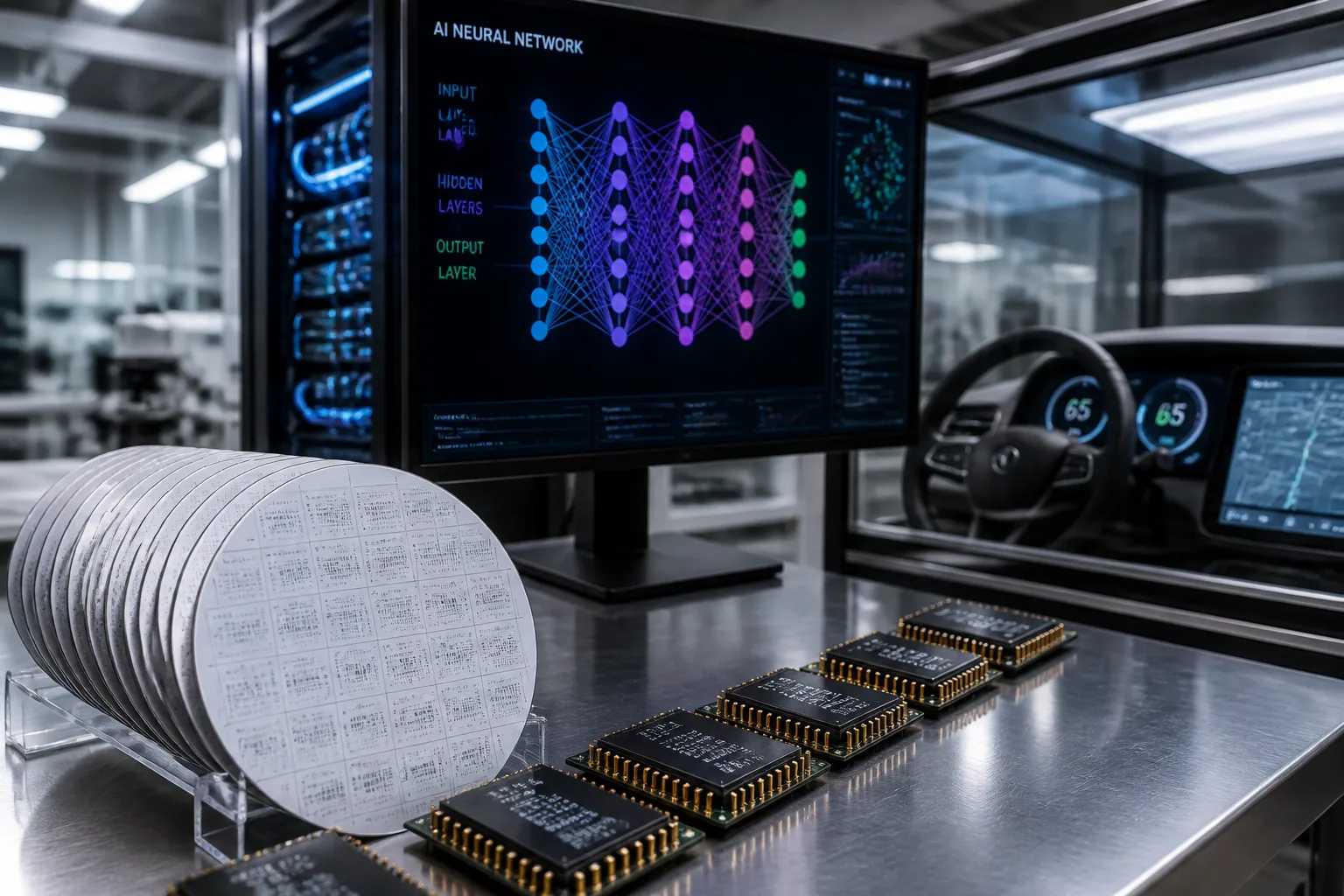
The rapid expansion of AI‑server sales has exposed several operational bottlenecks. GPU and memory constraints are cited as limiting factors for data‑center operators. Micron’s senior vice‑president of memory technology highlighted that memory shortages can reduce GPU efficiency in AI inference workloads. Nvidia’s announcement of its Grace data‑center processor, based on an Arm microarchitecture, aims to address these bottlenecks by improving memory bandwidth.
In addition to supply‑chain constraints, analysts warn that a slowdown in data‑center build‑outs could dampen Dell’s growth trajectory. Emerging chip architectures—such as AMD’s MI300 series and NVIDIA’s H100—are reshaping the competitive landscape, and Dell’s ability to keep pace with these developments remains uncertain. The company’s current product mix and pricing strategy may face pressure if customers shift toward alternative architectures or if cooling and power requirements become prohibitive.
The downgrade reflects a broader reassessment of Dell’s risk profile. While the company’s AI‑server momentum is strong, the combination of high valuation, supply‑chain bottlenecks, and potential market contraction suggests that the current price may not fully reflect sustainable earnings prospects.
Looking ahead, Dell’s next earnings release will provide further insight into whether the company can maintain its AI‑server growth while managing cost pressures. Investors will also watch for updates on data‑center build‑out activity, memory supply developments, and the adoption of new chip architectures. The company’s ability to navigate these challenges will be critical to determining whether the stock can justify its current valuation.
In summary, Dell Technologies’ downgrade to hold signals that analysts see a mismatch between the company’s recent growth and its valuation. The firm’s AI‑server business remains robust, but memory and GPU bottlenecks, coupled with a possible slowdown in data‑center expansion, could constrain future profitability. Stakeholders will need to monitor how Dell addresses these risks in the coming quarters.
In its fiscal 2025 fourth‑quarter report, Dell posted total net revenue of $95.6 billion, up 8 % year‑over‑year. The ISG segment—encompassing servers, storage, networking, and data‑center services—expanded 22 % to $19.6 billion. AI‑server revenue within that segment surged an astonishing 750 % during the same period, fueled by a $9 billion backlog of AI‑ready systems. CFO Yvonne McGill noted that the company’s server and networking arm reached record highs, growing 69 % to $12.9 billion.
Despite the impressive top‑line growth, Dell’s valuation metrics raise concerns. Its trailing‑12‑month GAAP price‑to‑earnings ratio sits at 33, while the net margin is 6.28 %. A reverse discounted‑cash‑flow analysis suggests that the current share price would require free‑cash‑flow growth that is unsustainably high, given the company’s historical performance and the competitive environment.
The rapid expansion of AI‑server sales has exposed several operational bottlenecks. GPU and memory constraints are cited as limiting factors for data‑center operators. Micron’s senior vice‑president of memory technology highlighted that memory shortages can reduce GPU efficiency in AI inference workloads. Nvidia’s announcement of its Grace data‑center processor, based on an Arm microarchitecture, aims to address these bottlenecks by improving memory bandwidth.
In addition to supply‑chain constraints, analysts warn that a slowdown in data‑center build‑outs could dampen Dell’s growth trajectory. Emerging chip architectures—such as AMD’s MI300 series and NVIDIA’s H100—are reshaping the competitive landscape, and Dell’s ability to keep pace with these developments remains uncertain. The company’s current product mix and pricing strategy may face pressure if customers shift toward alternative architectures or if cooling and power requirements become prohibitive.
The downgrade reflects a broader reassessment of Dell’s risk profile. While the company’s AI‑server momentum is strong, the combination of high valuation, supply‑chain bottlenecks, and potential market contraction suggests that the current price may not fully reflect sustainable earnings prospects.
Looking ahead, Dell’s next earnings release will provide further insight into whether the company can maintain its AI‑server growth while managing cost pressures. Investors will also watch for updates on data‑center build‑out activity, memory supply developments, and the adoption of new chip architectures. The company’s ability to navigate these challenges will be critical to determining whether the stock can justify its current valuation.
In summary, Dell Technologies’ downgrade to hold signals that analysts see a mismatch between the company’s recent growth and its valuation. The firm’s AI‑server business remains robust, but memory and GPU bottlenecks, coupled with a possible slowdown in data‑center expansion, could constrain future profitability. Stakeholders will need to monitor how Dell addresses these risks in the coming quarters.