Blab Business
OpenAI, Sam Altman, and the Debate Over AIs Labor and Environmental Impact
On July 4, a special episode of Democracy Now! aired a conversation that cut to the heart of AI’s growing influence. Journalist Karen Hao—author of Empire of AI: Dreams and Nightmares in Sam Altman’s OpenAI—sat down with OpenAI leaders to unpack how artificial intelligence is reshaping the workforce, the environment, and international relations.
Hao opened by highlighting the paradox that keeps many executives awake at night: AI’s promise to automate jobs clashes with the reality that the technology is still a work in progress. She noted that OpenAI defines artificial general intelligence as “highly autonomous systems that outperform humans in most economically valuable work,” a claim critics say lacks a solid scientific foundation. The perception that AI can replace workers, even when the tools are not yet ready, has already spurred layoffs in some firms and fueled calls for guardrails that would steer development toward assistance rather than replacement.
The interview also traced OpenAI’s corporate journey. Founded in 2015 as a Delaware nonprofit, the company created a for‑profit subsidiary in 2019. In 2025 that subsidiary was restructured into a public‑benefit corporation (PBC), with 26 % owned by the original nonprofit. Microsoft’s investment of more than $13 billion and its provision of Azure cloud resources have been pivotal, and an October 2025 share sale that raised $6.6 billion valued the enterprise at $500 billion.
Sam Altman’s tenure as CEO has been anything but smooth. After stepping into the role in 2019, he was briefly ousted by the board in November 2023 over concerns about his candidness. Five days later, following a board reconstruction, Altman was reinstated—a move that sparked employee backlash and spotlighted governance challenges within the organization.
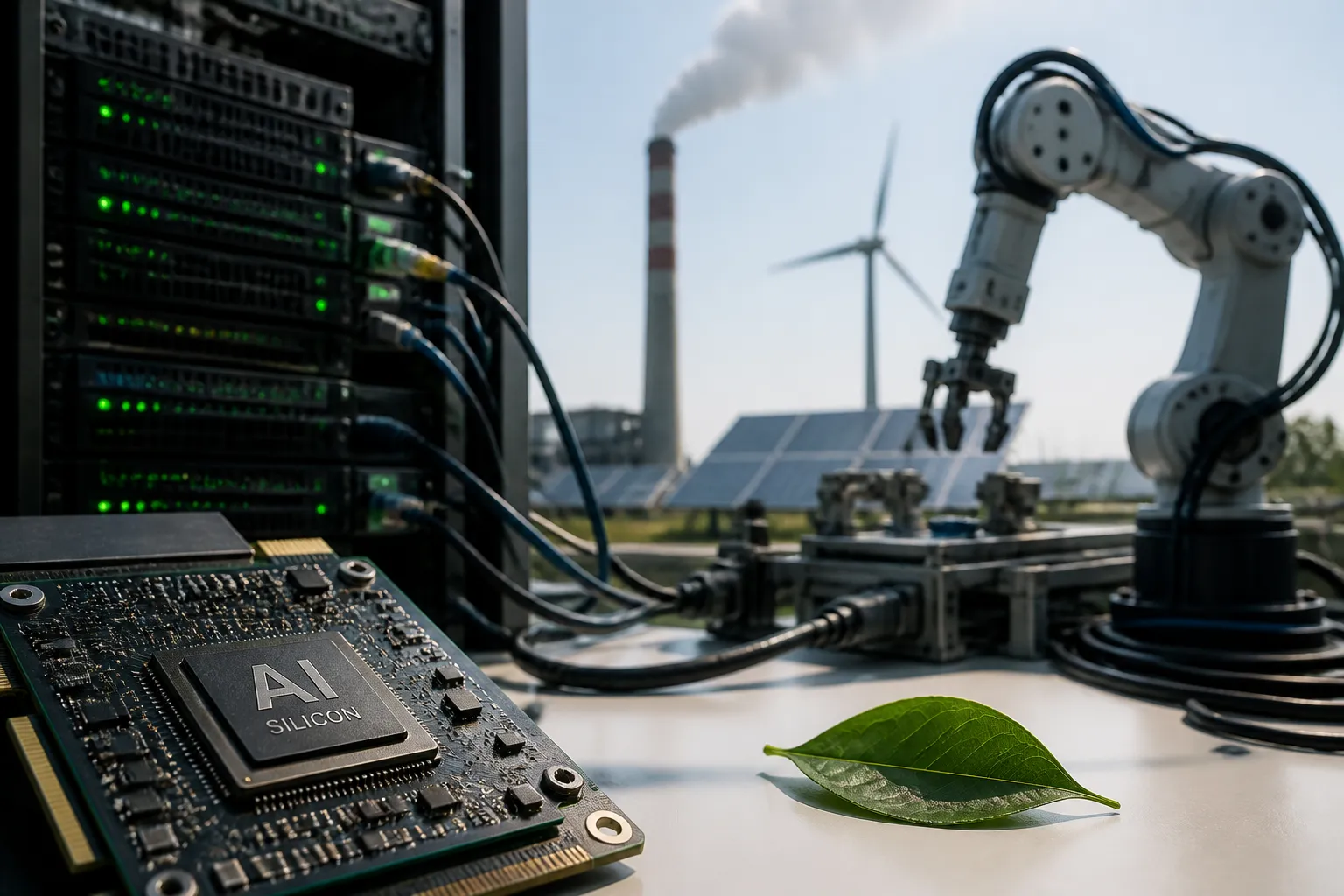
Environmental concerns took center stage when Altman testified before the Senate in 2026. He outlined OpenAI’s reliance on natural gas, solar power, and, in the medium term, advanced nuclear energy to meet the relentless energy demands of data centers that run 24/7. Critics argue that a push toward nuclear could erode existing regulatory safeguards, while others point out the difficulty of maintaining a continuous renewable supply.
On the international front, U.S. export controls designed to limit China’s access to advanced semiconductor technology have had unintended consequences. Hao reported that Chinese firms such as High‑Flyer have built AI models—most notably DeepSeek—that require less computational power and fewer resources than their U.S. counterparts. The policy, intended to curb Chinese progress, may have instead accelerated it.
The political dimension of AI surfaced when Hao recalled a 2021 meeting between Altman and President Trump to discuss a $500 billion “Stargate” project aimed at boosting U.S. AI infrastructure. The initiative was largely a private investment, sourced mainly from SoftBank, and was not a direct government allocation.
Socially, the interview turned to grassroots resistance. Communities ranging from Chilean water activists to artists have challenged AI firms that seek to appropriate their resources. These groups have pursued legal action, unionization, and public campaigns to protect their data, land, and cultural heritage.
Hao concluded by underscoring the need for democratic governance of AI. She cited the EU’s AI Act as a risk‑based, rights‑based regulatory framework, but argued that true democratic AI requires community involvement in data collection, model training, and deployment decisions. The conversation, in sum, laid bare the intricate interplay of technological ambition, corporate governance, environmental sustainability, and social equity that defines today’s AI landscape.
Hao opened by highlighting the paradox that keeps many executives awake at night: AI’s promise to automate jobs clashes with the reality that the technology is still a work in progress. She noted that OpenAI defines artificial general intelligence as “highly autonomous systems that outperform humans in most economically valuable work,” a claim critics say lacks a solid scientific foundation. The perception that AI can replace workers, even when the tools are not yet ready, has already spurred layoffs in some firms and fueled calls for guardrails that would steer development toward assistance rather than replacement.
The interview also traced OpenAI’s corporate journey. Founded in 2015 as a Delaware nonprofit, the company created a for‑profit subsidiary in 2019. In 2025 that subsidiary was restructured into a public‑benefit corporation (PBC), with 26 % owned by the original nonprofit. Microsoft’s investment of more than $13 billion and its provision of Azure cloud resources have been pivotal, and an October 2025 share sale that raised $6.6 billion valued the enterprise at $500 billion.
Sam Altman’s tenure as CEO has been anything but smooth. After stepping into the role in 2019, he was briefly ousted by the board in November 2023 over concerns about his candidness. Five days later, following a board reconstruction, Altman was reinstated—a move that sparked employee backlash and spotlighted governance challenges within the organization.
Environmental concerns took center stage when Altman testified before the Senate in 2026. He outlined OpenAI’s reliance on natural gas, solar power, and, in the medium term, advanced nuclear energy to meet the relentless energy demands of data centers that run 24/7. Critics argue that a push toward nuclear could erode existing regulatory safeguards, while others point out the difficulty of maintaining a continuous renewable supply.
On the international front, U.S. export controls designed to limit China’s access to advanced semiconductor technology have had unintended consequences. Hao reported that Chinese firms such as High‑Flyer have built AI models—most notably DeepSeek—that require less computational power and fewer resources than their U.S. counterparts. The policy, intended to curb Chinese progress, may have instead accelerated it.
The political dimension of AI surfaced when Hao recalled a 2021 meeting between Altman and President Trump to discuss a $500 billion “Stargate” project aimed at boosting U.S. AI infrastructure. The initiative was largely a private investment, sourced mainly from SoftBank, and was not a direct government allocation.
Socially, the interview turned to grassroots resistance. Communities ranging from Chilean water activists to artists have challenged AI firms that seek to appropriate their resources. These groups have pursued legal action, unionization, and public campaigns to protect their data, land, and cultural heritage.
Hao concluded by underscoring the need for democratic governance of AI. She cited the EU’s AI Act as a risk‑based, rights‑based regulatory framework, but argued that true democratic AI requires community involvement in data collection, model training, and deployment decisions. The conversation, in sum, laid bare the intricate interplay of technological ambition, corporate governance, environmental sustainability, and social equity that defines today’s AI landscape.








