Blab Business
World Coffee Champions Crowned in Brussels as Brazil-Rain-Driven Arabica Prices Surge
On June 29–30, 2026, Brussels became the stage for a trio of firsts in the World Coffee Championships (WCC). Nas Jafaar of Malaysia clinched the 2026 World Brewers Cup, marking the first time a Malaysian has lifted the title. Andy Philein of China won the 2026 World Coffee in Good Spirits Championship, while Belgium’s own Benjamin Brassart took home the 2026 World Coffee Roasting Championship.
Jafaar’s triumph arrives amid a surge in Southeast Asia’s specialty coffee market, the fastest‑growing region worldwide. His win signals that the region’s burgeoning coffee culture may gain fresh global attention.
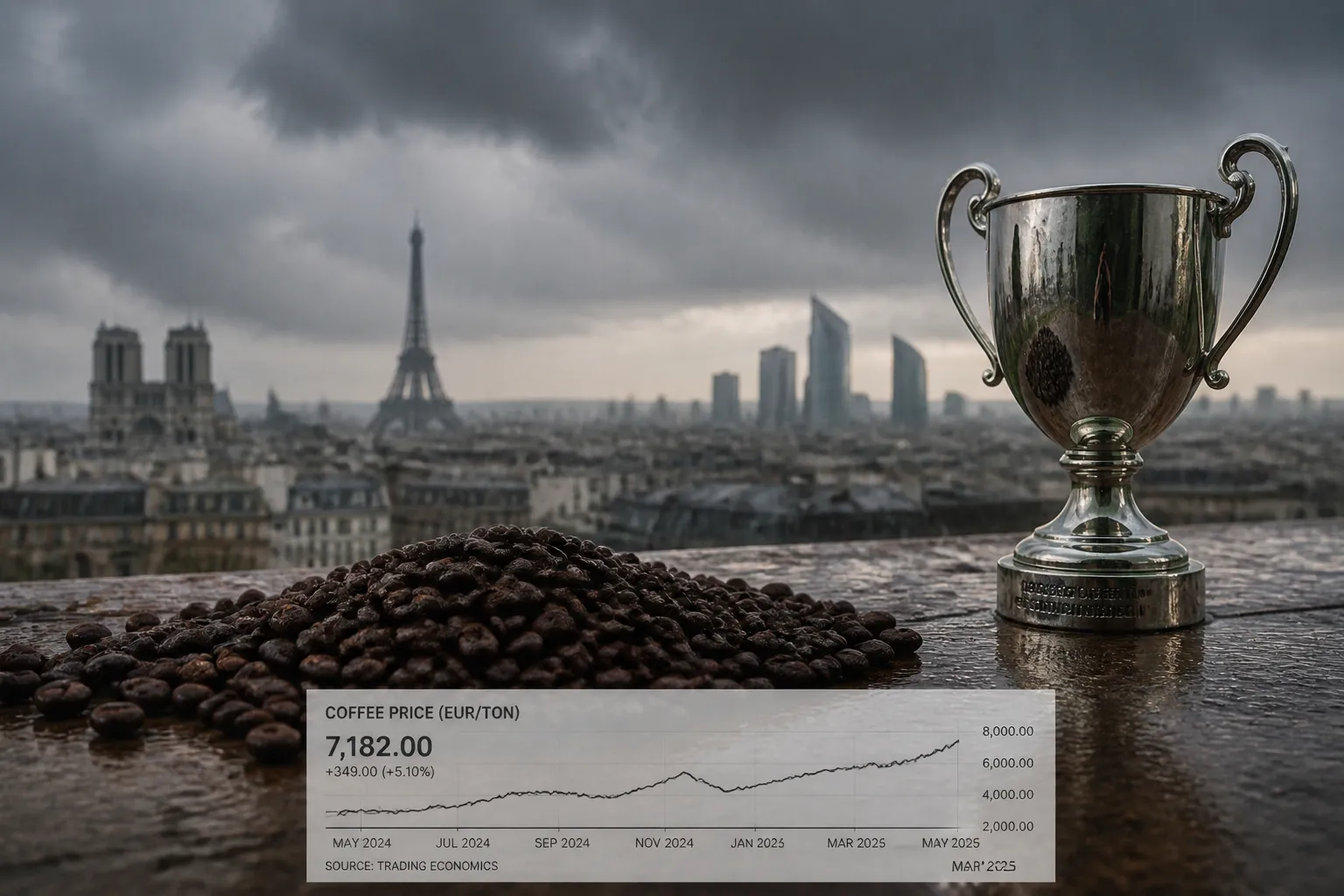
The championships also underscored how weather can shape the market. On June 30, the Intercontinental Exchange (ICE) reported a 6.71 % jump in arabica futures—the largest gain since 2022—after torrential rains in Brazil’s Minas Gerais, the country’s most important coffee‑growing area. Somar Meteorologia noted that Minas Gerais received 1,956 % of its historical average rainfall for the week, stalling harvests and raising quality concerns.
ICE inventory data revealed that arabica stocks fell to a 2.25‑year low of 377,465 bags. Traders are also eyeing a developing “Godzilla” El Niño event, which could delay Brazil’s flowering rains in September and October and exert further pressure on next year’s crop.
The confluence of extreme rainfall and dwindling inventories has tightened supply, keeping coffee prices volatile. While robusta futures also rose 2.64 %, the spotlight remains on arabica, the premium segment of the market.
In parallel industry news, Ethiopia unveiled a five‑year national coffee initiative aimed at doubling average yields from 9 to 21 quintals per hectare and doubling export revenue from US$3 billion to US$6 billion. The plan fits Addis Ababa’s broader strategy to strengthen the country’s position in the global coffee market.
Brazil’s Espírito Santo state reported a 97 % jump in coffee exports in May 2026 versus the same period last year, with robusta exports up 122 % and arabica up 91 %. The state’s Vitória Coffee Summit, slated for August 20–21, will focus on sustainability, climate challenges, and robusta’s role in meeting global demand.
The WCC results and price movements illustrate the tight link between specialty coffee competition, regional production, and global supply dynamics. The championships serve as a barometer for the specialty segment, while the price data reflects broader market pressures.
Industry observers note that current supply constraints and price volatility are likely to shape coffee trade and production decisions through 2026. Brazilian producers are already adjusting planting schedules, and traders are revisiting hedging strategies.
The coffee community will keep a close eye on the “Godzilla” El Niño, as its impact on Brazil’s flowering period could have lasting effects on the 2027 crop. Meanwhile, the new world champions from Malaysia, China, and Belgium will represent their regions in upcoming international events and may influence market perceptions of specialty coffee quality.
The sector remains in flux, with weather, inventory, and geopolitical initiatives all shaping price trajectories and supply availability. Stakeholders across the value chain are monitoring these developments closely as they plan for the next harvest season.
Jafaar’s triumph arrives amid a surge in Southeast Asia’s specialty coffee market, the fastest‑growing region worldwide. His win signals that the region’s burgeoning coffee culture may gain fresh global attention.
The championships also underscored how weather can shape the market. On June 30, the Intercontinental Exchange (ICE) reported a 6.71 % jump in arabica futures—the largest gain since 2022—after torrential rains in Brazil’s Minas Gerais, the country’s most important coffee‑growing area. Somar Meteorologia noted that Minas Gerais received 1,956 % of its historical average rainfall for the week, stalling harvests and raising quality concerns.
ICE inventory data revealed that arabica stocks fell to a 2.25‑year low of 377,465 bags. Traders are also eyeing a developing “Godzilla” El Niño event, which could delay Brazil’s flowering rains in September and October and exert further pressure on next year’s crop.
The confluence of extreme rainfall and dwindling inventories has tightened supply, keeping coffee prices volatile. While robusta futures also rose 2.64 %, the spotlight remains on arabica, the premium segment of the market.
In parallel industry news, Ethiopia unveiled a five‑year national coffee initiative aimed at doubling average yields from 9 to 21 quintals per hectare and doubling export revenue from US$3 billion to US$6 billion. The plan fits Addis Ababa’s broader strategy to strengthen the country’s position in the global coffee market.
Brazil’s Espírito Santo state reported a 97 % jump in coffee exports in May 2026 versus the same period last year, with robusta exports up 122 % and arabica up 91 %. The state’s Vitória Coffee Summit, slated for August 20–21, will focus on sustainability, climate challenges, and robusta’s role in meeting global demand.
The WCC results and price movements illustrate the tight link between specialty coffee competition, regional production, and global supply dynamics. The championships serve as a barometer for the specialty segment, while the price data reflects broader market pressures.
Industry observers note that current supply constraints and price volatility are likely to shape coffee trade and production decisions through 2026. Brazilian producers are already adjusting planting schedules, and traders are revisiting hedging strategies.
The coffee community will keep a close eye on the “Godzilla” El Niño, as its impact on Brazil’s flowering period could have lasting effects on the 2027 crop. Meanwhile, the new world champions from Malaysia, China, and Belgium will represent their regions in upcoming international events and may influence market perceptions of specialty coffee quality.
The sector remains in flux, with weather, inventory, and geopolitical initiatives all shaping price trajectories and supply availability. Stakeholders across the value chain are monitoring these developments closely as they plan for the next harvest season.