Blab Business
Intels 2026 Turnaround: AI Demand and Foundry Gains Drive Stock Surge
A $10,000 investment in Intel (NASDAQ: INTC) on January 2, 2026—when the share closed at $39.38—would have bought roughly 254 shares. By the close on June 30, those shares were worth more than $35,000, before a 14 % drop in the first two trading sessions of July. The rally illustrates how Intel’s fortunes reversed in 2026.
The comeback is anchored in two sharply expanding lines of business. First, the company’s Data Center and Artificial Intelligence (AI) segment grew 22 % year‑over‑year to $5.1 billion in the first quarter of fiscal 2026. Second, Intel’s Foundry division, long a cash‑draining operation, generated $5.4 billion in revenue—up 16 % from a year earlier. In contrast, the classic Client Computing Group, the PC‑chip business, grew only 1 % to $7.7 billion.
In its first‑quarter 2026 earnings release, Intel reported total revenue of $13.6 billion, a 7 % increase from the same period a year earlier. Non‑GAAP earnings per share rose to $0.29, more than doubling the previous year’s figure. CEO Lip‑Bu Tan said the “deliberate reset to how we operate drove a sixth consecutive quarter of revenue above our expectations, as well as new and deepened relationships with strategic partners.”
The foundry’s turnaround has been a key driver of investor confidence. Historically, Intel’s manufacturing arm faced skepticism because of high capital expenditures and lower yields compared to competitors. In 2026, customers and investors began to see the foundry’s progress as on schedule, with each new commitment adding both future revenue and credibility that Intel’s fabs can handle cutting‑edge work.
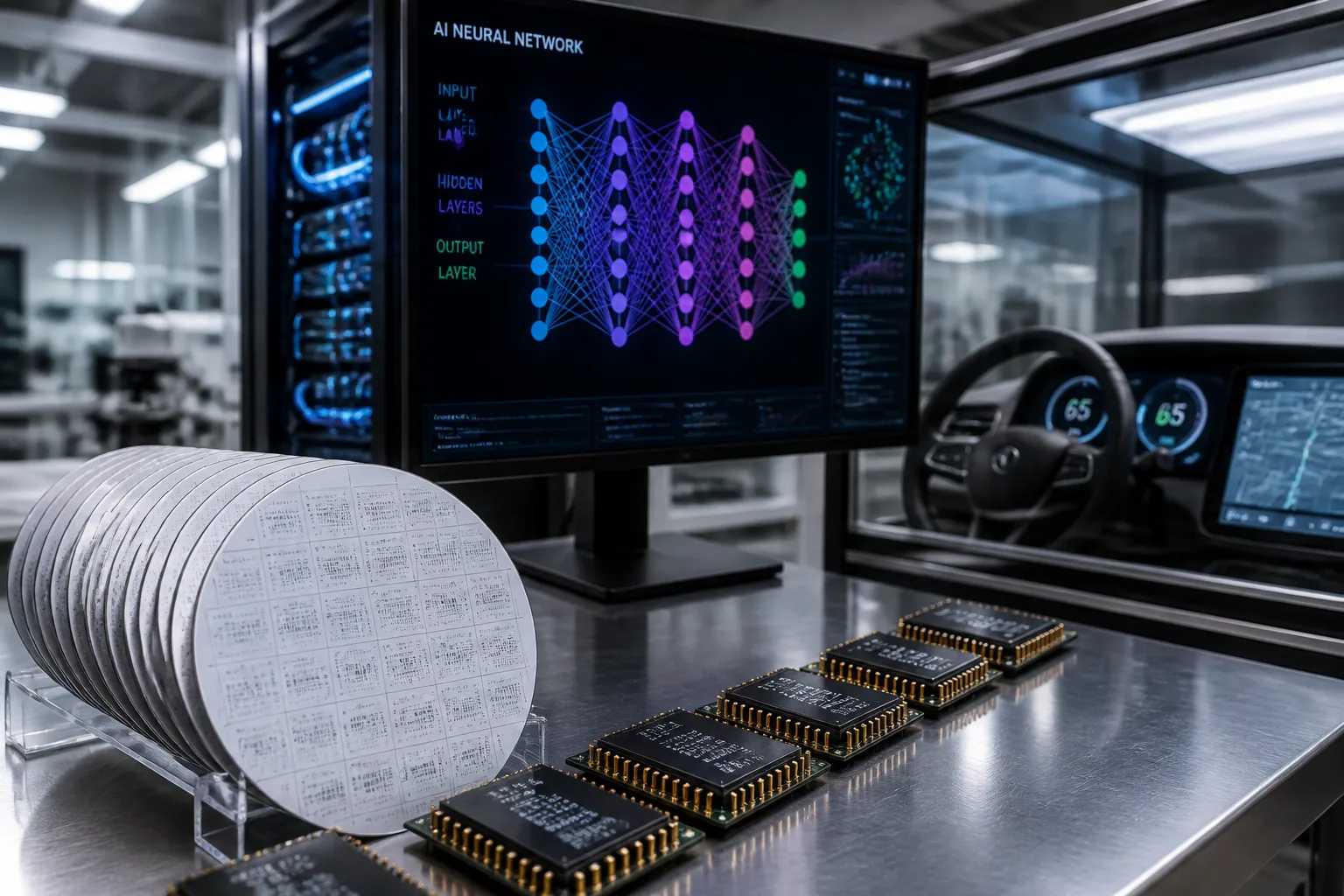
Meanwhile, the AI data‑center boom has amplified demand for Intel’s server CPUs. Analysts note that Intel’s Xeon processors are increasingly used in AI inference workloads, a shift that has contributed to the 22 % growth in the Data Center and AI segment. The broader market has seen a surge in AI‑focused data‑center construction, with estimates of $650 billion in spending in 2026.
Intel’s stock reflected these earnings surprises. After the April 23 earnings announcement, the share price rose 90 % in April. By mid‑June, the stock had climbed 168 % from its January 2025 level, driven by the combined momentum of AI demand and foundry performance.
Looking ahead, Intel’s outlook for the second quarter of fiscal 2026 is positive. The company forecast revenue of $13.8 billion to $14.8 billion and non‑GAAP earnings per share of $0.20, signaling continued strength in both the data‑center and foundry businesses.
Intel’s resurgence also reflects a broader shift in the semiconductor industry. While competitors such as AMD have gained market share in the PC segment, Intel’s focus on AI and foundry services has positioned it as a key supplier for high‑performance computing workloads.
Sustaining growth will hinge on maintaining momentum in AI data‑center sales and delivering on foundry commitments. Leadership has emphasized operational discipline and strategic partnerships to keep the turnaround on track.
In summary, Intel’s 2026 performance demonstrates a successful pivot from a declining PC market to a high‑growth AI and foundry focus. The company’s earnings growth, stock rally, and positive guidance suggest that the turnaround is not a one‑off event but a sustained shift in its business model.
The comeback is anchored in two sharply expanding lines of business. First, the company’s Data Center and Artificial Intelligence (AI) segment grew 22 % year‑over‑year to $5.1 billion in the first quarter of fiscal 2026. Second, Intel’s Foundry division, long a cash‑draining operation, generated $5.4 billion in revenue—up 16 % from a year earlier. In contrast, the classic Client Computing Group, the PC‑chip business, grew only 1 % to $7.7 billion.
In its first‑quarter 2026 earnings release, Intel reported total revenue of $13.6 billion, a 7 % increase from the same period a year earlier. Non‑GAAP earnings per share rose to $0.29, more than doubling the previous year’s figure. CEO Lip‑Bu Tan said the “deliberate reset to how we operate drove a sixth consecutive quarter of revenue above our expectations, as well as new and deepened relationships with strategic partners.”
The foundry’s turnaround has been a key driver of investor confidence. Historically, Intel’s manufacturing arm faced skepticism because of high capital expenditures and lower yields compared to competitors. In 2026, customers and investors began to see the foundry’s progress as on schedule, with each new commitment adding both future revenue and credibility that Intel’s fabs can handle cutting‑edge work.
Meanwhile, the AI data‑center boom has amplified demand for Intel’s server CPUs. Analysts note that Intel’s Xeon processors are increasingly used in AI inference workloads, a shift that has contributed to the 22 % growth in the Data Center and AI segment. The broader market has seen a surge in AI‑focused data‑center construction, with estimates of $650 billion in spending in 2026.
Intel’s stock reflected these earnings surprises. After the April 23 earnings announcement, the share price rose 90 % in April. By mid‑June, the stock had climbed 168 % from its January 2025 level, driven by the combined momentum of AI demand and foundry performance.
Looking ahead, Intel’s outlook for the second quarter of fiscal 2026 is positive. The company forecast revenue of $13.8 billion to $14.8 billion and non‑GAAP earnings per share of $0.20, signaling continued strength in both the data‑center and foundry businesses.
Intel’s resurgence also reflects a broader shift in the semiconductor industry. While competitors such as AMD have gained market share in the PC segment, Intel’s focus on AI and foundry services has positioned it as a key supplier for high‑performance computing workloads.
Sustaining growth will hinge on maintaining momentum in AI data‑center sales and delivering on foundry commitments. Leadership has emphasized operational discipline and strategic partnerships to keep the turnaround on track.
In summary, Intel’s 2026 performance demonstrates a successful pivot from a declining PC market to a high‑growth AI and foundry focus. The company’s earnings growth, stock rally, and positive guidance suggest that the turnaround is not a one‑off event but a sustained shift in its business model.