Blab Business
Camecos Cigar Lake Mine: Operations, Workforce, and Environmental Safeguards in Northern Saskatchewan
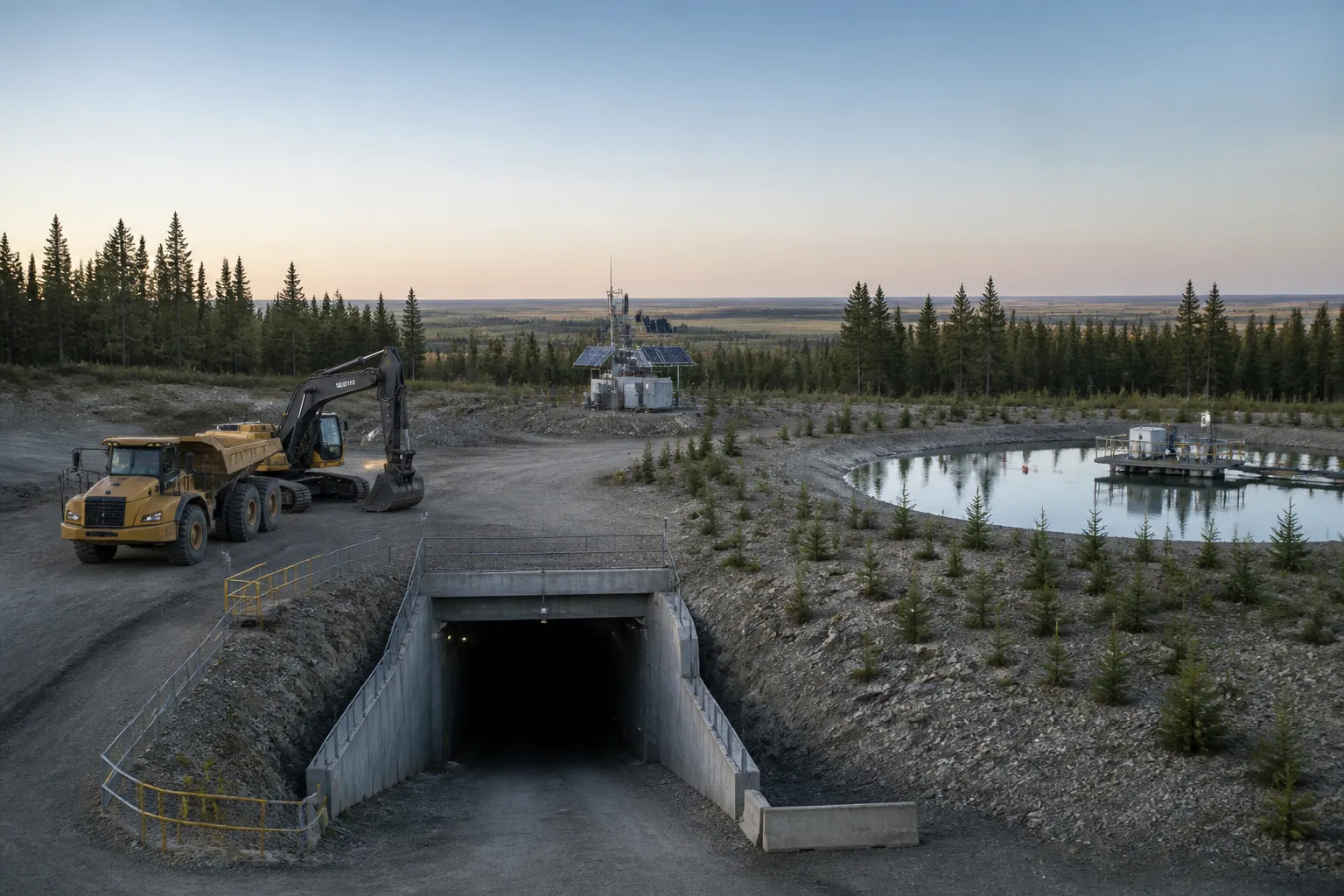
Far from the bustling streets of Saskatoon, a subterranean powerhouse hums beneath the northern Saskatchewan plains. The Cigar Lake uranium mine, situated 660 km northeast of the city in the Athabasca Basin, is the world’s highest‑grade underground uranium operation. Commercial production began in 2015, and the mine now delivers roughly 8 million kilograms of uranium each year—enough to keep the province’s electric grid running for 22 years.
Reaching the ore requires a steel‑cage elevator that can haul up to 20 workers and equipment down more than 1,200 m—a depth that eclipses the height of New York’s Empire State Building. Once underground, miners employ a jet‑boring system, a cutting‑edge non‑entry technique that blasts a high‑pressure water jet into the ore. The resulting slurry of uranium, water, and rock is pumped to a nearby mill, where it is refined into yellowcake. Cameco ships the concentrate to buyers across Ontario, the United States, Europe, and Asia.
Safety and radiation protection sit at the core of the mine’s operations. The company reports that the average employee’s radiation dose is less than the exposure from most CT scans. Continuous monitoring feeds a light‑box system that displays green for safe, yellow for a check, and red for evacuation. In the event of a fire, a gas is released to alert workers instantly.
The workforce is largely local: 45 % of employees live in northern Saskatchewan and 46 % are Indigenous. More than 400 people and contractors work at Cigar Lake, including a small but highly skilled team that runs the jet‑boring machine. Taryn Roske, who has spent 16 years at the mine, is the sole female operator of the machine and works 13 hours underground each day. She says the role has built her resilience in an industry where women represent only 12 % of the workforce.
Life on site balances hard work with community. The camp offers meals, a gym, and recreational activities such as card tournaments and movie nights. Workers typically spend two weeks underground, fly home for two weeks, and then return. The camp also provides access to Waterbury Lake— the mine’s water source—for boating and fishing.
Family ties run deep. 19‑year‑old technician Cessa Fern works alongside her father, Victor Fern Jr., the maintenance supervisor, and her grandfather, Victor Fern Sr., who serves as a community‑relations liaison in nearby Fond du Lac. Fern describes the experience as a “family affair,” noting she now understands why her father spends two weeks away.
Cameco underscores its commitment to surrounding communities by signing collaboration agreements with several First Nations, focusing on jobs, development, and environmental stewardship. General manager Kirk Lamont calls Cigar Lake a “boutique mine” that is small but very high‑grade and specialized. He stresses the company’s responsibility to operate on treaty territory and maintain clean water. Water used in mining is treated and tested before returning to Waterbury Lake, and radiologically contaminated waste is bagged and later used to fill tunnels.
The mine’s operations are regulated by the Canadian Nuclear Safety Commission (CNSC). Cameco’s radiation protection program has received CNSC approval, ensuring doses remain as low as reasonably achievable.
Beyond its production and safety record, Cigar Lake plays a pivotal role in Canada’s uranium industry. Canada is the world’s second‑largest uranium producer, and all of its output comes from three mines in the Athabasca Basin. The high‑grade ore from Cigar Lake makes it a key contributor to the country’s share of global supply.
Looking ahead, the mine’s future hinges on ongoing water‑management projects and continued collaboration with local communities. As of July 5, 2026, Cameco remains focused on maintaining safe, efficient operations while supporting the economic and environmental well‑being of northern Saskatchewan.
Reaching the ore requires a steel‑cage elevator that can haul up to 20 workers and equipment down more than 1,200 m—a depth that eclipses the height of New York’s Empire State Building. Once underground, miners employ a jet‑boring system, a cutting‑edge non‑entry technique that blasts a high‑pressure water jet into the ore. The resulting slurry of uranium, water, and rock is pumped to a nearby mill, where it is refined into yellowcake. Cameco ships the concentrate to buyers across Ontario, the United States, Europe, and Asia.
Safety and radiation protection sit at the core of the mine’s operations. The company reports that the average employee’s radiation dose is less than the exposure from most CT scans. Continuous monitoring feeds a light‑box system that displays green for safe, yellow for a check, and red for evacuation. In the event of a fire, a gas is released to alert workers instantly.
The workforce is largely local: 45 % of employees live in northern Saskatchewan and 46 % are Indigenous. More than 400 people and contractors work at Cigar Lake, including a small but highly skilled team that runs the jet‑boring machine. Taryn Roske, who has spent 16 years at the mine, is the sole female operator of the machine and works 13 hours underground each day. She says the role has built her resilience in an industry where women represent only 12 % of the workforce.
Life on site balances hard work with community. The camp offers meals, a gym, and recreational activities such as card tournaments and movie nights. Workers typically spend two weeks underground, fly home for two weeks, and then return. The camp also provides access to Waterbury Lake— the mine’s water source—for boating and fishing.
Family ties run deep. 19‑year‑old technician Cessa Fern works alongside her father, Victor Fern Jr., the maintenance supervisor, and her grandfather, Victor Fern Sr., who serves as a community‑relations liaison in nearby Fond du Lac. Fern describes the experience as a “family affair,” noting she now understands why her father spends two weeks away.
Cameco underscores its commitment to surrounding communities by signing collaboration agreements with several First Nations, focusing on jobs, development, and environmental stewardship. General manager Kirk Lamont calls Cigar Lake a “boutique mine” that is small but very high‑grade and specialized. He stresses the company’s responsibility to operate on treaty territory and maintain clean water. Water used in mining is treated and tested before returning to Waterbury Lake, and radiologically contaminated waste is bagged and later used to fill tunnels.
The mine’s operations are regulated by the Canadian Nuclear Safety Commission (CNSC). Cameco’s radiation protection program has received CNSC approval, ensuring doses remain as low as reasonably achievable.
Beyond its production and safety record, Cigar Lake plays a pivotal role in Canada’s uranium industry. Canada is the world’s second‑largest uranium producer, and all of its output comes from three mines in the Athabasca Basin. The high‑grade ore from Cigar Lake makes it a key contributor to the country’s share of global supply.
Looking ahead, the mine’s future hinges on ongoing water‑management projects and continued collaboration with local communities. As of July 5, 2026, Cameco remains focused on maintaining safe, efficient operations while supporting the economic and environmental well‑being of northern Saskatchewan.