Blab Business
Tesla Reports First-Quarter FY26 Automotive Growth, But Demand and Profitability Remain Soft
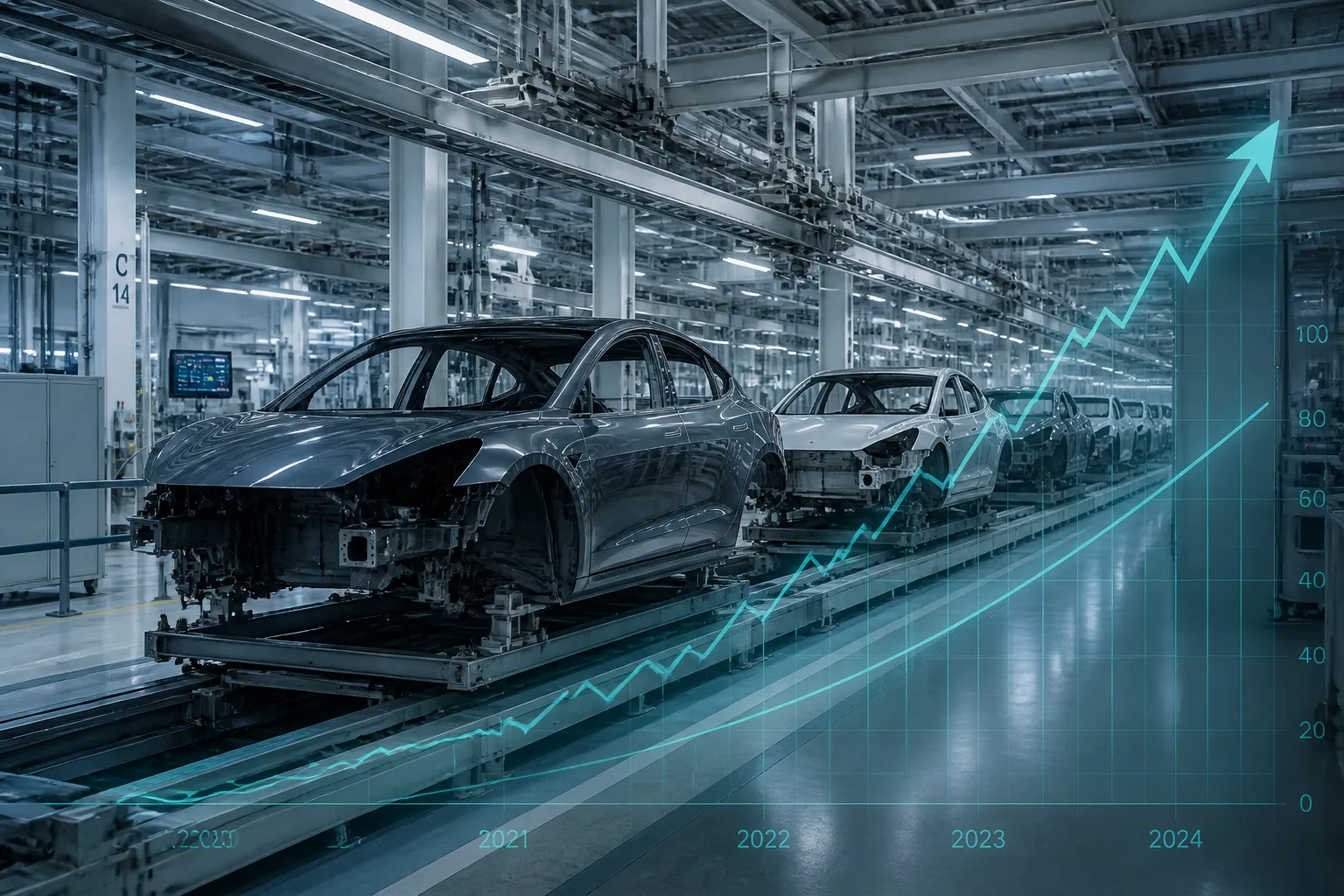
Tesla’s first‑quarter revenue climb is a bright spot in a season of softness. In the first quarter of fiscal 2026, the automaker posted a 12 % year‑over‑year rise in automotive revenue, reversing the 10 % decline it recorded in 2025.
The uptick came largely from higher deliveries of the Model 3 and Model Y, and from the launch of the Robotaxi service in Austin, Texas. Still, the broader demand environment remains muted. A Seeking Alpha analysis published on May 1, 2026 notes that while the company’s topline grew, elevated production costs and pricing pressure are likely to keep operating margins below historical levels.
Tesla’s long‑term AI ambitions—Full Self‑Driving (FSD), the Robotaxi network, and the Optimus humanoid robot—continue to be in the development phase. The same analysis points out that these moonshots are unlikely to generate material revenue or margin impact in the near term. Tesla’s investor‑relations site confirms that the Robotaxi service, launched in June 2025 with a human safety monitor, is currently limited to Model Y vehicles.
Industry context shows that the automotive segment still dominates Tesla’s total revenue, but its share of the global electric‑vehicle (EV) market has slipped. Wikipedia records a 17.6 % share in 2024 and notes that Tesla lost its status as the world’s leading manufacturer by the end of 2025.
Competitive headwinds are evident. The EV market has seen a surge in new entrants, and several traditional automakers have accelerated their own electrification plans. Analysts have observed that Tesla’s pricing strategy has become more aggressive in response to this competition, potentially compressing margins further.
Profitability figures for Q1 FY26 were modest. The company reported a net income of $477 million, a 16.6 % increase from the same quarter in 2025, but still below the multi‑year highs of 2019 and 2020. Operating profit margins remained under 8 %, and the guidance for the remainder of FY26 reflects expectations of continued margin pressure.
Tesla’s management has reiterated its focus on scaling production and cutting costs. In a recent earnings call, executives highlighted progress in automation at its Gigafactories and the planned expansion of the Robotaxi network to include the Cybercab and other models. They also emphasized heavy investment in AI training infrastructure to support future autonomous capabilities.
Regulatory scrutiny continues. The National Highway Traffic Safety Administration (NHTSA) investigated several incidents involving the Robotaxi service, including reports of vehicles driving on the wrong side of the road and phantom braking. Tesla has stated that it is working with regulators to address these issues.
Looking ahead, investors will be watching Tesla’s Q2 FY26 earnings for signs of sustained automotive growth and margin improvement. The company is also expected to provide updates on its AI initiatives and any progress toward full autonomy. Meanwhile, the broader EV market remains volatile, with demand influenced by macroeconomic factors such as interest rates, supply‑chain constraints, and consumer sentiment.
In summary, Tesla’s first‑quarter FY26 automotive revenue growth is a positive sign, but the company faces a soft demand environment, margin pressure, and regulatory challenges. The near‑term outlook remains cautious, with investors awaiting further evidence of sustained growth and profitability.
The uptick came largely from higher deliveries of the Model 3 and Model Y, and from the launch of the Robotaxi service in Austin, Texas. Still, the broader demand environment remains muted. A Seeking Alpha analysis published on May 1, 2026 notes that while the company’s topline grew, elevated production costs and pricing pressure are likely to keep operating margins below historical levels.
Tesla’s long‑term AI ambitions—Full Self‑Driving (FSD), the Robotaxi network, and the Optimus humanoid robot—continue to be in the development phase. The same analysis points out that these moonshots are unlikely to generate material revenue or margin impact in the near term. Tesla’s investor‑relations site confirms that the Robotaxi service, launched in June 2025 with a human safety monitor, is currently limited to Model Y vehicles.
Industry context shows that the automotive segment still dominates Tesla’s total revenue, but its share of the global electric‑vehicle (EV) market has slipped. Wikipedia records a 17.6 % share in 2024 and notes that Tesla lost its status as the world’s leading manufacturer by the end of 2025.
Competitive headwinds are evident. The EV market has seen a surge in new entrants, and several traditional automakers have accelerated their own electrification plans. Analysts have observed that Tesla’s pricing strategy has become more aggressive in response to this competition, potentially compressing margins further.
Profitability figures for Q1 FY26 were modest. The company reported a net income of $477 million, a 16.6 % increase from the same quarter in 2025, but still below the multi‑year highs of 2019 and 2020. Operating profit margins remained under 8 %, and the guidance for the remainder of FY26 reflects expectations of continued margin pressure.
Tesla’s management has reiterated its focus on scaling production and cutting costs. In a recent earnings call, executives highlighted progress in automation at its Gigafactories and the planned expansion of the Robotaxi network to include the Cybercab and other models. They also emphasized heavy investment in AI training infrastructure to support future autonomous capabilities.
Regulatory scrutiny continues. The National Highway Traffic Safety Administration (NHTSA) investigated several incidents involving the Robotaxi service, including reports of vehicles driving on the wrong side of the road and phantom braking. Tesla has stated that it is working with regulators to address these issues.
Looking ahead, investors will be watching Tesla’s Q2 FY26 earnings for signs of sustained automotive growth and margin improvement. The company is also expected to provide updates on its AI initiatives and any progress toward full autonomy. Meanwhile, the broader EV market remains volatile, with demand influenced by macroeconomic factors such as interest rates, supply‑chain constraints, and consumer sentiment.
In summary, Tesla’s first‑quarter FY26 automotive revenue growth is a positive sign, but the company faces a soft demand environment, margin pressure, and regulatory challenges. The near‑term outlook remains cautious, with investors awaiting further evidence of sustained growth and profitability.