Blab Business
SpaceX Stock Faces 80% Drop, Analyst Warns of Overvaluation
Space Exploration Technologies Corp. (SPCX) is trading at about $148 a share, but a New York University marketing professor has warned that the stock could fall as much as 80% from its current level.
Scott Galloway, who hosts a popular business podcast, said on a recent episode that SpaceX shares are worth only between $10 and $30. The comment follows SpaceX’s June 2026 initial public offering (IPO), which raised $75 billion and gave the company a market value of roughly $1.8 trillion. The IPO price was $135 per share. The stock rose to a high of $225 before falling more than 50% to $105, and has since recovered to above its IPO price.
Galloway’s assessment is based on several structural factors. First, only about 4‑5% of the company’s shares were available for public trading immediately after the IPO, creating a very limited free float. Second, SpaceX was added to the Nasdaq‑100 index, which forces index‑tracking funds to purchase shares regardless of price. Third, the company issued a $25 billion bond just two weeks after the IPO, despite holding more than $100 billion in cash. The bond sale, according to Galloway, signals that investors are treating SpaceX as an artificial‑intelligence (AI) infrastructure bet disguised as a rocket company.
SpaceX’s financials support the view that the company is not yet profitable. Fiscal.ai data show that sales grew from $10.4 billion in 2023 to $23 billion in the trailing 12‑month period. Net losses were $4.6 billion in 2023 and are projected to be $4.9 billion in 2025. Over the same 12‑month period, total net losses amount to $8.2 billion, and the operating margin is –16.2%. The company also burned $31.2 billion in free cash flow, largely driven by $41.1 billion in capital expenditures on AI compute infrastructure.
SpaceX’s business model is diversified across three segments: Space (launch vehicles and spacecraft), Connectivity (Starlink satellite broadband), and AI (SpaceXAI, the Grok language‑model platform, and data‑center operations). The company’s AI ambitions are a key driver of its recent capital spending.
Elon Musk owns about 39% of the outstanding shares and controls 84% of the voting power through super‑voting stock. After the IPO, Musk briefly became the first U.S. dollar trillionaire, but a sharp decline in the stock price in July 2026 brought his net worth below that threshold.
The current market price of $148 per share reflects a valuation that Galloway believes is far above the company’s intrinsic value. He argues that the stock’s price action is largely a result of mechanical trading factors rather than underlying business fundamentals.
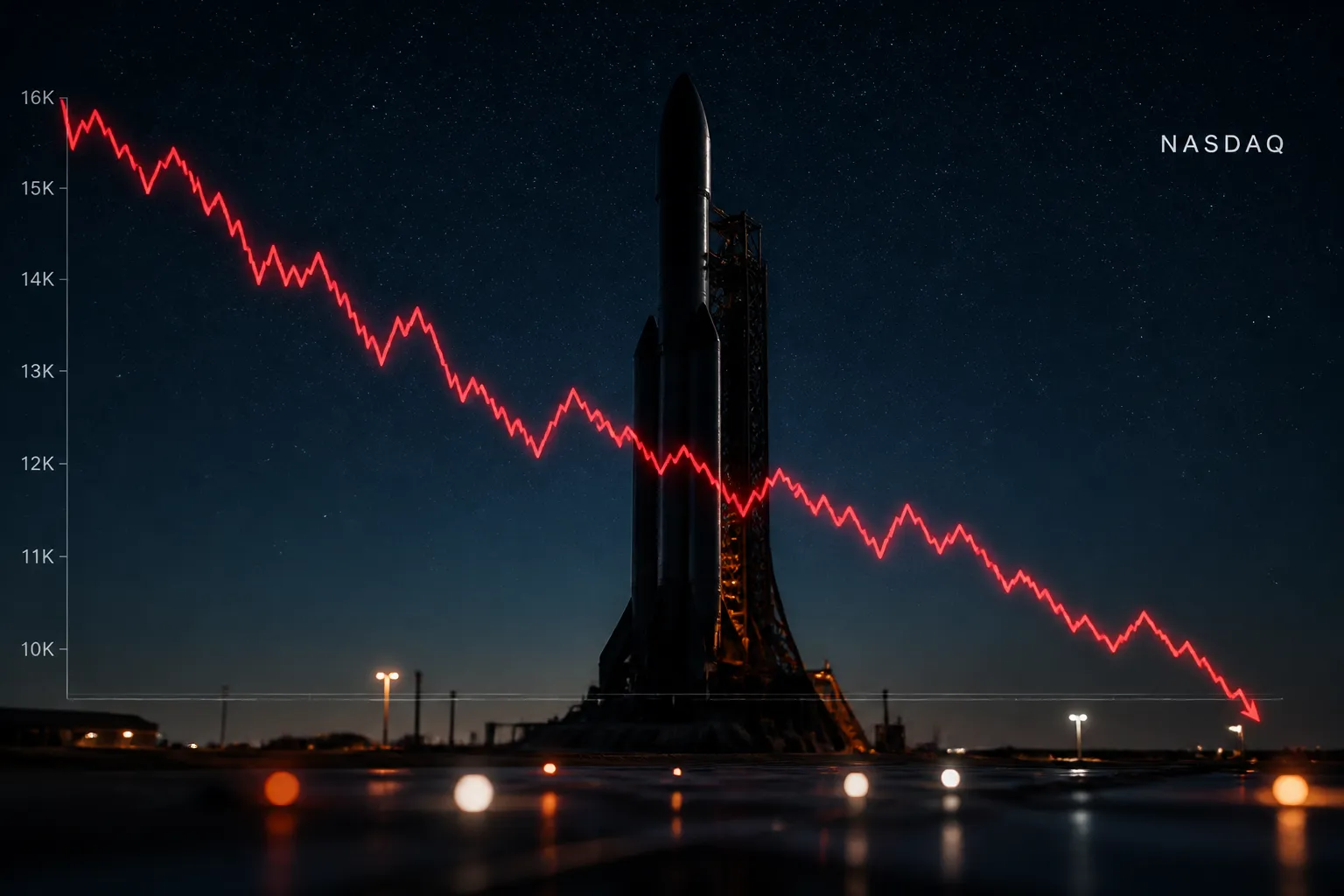
SpaceX’s stock has shown volatility since the IPO. After a peak of $225, the share price fell to $105, then recovered to above the IPO price in the last two weeks. The stock’s current level of $148 is still well above the $135 IPO price.
Investors and analysts are watching how SpaceX’s financial trajectory will evolve. The company’s large cash reserve, ongoing losses, and heavy investment in AI infrastructure raise questions about the sustainability of its growth model.
At present, SpaceX’s market capitalization stands at approximately $1.91 trillion. The company’s next major corporate event will likely be the release of its Q4 earnings report, which will provide further insight into its revenue mix, profitability, and capital‑expenditure plans.
The debate over SpaceX’s valuation illustrates the broader challenge of valuing companies that combine high‑growth technology ventures with traditional aerospace operations. Until the company demonstrates consistent profitability, analysts like Galloway will likely continue to view the stock as overvalued.
The current situation remains that SpaceX’s stock is trading at $148, with a potential for a significant decline according to some analysts. The company’s upcoming earnings release and any further capital‑raising activity will be key to determining whether the market’s current valuation is justified.
Scott Galloway, who hosts a popular business podcast, said on a recent episode that SpaceX shares are worth only between $10 and $30. The comment follows SpaceX’s June 2026 initial public offering (IPO), which raised $75 billion and gave the company a market value of roughly $1.8 trillion. The IPO price was $135 per share. The stock rose to a high of $225 before falling more than 50% to $105, and has since recovered to above its IPO price.
Galloway’s assessment is based on several structural factors. First, only about 4‑5% of the company’s shares were available for public trading immediately after the IPO, creating a very limited free float. Second, SpaceX was added to the Nasdaq‑100 index, which forces index‑tracking funds to purchase shares regardless of price. Third, the company issued a $25 billion bond just two weeks after the IPO, despite holding more than $100 billion in cash. The bond sale, according to Galloway, signals that investors are treating SpaceX as an artificial‑intelligence (AI) infrastructure bet disguised as a rocket company.
SpaceX’s financials support the view that the company is not yet profitable. Fiscal.ai data show that sales grew from $10.4 billion in 2023 to $23 billion in the trailing 12‑month period. Net losses were $4.6 billion in 2023 and are projected to be $4.9 billion in 2025. Over the same 12‑month period, total net losses amount to $8.2 billion, and the operating margin is –16.2%. The company also burned $31.2 billion in free cash flow, largely driven by $41.1 billion in capital expenditures on AI compute infrastructure.
SpaceX’s business model is diversified across three segments: Space (launch vehicles and spacecraft), Connectivity (Starlink satellite broadband), and AI (SpaceXAI, the Grok language‑model platform, and data‑center operations). The company’s AI ambitions are a key driver of its recent capital spending.
Elon Musk owns about 39% of the outstanding shares and controls 84% of the voting power through super‑voting stock. After the IPO, Musk briefly became the first U.S. dollar trillionaire, but a sharp decline in the stock price in July 2026 brought his net worth below that threshold.
The current market price of $148 per share reflects a valuation that Galloway believes is far above the company’s intrinsic value. He argues that the stock’s price action is largely a result of mechanical trading factors rather than underlying business fundamentals.
SpaceX’s stock has shown volatility since the IPO. After a peak of $225, the share price fell to $105, then recovered to above the IPO price in the last two weeks. The stock’s current level of $148 is still well above the $135 IPO price.
Investors and analysts are watching how SpaceX’s financial trajectory will evolve. The company’s large cash reserve, ongoing losses, and heavy investment in AI infrastructure raise questions about the sustainability of its growth model.
At present, SpaceX’s market capitalization stands at approximately $1.91 trillion. The company’s next major corporate event will likely be the release of its Q4 earnings report, which will provide further insight into its revenue mix, profitability, and capital‑expenditure plans.
The debate over SpaceX’s valuation illustrates the broader challenge of valuing companies that combine high‑growth technology ventures with traditional aerospace operations. Until the company demonstrates consistent profitability, analysts like Galloway will likely continue to view the stock as overvalued.
The current situation remains that SpaceX’s stock is trading at $148, with a potential for a significant decline according to some analysts. The company’s upcoming earnings release and any further capital‑raising activity will be key to determining whether the market’s current valuation is justified.