Blab Business
Teslas Hardware 4 Fleet Positions It to Dominate the Robotaxi Market, Analysts Say
In a recent video on the All in Pod, technology commentator Jason Calcanis challenged a widely cited forecast that Tesla, Uber, and Waymo would each claim roughly 40% of the future robotaxi market, with the remainder split among smaller players. Calcanis argues that the numbers are misleading and that Tesla’s already‑deployed 6 million Hardware 4 vehicles could dominate the sector.
The analysis highlights stark structural differences among the three companies. Waymo’s fleet sits at about 4,000 vehicles, and its factory produces fewer than ten cars a day. The bottleneck is the lidar sensor, a component supplied by a handful of manufacturers. Global lidar production is capped at roughly 10,000 robotaxi‑grade units per year, a ceiling that would constrain Waymo’s expansion.
Uber follows a different path. The ride‑hailing giant has invested roughly $10 billion across 20 autonomous‑vehicle partners, yet its fleet remains largely lidar‑dependent. Uber’s take rate for mobility services was 29.9% in the fourth quarter of 2025, meaning that only about $5 of a typical $25 ride goes to the company. Uber has also unveiled a “Plan B” that would involve buying Cybercabs directly from Tesla.
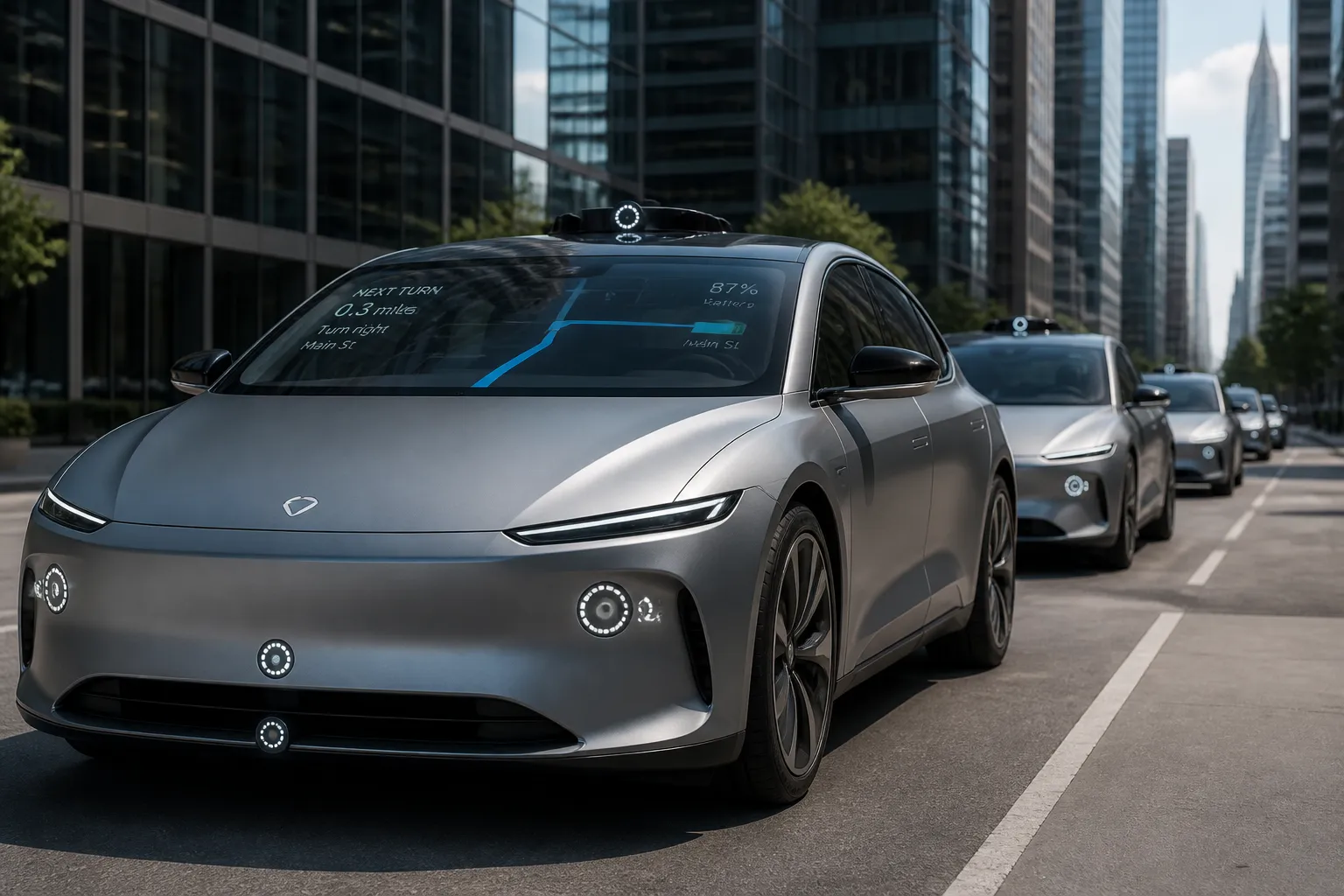
Tesla’s edge lies in its vertical integration. More than 6 million vehicles already carry Hardware 4, and the forthcoming Full‑Self‑Driving (FSD) v15 software update is expected to unlock unsupervised driving for all of them. Calcanis points out that the rollout timeline for FSD v15 would allow Tesla to field a robotaxi fleet at a scale that rivals or exceeds the combined fleets of Waymo and Uber.
A critical component of Tesla’s strategy is its charging network. While the company still needs to expand its Supercharger and Destination Charger infrastructure to support a large robotaxi fleet, the existing network is already the most extensive in the world.
Waymo’s unit economics also raise concerns. The company logged 200 million fully autonomous miles in 2025 and provided 500,000 paid rides per week, yet its per‑mile cost remains higher than Tesla’s due to the lidar requirement and the lower vehicle volume. In addition, Waymo has faced regulatory scrutiny, with the National Transportation Safety Board and the National Highway Traffic Safety Administration opening investigations into incidents involving school buses and a child in a school zone.
The robotaxi market itself is expanding rapidly. A Fortune Business Insights report projects the global market to grow from $1.27 billion in 2026 to $96.31 billion by 2034, a compound annual growth rate of 71.9%. Tesla’s current unsupervised mileage—over 380,000 miles in seven U.S. markets and 2.5 million paid miles—suggests that the company is already operating at a scale that could meet a large portion of that demand.
While the analysis acknowledges that Waymo, Uber, and other Chinese autonomous‑vehicle companies are active players, it argues that the scale math, timing, and unit economics all point toward Tesla pulling away from a three‑way split. The video concludes that Tesla could capture 99–100% of the market if the FSD v15 rollout proceeds as planned.
The situation remains in flux. Tesla’s next earnings report will provide updated figures on its autonomous‑driving revenue, and Uber’s next quarter will show whether its partnership strategy yields a larger fleet. Waymo’s ongoing investigations and regulatory reviews could also impact its expansion plans. Investors and industry observers will be watching the rollout of FSD v15 and the development of Tesla’s charging network closely as the robotaxi market moves toward its projected peak.
The analysis highlights stark structural differences among the three companies. Waymo’s fleet sits at about 4,000 vehicles, and its factory produces fewer than ten cars a day. The bottleneck is the lidar sensor, a component supplied by a handful of manufacturers. Global lidar production is capped at roughly 10,000 robotaxi‑grade units per year, a ceiling that would constrain Waymo’s expansion.
Uber follows a different path. The ride‑hailing giant has invested roughly $10 billion across 20 autonomous‑vehicle partners, yet its fleet remains largely lidar‑dependent. Uber’s take rate for mobility services was 29.9% in the fourth quarter of 2025, meaning that only about $5 of a typical $25 ride goes to the company. Uber has also unveiled a “Plan B” that would involve buying Cybercabs directly from Tesla.
Tesla’s edge lies in its vertical integration. More than 6 million vehicles already carry Hardware 4, and the forthcoming Full‑Self‑Driving (FSD) v15 software update is expected to unlock unsupervised driving for all of them. Calcanis points out that the rollout timeline for FSD v15 would allow Tesla to field a robotaxi fleet at a scale that rivals or exceeds the combined fleets of Waymo and Uber.
A critical component of Tesla’s strategy is its charging network. While the company still needs to expand its Supercharger and Destination Charger infrastructure to support a large robotaxi fleet, the existing network is already the most extensive in the world.
Waymo’s unit economics also raise concerns. The company logged 200 million fully autonomous miles in 2025 and provided 500,000 paid rides per week, yet its per‑mile cost remains higher than Tesla’s due to the lidar requirement and the lower vehicle volume. In addition, Waymo has faced regulatory scrutiny, with the National Transportation Safety Board and the National Highway Traffic Safety Administration opening investigations into incidents involving school buses and a child in a school zone.
The robotaxi market itself is expanding rapidly. A Fortune Business Insights report projects the global market to grow from $1.27 billion in 2026 to $96.31 billion by 2034, a compound annual growth rate of 71.9%. Tesla’s current unsupervised mileage—over 380,000 miles in seven U.S. markets and 2.5 million paid miles—suggests that the company is already operating at a scale that could meet a large portion of that demand.
While the analysis acknowledges that Waymo, Uber, and other Chinese autonomous‑vehicle companies are active players, it argues that the scale math, timing, and unit economics all point toward Tesla pulling away from a three‑way split. The video concludes that Tesla could capture 99–100% of the market if the FSD v15 rollout proceeds as planned.
The situation remains in flux. Tesla’s next earnings report will provide updated figures on its autonomous‑driving revenue, and Uber’s next quarter will show whether its partnership strategy yields a larger fleet. Waymo’s ongoing investigations and regulatory reviews could also impact its expansion plans. Investors and industry observers will be watching the rollout of FSD v15 and the development of Tesla’s charging network closely as the robotaxi market moves toward its projected peak.