Blab Business
Samsungs Q1 2026 Chip Profits Surge as Global AI Demand Drives Foundry Expansion
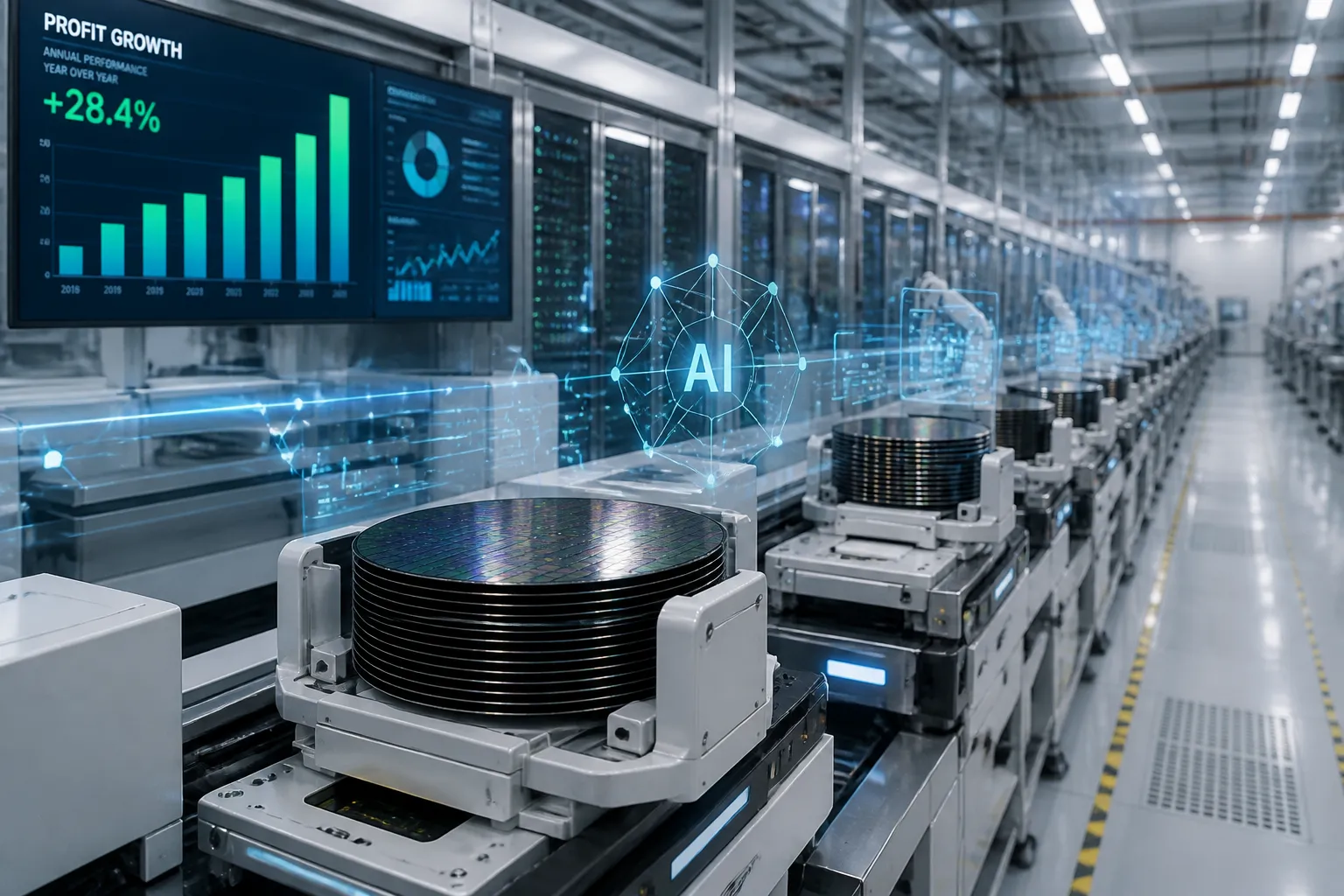
Samsung Electronics’ first‑quarter 2026 earnings stunned the market, with a record operating profit of KRW 31.8 trillion (about $31.8 billion) driven largely by its semiconductor arm. Consolidated revenue reached KRW 133.9 trillion (roughly $90 billion), marking the highest operating margin in the company’s history.
The surge is rooted in two intertwined trends. First, Samsung’s high‑performance memory segment—particularly its high‑bandwidth memory 4 (HBM4) line—has captured a growing share of AI‑specific workloads, lifting margins. Second, the company’s foundry services are stepping in as a key alternative for firms that cannot secure capacity at Taiwan Semiconductor Manufacturing Company (TSMC), the global leader that controls about 70 % of the foundry market.
TSMC’s production pipeline is strained by an unprecedented wave of demand for AI and high‑performance chips. With its capacity already stretched, many fabless companies have begun to adopt dual‑sourcing strategies, splitting orders between TSMC and Samsung to hedge against bottlenecks. Samsung’s foundry, while technically behind TSMC in some advanced nodes, offers readily available capacity that can be tapped almost immediately.
To meet this opportunity, Samsung announced plans to triple its foundry output by 2026 and to ramp up volume production of its 2 nm process in the first half of the year. In the interim, the company is encouraging customers to place orders for its 5 nm and 8 nm nodes to keep utilization high. These moves position Samsung as a viable backup for customers whose timelines cannot wait for TSMC’s more mature but tighter schedules.
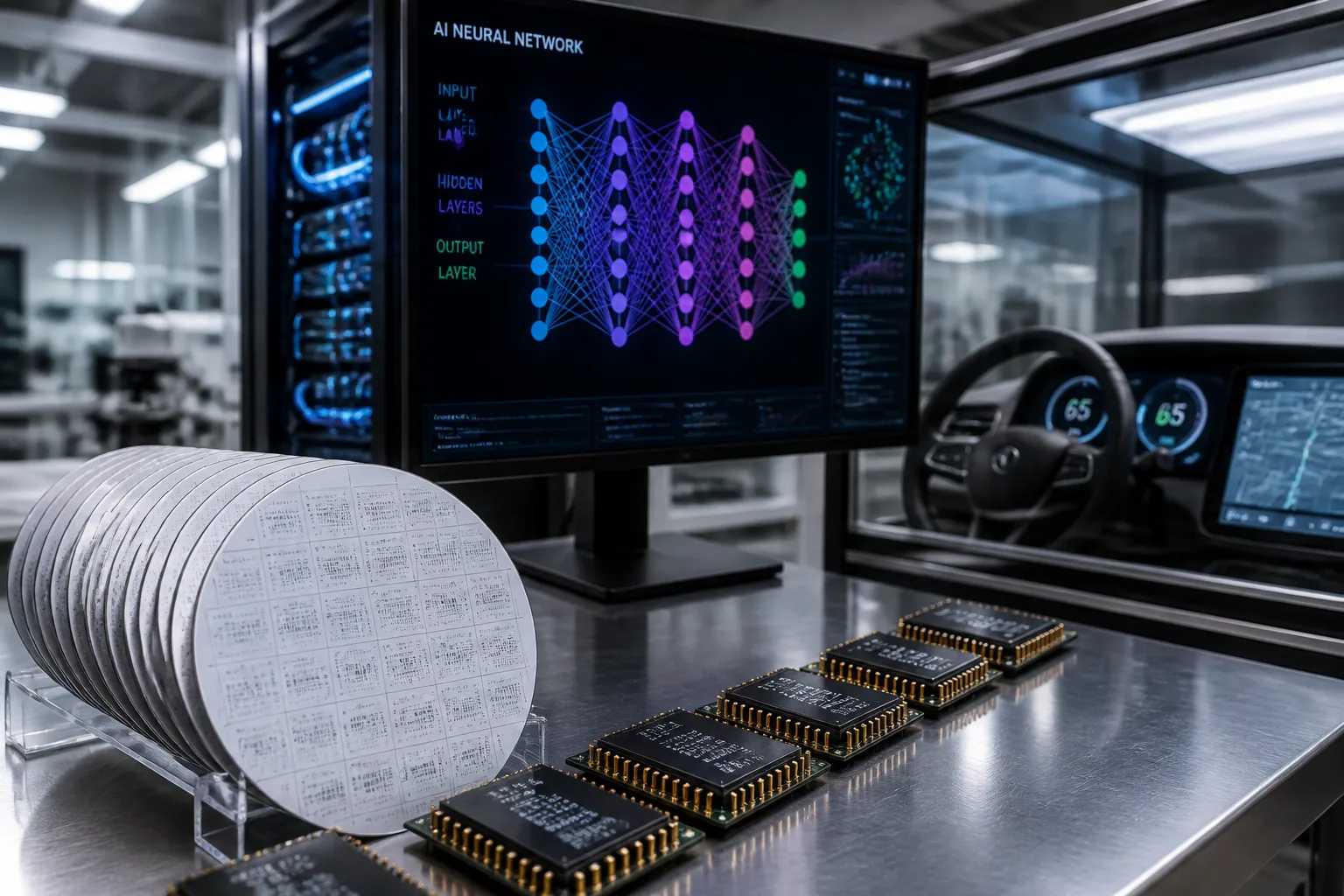
Several high‑profile customers are already locking in new deals. Advanced Micro Devices (AMD) is in talks to have its next‑generation CPUs manufactured by Samsung starting in 2028. Google is reportedly expanding its partnership to produce its next‑generation Axion processors—set for a 2028 launch—and to build part of its Tensor Processing Units (TPUs) for AI workloads as early as 2028. Tesla confirmed that its next‑generation AI6 chip, used for autonomous driving, data‑center workloads, and the Optimus robot, will be fabricated at Samsung’s Texas facility, with the AI5 chip already in production there. NVIDIA‑backed Groq, which develops language‑processing units, is using Samsung for its current line and may turn to the foundry for future AI processors. BYD, the world’s largest electric‑vehicle maker, is also in discussion with Samsung about producing its next‑generation autonomous‑driving chips.
Samsung’s memory business has benefited from the AI boom as well. The company’s HBM4 production has driven higher margins, and analysts expect demand for AI‑specific memory to keep rising. Industry experts note that Samsung’s ability to offer available capacity—even if it lags TSMC in some technical parameters—constitutes a significant competitive advantage. The foundry is seen as a “risk‑diversification” option for firms that need to hedge against potential bottlenecks at TSMC.
Geopolitical considerations also play a role. Companies are wary of concentrating all their chip production in a single country, and Samsung’s global footprint—including its Texas plant—provides a more geographically diversified supply chain. As TSMC’s capacity constraints persist, Samsung’s expanding foundry and memory businesses position it to capture a larger share of the semiconductor market.
Samsung’s Q1 2026 results underscore a broader trend: the accelerating demand for AI and high‑performance chips. Investors will look to the company’s next earnings report, scheduled for the end of the second quarter, for further insight into the pace of its foundry expansion and the depth of its new customer relationships. They will also monitor updates on Samsung’s 2 nm production schedule and the status of partnership agreements with AMD, Google, Tesla, and other major clients.
In short, Samsung’s record Q1 2026 operating profit reflects a powerful combination of strong memory sales and growing foundry demand. The company’s strategic expansion of manufacturing capacity and its growing customer base are expected to sustain its momentum as the AI chip market continues to expand.
The surge is rooted in two intertwined trends. First, Samsung’s high‑performance memory segment—particularly its high‑bandwidth memory 4 (HBM4) line—has captured a growing share of AI‑specific workloads, lifting margins. Second, the company’s foundry services are stepping in as a key alternative for firms that cannot secure capacity at Taiwan Semiconductor Manufacturing Company (TSMC), the global leader that controls about 70 % of the foundry market.
TSMC’s production pipeline is strained by an unprecedented wave of demand for AI and high‑performance chips. With its capacity already stretched, many fabless companies have begun to adopt dual‑sourcing strategies, splitting orders between TSMC and Samsung to hedge against bottlenecks. Samsung’s foundry, while technically behind TSMC in some advanced nodes, offers readily available capacity that can be tapped almost immediately.
To meet this opportunity, Samsung announced plans to triple its foundry output by 2026 and to ramp up volume production of its 2 nm process in the first half of the year. In the interim, the company is encouraging customers to place orders for its 5 nm and 8 nm nodes to keep utilization high. These moves position Samsung as a viable backup for customers whose timelines cannot wait for TSMC’s more mature but tighter schedules.
Several high‑profile customers are already locking in new deals. Advanced Micro Devices (AMD) is in talks to have its next‑generation CPUs manufactured by Samsung starting in 2028. Google is reportedly expanding its partnership to produce its next‑generation Axion processors—set for a 2028 launch—and to build part of its Tensor Processing Units (TPUs) for AI workloads as early as 2028. Tesla confirmed that its next‑generation AI6 chip, used for autonomous driving, data‑center workloads, and the Optimus robot, will be fabricated at Samsung’s Texas facility, with the AI5 chip already in production there. NVIDIA‑backed Groq, which develops language‑processing units, is using Samsung for its current line and may turn to the foundry for future AI processors. BYD, the world’s largest electric‑vehicle maker, is also in discussion with Samsung about producing its next‑generation autonomous‑driving chips.
Samsung’s memory business has benefited from the AI boom as well. The company’s HBM4 production has driven higher margins, and analysts expect demand for AI‑specific memory to keep rising. Industry experts note that Samsung’s ability to offer available capacity—even if it lags TSMC in some technical parameters—constitutes a significant competitive advantage. The foundry is seen as a “risk‑diversification” option for firms that need to hedge against potential bottlenecks at TSMC.
Geopolitical considerations also play a role. Companies are wary of concentrating all their chip production in a single country, and Samsung’s global footprint—including its Texas plant—provides a more geographically diversified supply chain. As TSMC’s capacity constraints persist, Samsung’s expanding foundry and memory businesses position it to capture a larger share of the semiconductor market.
Samsung’s Q1 2026 results underscore a broader trend: the accelerating demand for AI and high‑performance chips. Investors will look to the company’s next earnings report, scheduled for the end of the second quarter, for further insight into the pace of its foundry expansion and the depth of its new customer relationships. They will also monitor updates on Samsung’s 2 nm production schedule and the status of partnership agreements with AMD, Google, Tesla, and other major clients.
In short, Samsung’s record Q1 2026 operating profit reflects a powerful combination of strong memory sales and growing foundry demand. The company’s strategic expansion of manufacturing capacity and its growing customer base are expected to sustain its momentum as the AI chip market continues to expand.