Blab Business
Micronesia Advances Digital Finance Amid Geographic Challenges in 2026
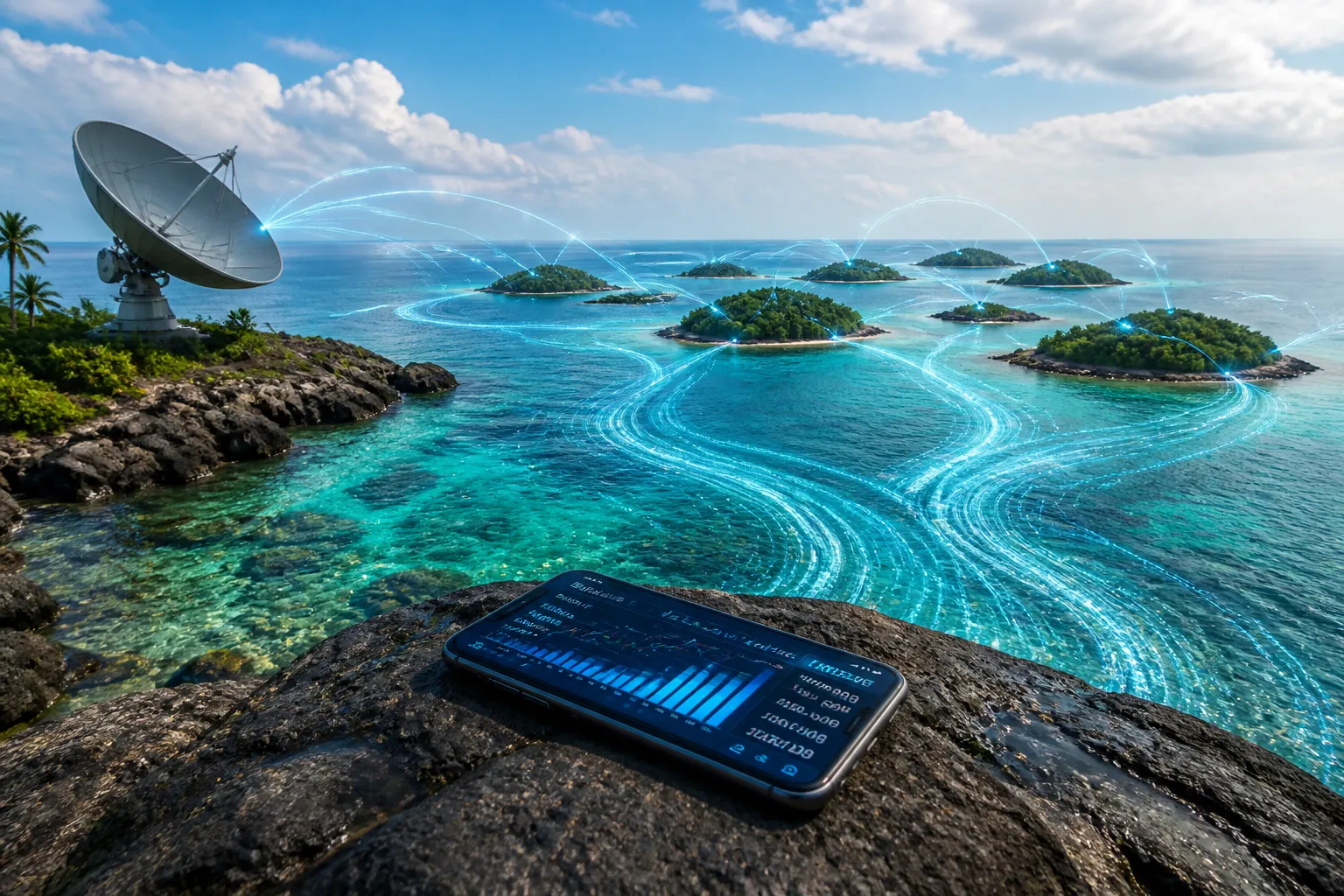
In 2026, the Federated States of Micronesia (FSM) is turning its scattered archipelago into a digital network. With four states—Yap, Chuuk, Pohnpei, and Kosrae—sprawled across more than 600 islands, opening a traditional bank branch on each is both expensive and impractical. As a result, digital channels are gaining the same importance as physical infrastructure.
The FSM’s economy remains modest, with a GDP per capita of roughly $4,000 and a population of about 115,000. Public administration, fisheries, tourism, subsistence agriculture, and development assistance make up the bulk of economic activity. The Compact of Free Association with the United States continues to supply significant financial assistance, shaping the country’s fiscal environment.
Digital finance in FSM is framed as an infrastructure project rather than a disruptive innovation. The Digital FSM Project, backed by the Asian Development Bank (ADB), seeks to enhance internet connectivity and expand digital government services. ADB’s announced $70 billion commitment to digital infrastructure in the Asia‑Pacific by 2035 underpins a “digital highway” that will support mobile payments, online banking, and e‑commerce.
The banking sector remains small. Core services are offered by institutions such as the Bank of Guam and the Bank of the Federated States of Micronesia, yet many citizens turn to digital channels to avoid the high costs of traveling between islands. Digital wallets and electronic transfers are gaining traction, and the government is moving to digitise payroll and public‑benefit payments.
Remittances are a vital part of household income. Families in FSM often receive money from relatives working in the United States, Guam, and Hawaii. Digital platforms that lower transfer costs could have a measurable impact on the local economy. The FSM government has also explored using digital payments for disaster relief, a strategy that could improve the speed and transparency of aid distribution during climate‑related emergencies.
Challenges remain. The domestic market is small, telecommunications costs can be high, digital literacy varies across communities, and cybersecurity capacity is still developing. Attracting private‑sector fintech investment is difficult given the country’s size and isolation, so partnerships between government, development finance institutions, telecom providers, and regional organisations are likely to stay essential.
Despite these hurdles, FSM’s small scale offers advantages. Targeted initiatives can be rolled out more quickly than in larger economies, and a single digital platform can reach a large portion of the population without extensive physical infrastructure. The country’s future fintech ecosystem will differ from those in Asia, Europe, or North America, but its value lies in connecting people across vast distances.
In summary, 2026 marks a continued push toward digital finance in Micronesia, driven by connectivity investments, government digital‑government initiatives, and the need to support a dispersed population. The next steps include expanding mobile payment services, improving cybersecurity, and integrating remittance flows into the formal economy.
The FSM’s economy remains modest, with a GDP per capita of roughly $4,000 and a population of about 115,000. Public administration, fisheries, tourism, subsistence agriculture, and development assistance make up the bulk of economic activity. The Compact of Free Association with the United States continues to supply significant financial assistance, shaping the country’s fiscal environment.
Digital finance in FSM is framed as an infrastructure project rather than a disruptive innovation. The Digital FSM Project, backed by the Asian Development Bank (ADB), seeks to enhance internet connectivity and expand digital government services. ADB’s announced $70 billion commitment to digital infrastructure in the Asia‑Pacific by 2035 underpins a “digital highway” that will support mobile payments, online banking, and e‑commerce.
The banking sector remains small. Core services are offered by institutions such as the Bank of Guam and the Bank of the Federated States of Micronesia, yet many citizens turn to digital channels to avoid the high costs of traveling between islands. Digital wallets and electronic transfers are gaining traction, and the government is moving to digitise payroll and public‑benefit payments.
Remittances are a vital part of household income. Families in FSM often receive money from relatives working in the United States, Guam, and Hawaii. Digital platforms that lower transfer costs could have a measurable impact on the local economy. The FSM government has also explored using digital payments for disaster relief, a strategy that could improve the speed and transparency of aid distribution during climate‑related emergencies.
Challenges remain. The domestic market is small, telecommunications costs can be high, digital literacy varies across communities, and cybersecurity capacity is still developing. Attracting private‑sector fintech investment is difficult given the country’s size and isolation, so partnerships between government, development finance institutions, telecom providers, and regional organisations are likely to stay essential.
Despite these hurdles, FSM’s small scale offers advantages. Targeted initiatives can be rolled out more quickly than in larger economies, and a single digital platform can reach a large portion of the population without extensive physical infrastructure. The country’s future fintech ecosystem will differ from those in Asia, Europe, or North America, but its value lies in connecting people across vast distances.
In summary, 2026 marks a continued push toward digital finance in Micronesia, driven by connectivity investments, government digital‑government initiatives, and the need to support a dispersed population. The next steps include expanding mobile payment services, improving cybersecurity, and integrating remittance flows into the formal economy.