Blab Business
Singapore and Indonesia Sign Carbon Credit Pact and SME Trade Agreement
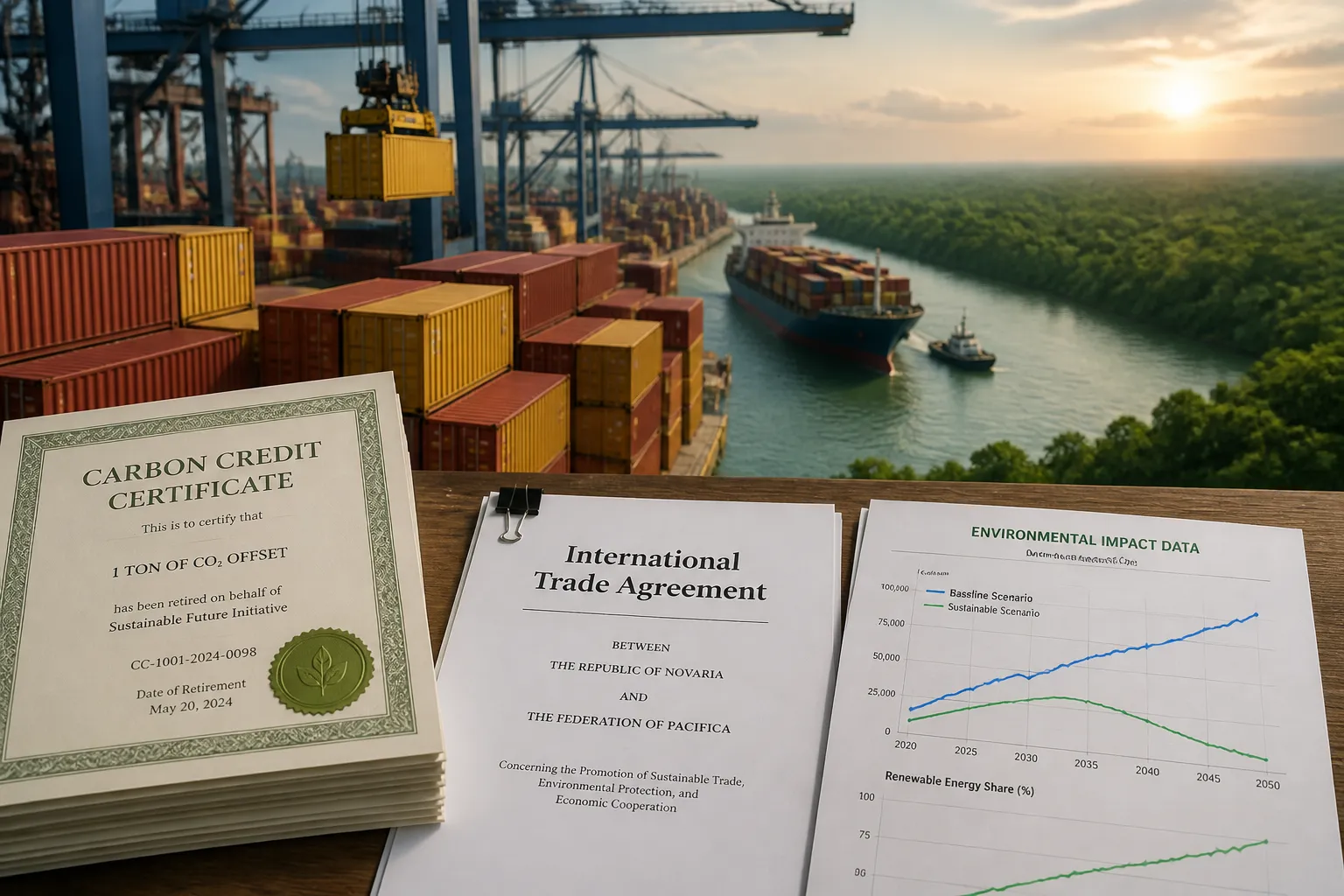
On 6 July 2026, Singapore’s Prime Minister Lawrence Wong and Indonesian President Prabowo Subianto signed a series of agreements that deepen cooperation on climate finance and cross‑border trade. The first agreement, a memorandum of understanding (MoU) on carbon credits under Article 6 of the Paris Agreement, was signed by Deputy Prime Minister and Minister for Trade and Industry Gan Kim Yong and Indonesian Minister of Environment Mohammad Jumhur Hidayat. The second MoU, signed by the Singapore Business Federation and Indonesia’s Chamber of Commerce and Industry, aims to make it easier for Indonesian small‑ and medium‑size enterprises (SMEs) to trade across borders.
The carbon‑credit MoU was announced at a press conference held at Jakarta’s Istana Merdeka during the leaders’ second bilateral retreat. According to a Ministry of Trade and Industry (MTI) press release, the agreement will enable the two countries to exchange information and technical expertise on carbon markets, work toward an implementation agreement aligned with Article 6, and identify high‑integrity carbon‑credit projects. The environment ministries of Singapore and Indonesia also signed a separate MoU on environmental cooperation last week, which will broaden collaboration in areas such as waste management.
In addition to the climate‑finance pact, the leaders signed a separate agreement with Singapore’s sovereign‑wealth fund Danantara, Keppel Electric, Sembcorp Industries and the Singapore Energy Interconnections. The agreement provides a clear roadmap for negotiations and discussions that will pave the way for a cross‑border electricity project. Prime Minister Wong said the project would be a “win‑win” for both countries and an important building block for a wider power grid across the Association of Southeast Asian Nations (ASEAN).
Wong highlighted Indonesia’s renewable‑energy potential, citing Singapore’s role in jointly constructing one of Indonesia’s largest solar projects in Morowali to power local industries. He also noted that the cross‑border electricity trade would help both countries diversify their energy mix amid recent disruptions in the Middle East.
The two ministers also reaffirmed their commitment to strengthening supply‑chain resilience. In a joint statement, Gan and Indonesia’s Coordinating Minister for Economic Affairs Airlangga Hartarto expressed concern over the situation in the Middle East and its implications for global peace and stability. They called for all parties to observe the ceasefire and for the right of transit passage for vessels and aircraft in the Strait of Hormuz under the United Nations Convention on the Law of the Sea. The ministers also pledged to keep markets open and connected and to swiftly ratify relevant ASEAN agreements to strengthen the region’s resilience to external economic disruptions.
The SME trade MoU, signed by the Singapore Business Federation and the Indonesia Chamber of Commerce and Industry, focuses on digital enablement, policy engagement and capability building. The parties agreed to work together to help Indonesian SMEs trade more easily across borders, a move that aligns with Singapore’s long‑standing investment in Indonesia and the two countries’ broader economic partnership.
The agreements were signed during a leaders’ retreat that also marked the 60th anniversary of diplomatic ties between Singapore and Indonesia, which will be celebrated in 2027. Prime Minister Wong said the partnership is deep, forward‑looking and full of potential, and that the two countries can create more opportunities together than either could achieve alone.
The agreements represent a coordinated effort to advance climate action, renewable‑energy development, and economic integration within ASEAN. They also reflect Singapore’s broader strategy to diversify energy sources and strengthen supply‑chain resilience in the face of geopolitical uncertainties. The next steps will involve detailed negotiations on the cross‑border electricity project, the establishment of a framework for high‑integrity carbon‑credit projects, and the implementation of digital tools to support Indonesian SMEs.
The agreements are part of a series of 26 MoUs signed during the leaders’ retreat, signalling a broad agenda that includes trade, investment, infrastructure, and sustainability. The agreements will be monitored by the respective ministries and industry bodies, with progress expected to be reported in upcoming bilateral meetings and through official channels.
The agreements do not yet specify financial commitments or timelines for project completion. However, the MoUs create a framework for future collaboration and set the stage for concrete actions that could involve investment from Singaporean companies such as Keppel Electric and Sembcorp Industries, as well as support from Indonesia’s sovereign‑wealth fund Danantara.
The agreements also underscore the importance of maintaining open trade routes and ensuring the right of transit passage, a concern that has been heightened by recent tensions in the Middle East. By reaffirming commitments to ASEAN agreements, Singapore and Indonesia aim to safeguard regional economic stability.
In summary, the July 6 agreements mark a significant step in deepening Singapore‑Indonesia cooperation on climate finance, renewable energy, supply‑chain resilience, and SME trade. The two countries have outlined a roadmap for future collaboration, with the next phase expected to involve detailed negotiations and the implementation of joint projects across the energy and trade sectors.
The carbon‑credit MoU was announced at a press conference held at Jakarta’s Istana Merdeka during the leaders’ second bilateral retreat. According to a Ministry of Trade and Industry (MTI) press release, the agreement will enable the two countries to exchange information and technical expertise on carbon markets, work toward an implementation agreement aligned with Article 6, and identify high‑integrity carbon‑credit projects. The environment ministries of Singapore and Indonesia also signed a separate MoU on environmental cooperation last week, which will broaden collaboration in areas such as waste management.
In addition to the climate‑finance pact, the leaders signed a separate agreement with Singapore’s sovereign‑wealth fund Danantara, Keppel Electric, Sembcorp Industries and the Singapore Energy Interconnections. The agreement provides a clear roadmap for negotiations and discussions that will pave the way for a cross‑border electricity project. Prime Minister Wong said the project would be a “win‑win” for both countries and an important building block for a wider power grid across the Association of Southeast Asian Nations (ASEAN).
Wong highlighted Indonesia’s renewable‑energy potential, citing Singapore’s role in jointly constructing one of Indonesia’s largest solar projects in Morowali to power local industries. He also noted that the cross‑border electricity trade would help both countries diversify their energy mix amid recent disruptions in the Middle East.
The two ministers also reaffirmed their commitment to strengthening supply‑chain resilience. In a joint statement, Gan and Indonesia’s Coordinating Minister for Economic Affairs Airlangga Hartarto expressed concern over the situation in the Middle East and its implications for global peace and stability. They called for all parties to observe the ceasefire and for the right of transit passage for vessels and aircraft in the Strait of Hormuz under the United Nations Convention on the Law of the Sea. The ministers also pledged to keep markets open and connected and to swiftly ratify relevant ASEAN agreements to strengthen the region’s resilience to external economic disruptions.
The SME trade MoU, signed by the Singapore Business Federation and the Indonesia Chamber of Commerce and Industry, focuses on digital enablement, policy engagement and capability building. The parties agreed to work together to help Indonesian SMEs trade more easily across borders, a move that aligns with Singapore’s long‑standing investment in Indonesia and the two countries’ broader economic partnership.
The agreements were signed during a leaders’ retreat that also marked the 60th anniversary of diplomatic ties between Singapore and Indonesia, which will be celebrated in 2027. Prime Minister Wong said the partnership is deep, forward‑looking and full of potential, and that the two countries can create more opportunities together than either could achieve alone.
The agreements represent a coordinated effort to advance climate action, renewable‑energy development, and economic integration within ASEAN. They also reflect Singapore’s broader strategy to diversify energy sources and strengthen supply‑chain resilience in the face of geopolitical uncertainties. The next steps will involve detailed negotiations on the cross‑border electricity project, the establishment of a framework for high‑integrity carbon‑credit projects, and the implementation of digital tools to support Indonesian SMEs.
The agreements are part of a series of 26 MoUs signed during the leaders’ retreat, signalling a broad agenda that includes trade, investment, infrastructure, and sustainability. The agreements will be monitored by the respective ministries and industry bodies, with progress expected to be reported in upcoming bilateral meetings and through official channels.
The agreements do not yet specify financial commitments or timelines for project completion. However, the MoUs create a framework for future collaboration and set the stage for concrete actions that could involve investment from Singaporean companies such as Keppel Electric and Sembcorp Industries, as well as support from Indonesia’s sovereign‑wealth fund Danantara.
The agreements also underscore the importance of maintaining open trade routes and ensuring the right of transit passage, a concern that has been heightened by recent tensions in the Middle East. By reaffirming commitments to ASEAN agreements, Singapore and Indonesia aim to safeguard regional economic stability.
In summary, the July 6 agreements mark a significant step in deepening Singapore‑Indonesia cooperation on climate finance, renewable energy, supply‑chain resilience, and SME trade. The two countries have outlined a roadmap for future collaboration, with the next phase expected to involve detailed negotiations and the implementation of joint projects across the energy and trade sectors.








