Blab Business
Walmarts 400-kW EV Charging Network Expands to 73 Locations Across 17 States
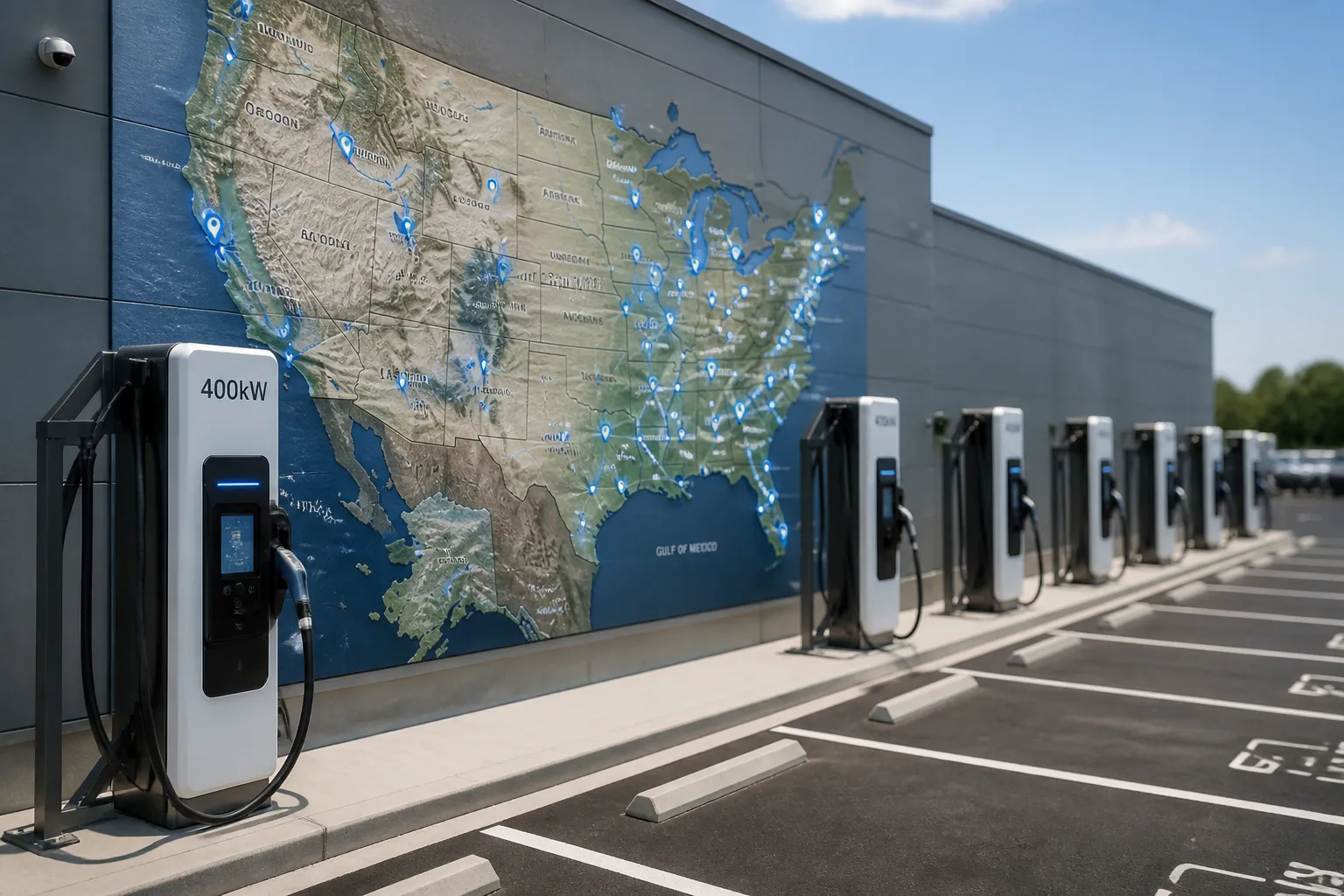
Walmart has added 73 electric‑vehicle (EV) fast‑charging stations in 17 U.S. states, bringing its total to 612 charging ports. The expansion, announced in July 2026, marks the retailer’s fastest growth in the network since it launched 15 months ago.
The retailer’s chargers are 400‑kilowatt DC units supplied by ABB and Alpitronic. Each stall contains two ports: one Combined Charging System (CCS) and one North American Charging Standard (NACS) connector, allowing drivers of most North‑American EVs to plug in. The units are the ABB A400 or Alpitronic HYC400 models, both capable of delivering up to 400 kW to a compatible battery.
Walmart’s charging network is managed through the company’s mobile app. Users can start a session, monitor progress, and pay directly in the app. The retailer is testing chargers with built‑in card readers to simplify payment for drivers who prefer to use a credit card. However, the 10 % discount that Walmart Plus members receive on charging is only available when the session is paid through the app.
According to data compiled by the community‑led site PlugShare and corroborated by the Department of Energy’s Alternative Fuels Data Center, the network now has 73 locations and 612 individual ports. The DOE database lists 66 locations and 528 ports, reflecting a lag in updates. The difference illustrates the rapid pace of Walmart’s rollout.
The retailer’s growth has been steady. In May 2026, Walmart operated 50 stores with more than 300 ports. Within two months, the number of ports had doubled, and the number of sites increased to 73. The network now spans 17 states, a significant expansion from the 15 states that were covered when the first chargers went live in April 2025.
The average cost of charging at Walmart stations is $0.46 per kilowatt‑hour. Some sites offer off‑peak rates, which, combined with the Walmart Plus discount, can reduce the cost by up to $0.20 per kWh.
Walmart’s move comes amid a broader push to expand public charging infrastructure. The retailer’s strategy is to place fast chargers at high‑traffic locations, making it convenient for shoppers and commuters. The company has stated that it plans to install thousands of chargers across its U.S. stores, though it has not yet set a specific timeline.
Industry observers note that Walmart’s network is one of the few large retail chains to deploy high‑power chargers that support both CCS and NACS connectors. The dual‑connector approach aligns with the growing trend of automakers adopting NACS in North America.
The expansion also reflects Walmart’s broader commitment to sustainability. The retailer has announced plans to reduce its carbon footprint and to support the transition to electric vehicles. By providing fast charging at its stores, Walmart aims to make EV ownership more practical for a wider customer base.
The network’s growth has been documented by several community and industry sources. The Arkansas eTraveler YouTuber reported 73 locations and 612 ports, while PlugShare and the DOE database provide slightly lower figures. The discrepancy underscores the rapid pace of deployment.
Walmart’s charging stations are part of a larger ecosystem that includes other networks such as Electrify America and Tesla Supercharger. While those networks focus on dedicated charging corridors, Walmart’s model leverages existing retail infrastructure to reach customers in everyday settings.
The retailer’s charging initiative is still in its early stages, but the current expansion demonstrates a clear commitment to building a nationwide fast‑charging presence. Future reports will likely track the addition of new sites, the adoption of built‑in card readers, and the impact of the Walmart Plus discount on usage.
In summary, Walmart’s 400‑kW charging network has grown to 73 locations and 612 ports across 17 states, with a focus on dual‑connector compatibility, app‑based payment, and cost‑effective charging. The retailer’s strategy is to continue expanding its network to support the growing EV market and to provide convenient charging options for its customers.
The retailer’s chargers are 400‑kilowatt DC units supplied by ABB and Alpitronic. Each stall contains two ports: one Combined Charging System (CCS) and one North American Charging Standard (NACS) connector, allowing drivers of most North‑American EVs to plug in. The units are the ABB A400 or Alpitronic HYC400 models, both capable of delivering up to 400 kW to a compatible battery.
Walmart’s charging network is managed through the company’s mobile app. Users can start a session, monitor progress, and pay directly in the app. The retailer is testing chargers with built‑in card readers to simplify payment for drivers who prefer to use a credit card. However, the 10 % discount that Walmart Plus members receive on charging is only available when the session is paid through the app.
According to data compiled by the community‑led site PlugShare and corroborated by the Department of Energy’s Alternative Fuels Data Center, the network now has 73 locations and 612 individual ports. The DOE database lists 66 locations and 528 ports, reflecting a lag in updates. The difference illustrates the rapid pace of Walmart’s rollout.
The retailer’s growth has been steady. In May 2026, Walmart operated 50 stores with more than 300 ports. Within two months, the number of ports had doubled, and the number of sites increased to 73. The network now spans 17 states, a significant expansion from the 15 states that were covered when the first chargers went live in April 2025.
The average cost of charging at Walmart stations is $0.46 per kilowatt‑hour. Some sites offer off‑peak rates, which, combined with the Walmart Plus discount, can reduce the cost by up to $0.20 per kWh.
Walmart’s move comes amid a broader push to expand public charging infrastructure. The retailer’s strategy is to place fast chargers at high‑traffic locations, making it convenient for shoppers and commuters. The company has stated that it plans to install thousands of chargers across its U.S. stores, though it has not yet set a specific timeline.
Industry observers note that Walmart’s network is one of the few large retail chains to deploy high‑power chargers that support both CCS and NACS connectors. The dual‑connector approach aligns with the growing trend of automakers adopting NACS in North America.
The expansion also reflects Walmart’s broader commitment to sustainability. The retailer has announced plans to reduce its carbon footprint and to support the transition to electric vehicles. By providing fast charging at its stores, Walmart aims to make EV ownership more practical for a wider customer base.
The network’s growth has been documented by several community and industry sources. The Arkansas eTraveler YouTuber reported 73 locations and 612 ports, while PlugShare and the DOE database provide slightly lower figures. The discrepancy underscores the rapid pace of deployment.
Walmart’s charging stations are part of a larger ecosystem that includes other networks such as Electrify America and Tesla Supercharger. While those networks focus on dedicated charging corridors, Walmart’s model leverages existing retail infrastructure to reach customers in everyday settings.
The retailer’s charging initiative is still in its early stages, but the current expansion demonstrates a clear commitment to building a nationwide fast‑charging presence. Future reports will likely track the addition of new sites, the adoption of built‑in card readers, and the impact of the Walmart Plus discount on usage.
In summary, Walmart’s 400‑kW charging network has grown to 73 locations and 612 ports across 17 states, with a focus on dual‑connector compatibility, app‑based payment, and cost‑effective charging. The retailer’s strategy is to continue expanding its network to support the growing EV market and to provide convenient charging options for its customers.








